Tuesday, October 31, 2006

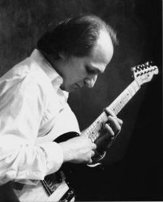
Stanley Jordan

( Naar de Nederlandse vertaling.)

Stanley Jordan, born in Chicago, 1959, started as a youngster to play the guitar is rock and soul groups. He studies electronic music at Princeton University and played with Dizzy Gillespie and Benny Carter. His first record was commercially not a success, although he showed his virtuosity to the world.

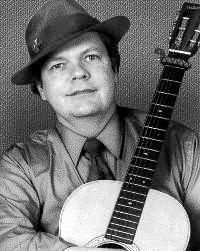
He loves to play his guitar as shown on the pictures with both hands tapping the strings of the instrument. It gives him the opportunity to play two independent lines and to accompany his own solos. It sounds a bit like the technique Oscar Aleman used to combine the solo pickings and rhythms in one instrument at the same time. This touch, or two-handed tapping technique is described in his home page you can visit by clicking on the title bar.


To be honest - I had never heard him playing and the Blue Note album Live in New York made me anxious to hear more of him. It is a transcription of a live recording in Manhattan Center, New York City, 21st of March 1989 and he is accompanied by two trios with names as Kenny Kirkland p, Charnett Moffett b, Jeff Watts dm and Bernard Wright p, Yossi Fine b, J.T. Lewis dm.


If you have to opportunity try to get one of his recordings and listen to his marvelous guitar playing technique, or better try to join a concert. His next one will be at the Phiippines, I guess.

Listen to a fragment of
Impressions, the first track on the album.

Nederlands ( To the English translation )


Stanley Jordan, geboren in 1959 in Chicago, begon als jong volwassene te spelen in Rock en Soul bandjes. Hij studeerde electronische muziek op de Princeton Universiteit en speelde met Dizzy Gillespie en Benny Carter. Zijn eerste plaat, een sologitaar-plaat, flopte, maar dat lag zeker niet aan zijn fabuleuze gitaar techniek.

Hij houdt ervan de gitaar te bespelen zoals te zien op de foto's. Beide handen bespelen de snaren op de hals van de gitaar. Dat geeft de mogelijkheid om twee aparte melodielijnen te creëren, zodat het lijkt alsof hij zichzelf begeleidt. Het lijkt een beetje op de techniek die Oscar Aleman toepaste, waarbij hij in staat was op zijn gitaar zowel de melodielijnen als de ritmebegeleiding tegelijkertijd te spelen. Dat geeft een heel rijk gitaargeluid. Stanley beschrijft deze techniek uitgebreid op zijn homepage, die je vindt door op de titelkop te klikken.


Om eerlijk te zijn - ik had hem nog nooit horen spelen en het Blue Note album Live in New York smaakt naar meer. Het is een opname van een live concert opgenomen op 21 maart 1989 in het Manhattan Center in New York City en Stanley wordt begeleid door twee trio's: Kenny Kirkland p, Charnett Moffett b, Jeff Watts dm en
Bernard Wright p, Yossi Fine b, J.T. Lewis dm.

Als je de kans krijgt moet je zeker proberen hem live te horen spelen, denk ik. Zijn fabelachtige gitaartechniek is binnenkort te beluisteren op de Filipijnen geloof ik, dus wat let je .....

Luister naar een fragment van
Impressions, het eerste nummer van de plaat.

Hans Koert


Monday, October 30, 2006

Jonathan Kellerman

( Naar de Nederlandse vertaling.)


A few years ago the following story took place.

Visitors, new on this blog, should know that I have a wide interests about a lot of subjects. Since I was a teen-ager my passions are history and jazz music. The latter expresses in my projects, like the Hit of the week - Durium project and the the project about the life and musical heritage of Oscar Aleman.

Well, the story is about Oscar Aleman.

Now and then people contact me if they have to ask me something about one of my projects. A few years ago I got a message from a lady who lived in Groningen ( a city in the northern part of the Netherlands) who asked me where she could buy an Oscar Aleman recording. She told me, she bought a book to relax, each year, for her holidays period. Her favorite author was Jonathan Kellerman. Jonathan Kellerman writes detective / thriler like books and he always introduces the readers to certain musicians. In one of his books, she had forgotten wich ones, he had talked about Oscar Aleman and, as she had form a habit to obtain the music Kellerman suggested, she wanted to know where she could obtain a CD of Oscar Aleman.


I responded to this lady, gave her some CD suggestions and asked her about the title of the book, but, unfortunally she had given the book to a good friend.


Each time, when I was at Vroom & Dreesman, a well known Dutch department store, I glanced through the books of Kellerman, but never found the Aleman ones .......


This morning I found a message from David W. Littlefield. He wrote me:

Hi Hans.

Found a reference to Oscar Aleman in the following novel:
Jonathan Kellerman "Flesh and blood", Ballantine Books, 2002, p.326 (Chapter 29). This is a paperback edition, so the page well might be different in the hard cover edition.


"I ran the tape deck as I slumped in the front seat. Old recording of Oscar Aleman riffing on a shiny silver National guitar in some thirties Buenos Aires nightclub. Aleman and the band peeling off a ha-ha rendition of 'Besame Mucho' that would have done Spike Jones proud, but no mistaking the artistry."

Kellerman writes excellent detective novels. I haven't had a chance to listen to the double CD I bought this year, (Accoustic Disk ACD-29), but it has "Besame mucho" so now I have a specific tune to hear.

I first learned about Aleman from your 78-l posts.

Cheers D.W.L.

Isn't that funny? The Jonathan Kellerman puzzle has been solved - The title of the book is known. I will visit the library this afternoon to have a look it they have got it for me.

Thanks David for your other nice words about the Hit of the week - Durium project you wrote in your mail. I have respond to you by email already.

If you click on the title bar you hear a fragment of Besame Mucho as played by Oscar Aleman.

This contribution is also posted at my
Oscar Aleman web log

Nederlands ( To the English translation )

Een paar jaar geleden vond het volgende plaats.


Lezers van mijn weblog, die hier voor de eerste keer komen, weten wellicht nog niet dat ik een heleboel interesses heb. Vanaf mijn tienerjaren ben ik verslingerd aan geschiedenis en jazzmuziek en dat laatste heeft zich geuit in een aantal projecten, zoals het Hit of the week-Durium project en het project of de muziek van Oscar Aleman.

Ik krijg zo af en toe vragen over deze onderwerpen. Een paar jaar geleden schreef een dame uit Groningen ( een stad in Noord Nederland) me met de vraag waar ze muziek van Oscar Aleman kon kopen. Ze vertelde me, dat ze elk jaar, voor de vakantie, zich zelf een boek van Jonathan Kellerman cadeau deed. Jonathan Kellerman schrijft detective-achtige boeken en vertelt zijn lezers, als een rode draad, altijd iets over een bepaalde muzikant. In één van zijn boeken, ze kon niet meer nagaan welke, vertelt hij over Oscar Aleman en omdat ze er een gewoonte van had gemaakt zichzelf de muziek die Kellerman aanroerde cadeau te geven, wilde ze graag een CD van Oscar Aleman kopen.

Ik antwoordde haar welke CDs ze het beste kon proberen te kopen en vroeg haar nogmaals naar de titel, maar aangezien ze elk gelezen boek meteen weggaf kon ze dat niet meer achterhalen.


Ik heb nog jarenlang tijdens de uitverkoop bij Vroom & Dreesman tussen de boeken van Kellermans gezocht in de hoop het Aleman boek te vinden.


Vanmorgen vond ik een berichtje in mijn mailbox van David. W. Littlefield. Hij schreef me (in het Engels uiteraard):

Hoi Hans. Ik vond een verwijzing naar Oscar Aleman in de volgende roman: Jonathan Kellerman "Flesh and blood", Ballantine Books, 2002, p.326 (Chapter 29). Dit is een paperback, dus zullen de pagina in de gebonden uitgave wel niet kloppen.

Er staat:

"I ran the tape deck as I slumped in the front seat. Old recording of Oscar Aleman riffing on a shiny silver National guitar in some thirties Buenos Aires nightclub. Aleman and the band peeling off a ha-ha rendition of 'Besame Mucho' that would have done Spike Jones proud, but no mistaking the artistry."

"Ik zette de taperecorder aan terwijl ik in de stoel zakte. Oscar Aleman speelde op zijn zilverkleurige National gitaar in een dertigerjaren nachtclub in Buenos Aires. Aleman speelde met zijn band, zonder afbreuk te doen aan zijn muzikale vaardigheid, een komische versie van
Besame Mucho
, waar Spike Jones om gelachen zou hebben." (eigen vertaling Hans)

Kellerman schrijft prima detectives. Ik heb nog geen kans gehad om de dubbelCD van Oscar Aleman te beluisteren, die ik eerder dit jaar kocht ( Accoustic Disk ACD-29), maar het bevat het nummer "Besame mucho
", zo nu weet ik waar ik naar moet luisteren.
Ik heb voor het eerst over Oscar Aleman gehoord door jouw berichten op 78-L
Groeten, D.W.L.

Is dat niet toevallig? De Jonathan Kellerman puzzel is in één keer opgelost; de titel van het boek is bekend. Ik zal vanmiddag in de bibliotheek proberen de Nederlandse vertaling "Vlees en bloed" te pakken te krijgen.


Kan iemand me, voor het geval ik de Nederlandse uitgave niet kan vinden, de vertaling van het fragment opsturen?

Bedankt David voor je vriendelijke woorden over het Hit of the week-Durium project. Ik heb je daarop al per email gereageerd.

Als je op de titelkop klikt hoor je een fragment van Besame Mucho.

Deze weblog is ook (in het Engels) verschenen in mijn Oscar Aleman weblog

Sunday, October 29, 2006

Jazz Behind The Dikes

( Naar de Nederlandse vertaling.)

Fifty years ago, Hanne R., at the start of her first full day on this planet, couldn't know that in the Netherlands, the first tracks for the third LP in the series Jazz Behind the Dikes were made.

Jazz behind the Dikes is a series of three Dutch 25 en 30-cm LPs that became classics and are collector's items now.

The Jazz Behind the Dikes LPs were produced by Michiel De Ruyter, a well known initiate of modern jazz in the Netherlands in the 1950s. Mind that in those years jazz was the Dutch Swing College Band and other traditional swing style groups and releasing records in the modern jazz styles like bebop were very risky. Bovema, a record company, had released some modern jazz, so Philips wanted to put out some feelers too.


The first Jazz Behind the Dikes LP contained four tunes on each side with a 3 minutes playing time for each track. If the record should become a success 78rpm recordings could be released easily. The first LP was a success, so a second one was made later that year and in 1957 the third LP was released .

Thanks to the fact that Michiel de Ruyter had chosen young talented musicians that played in a new, not yet accepted style of modern jazz, this series Jazz Behind the Dikes became a classic. The personel on the discs reads like a who-is-who in Dutch jazz, with names as Toon van Vliet, Herman Schoonderwalt, Rob Pronk, Ruud Brink, Piet Noordijk, the Van Rooyen and the Jacobs brothers, Wessel Ilcken and Cees See.

On the 29th of October 1956 four tunes were recorded ( Just A Kickshaw, Lady Bird, The Goofer and Jeepers Creepers ). The young talented Pim Jacobs made his very first recordings with his trio, featuring his brother Ruud on the bass and the drummer Wessel Ilcken. Wessel Ilcken was a skilled musician already around that date. He had played in the 1940s in the Piet van Dijks orchestra, felt in love with the singer of the band, Rita Reys and started his own group with her. They married. They were international famous with tours through Sweden and performances with American bebop musicians that visited Europe. Wessel Ilcken is the director on the other two tracks made by his All Stars. This All Star group contains nearly all modern Dutch jazzmen that were available at that date: Rob Pronk, Ack and Jerry van Rooyen, Ruud Bosch, Piet Noordijk, Toon van Vliet, Ruud Brink, Herman Schoonderwalt, Rob Madna, Dick van der Capellen and Wessel Ilcken on drums of course. Rita Reys, his wife, although present at the other LPs, was not on this session; she had made a recording session with Art Blakey around that time.

Wessel Ilcken died a year later and Pim Jacobs and Rita Reys and became the most well known Marriage in Jazz for the Dutch people.

I have found a film of a 1960 Rita Reys performance with the Pim Jacobs Trio. You can enjoy it by clicking on the title bar.

And Hanne ............ have a good weekend with your friends and family.

Nederlands ( To the English translation )

Precies vijftig jaar geleden, op de dag dat Hanne R. aan haar eerste volledige dag op deze wereld begon, kon ze niet weten dat de eerste nummers van de derde Jazz Behind the Dikes LP zouden worden opgenomen.

De Jazz Behind the Dikes
serie is een drietal LP 25 en 30cm LPs, die Nederlandse jazz klassiekers zijn geworden waar verzamelaar naar zoeken.

De Jazz Behind the Dikes LPs werden geproduceerd door Michiel de Ruyter, een bekende programmamaker van Nederlandse moderne jazz muziek. Bedenk dat in die tijd jazz in Nederland de Dutch Swing College Band heette en dat uitgaven in de modernere jazzstijlen risicovol waren. Bovema, een platenmaatschappij had al eens iets in die stijl uitgebracht, dus wilde Philips de boot niet missen. De eerste 25 cm Jazz Behind the Dikes LP bevatte aan elke kant vier titels, met een speelduur van drie minuten elk, zodat, als de plaat een succes zou worden, er gemakkelijk 78toeren platen van gemaakt zouden kunnen worden. De eerste LP verkocht goed, een tweede werd later datzelfde jaar gemaakt en de derde kwam uit in 1957.

Dankzij het feit dat Michiel de Ruyter koos voor jong talent, die de jazz in een modern jasje brachten, is deze serie Jazz Behind the Dikes een klassieker geworden. De namen van de musici lezen als een who-is-who in Dutch Jazz met namen als Toon van Vliet, Herman Schoonderwalt, Rob Pronk, Ruud Brink, Piet Noordijk, de broertjes Van Rooyen en Jacobs, Wessel Ilcken en Cees See.

Op 29 oktboer 1956 werden vier titels opgenomen: Just A Kickshaw, Lady Bird, The Goofer en Jeepers Creepers. De jonge, getallenteerde Pim Jacobs maakt zijn eerste twee opnamen samen met zijn broer Ruud op bas en Wessel Ilcken op drums. Wessel Ilcken was toen al een ervaren muzikant, die in de jaren veertig had gespeeld in het orkest van Piet van Dijk. Daar was hij verliefd geworden op de zangeres en met haar getrouwd: Rita Reys. Samen met Rita trad hij op in de jaren daarop volgend en ze kregen internationale bekendheid met tournees naar Zweden en het begeleiden van Amerikaanse musici, die naar Europa kwamen. Wessel Ilcken is de leider van de All Star groep, die de andere twee titels voor zijn rekening neemt. Die All-Star groep bevatte zowat elke musikant, die op dat moment in Nederland moderne jazz speelde:
Rob Pronk, Ack and Jerry van Rooyen, Ruud Bosch, Piet Noordijk, Toon van Vliet, Ruud Brink, Herman Schoonderwalt, Rob Madna, Dick van der Capellen en Wessel Ilcken op slagwerk uiteraard. Rita Reys, wel aanwezig op de eerdere opnamen voor Jazz Behind the Dikes was er deze keer niet bij; ze had net opnamen gemaakt met niemand minder dan Art Blakey.


Wessel Ilcken overleed een jaar later aan de gevolgen van een hersenbloeding tijdens het waterskiën en Rita trouwde met Pim Jacobs, dat voor veel Nederlanders het bekendste jazz-echtpaar zou worden.

Ik heb een opname uit 1960 gevonden van Rita Reys met het trio Pim Jacobs. Je kiut het bekijken door op de titelkop te klikken. Veel plezier er mee.

En Hanne ............ nog een gezellig weekend met je vrienden en gezin !!

Saturday, October 28, 2006

The Kid

( Naar de Nederlandse vertaling.)


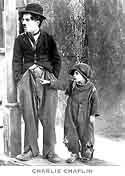
The film, The Kid, is one of those all times Chaplin classics. It's a picture with a smile - and perhaps a tear; Well said as it is certainly not a real scream. The film was made in 1921 for the Mutual Film Company and became a great success.

It's the story about an abandoned child, that grows up at the house of The Tramp, played by Chaplin. The Kid grows up into an efficient housekeeper and an enthusiastic business partner; when he is at the age of five he throws stones through windows, so The Tramp can use some money by repairing the windows as a glazier.

The child becomes ill and the doctor visits the house. He thinks the child should be into well fare. The woman, who abandoned the child is now a great artist and finds out that the Kid is her child and, to make this preview not too long, it ends all as a good story ought to end: the child is reunited with his real mother, now a rich woman of course.

It's interesting to see the unpaved streets and the primitive gas lightning.

The film has a playing time of about 45 minutes and it is, of course, a silent movie as sound was not used in film before the end of the 1920s.

The film is part of a great colection of reissued Chaplin films, called the Chaplin Collection.

You can see a fragment of the film by clicking on the title bar.

Nederlands ( To the English translation )


De film, The Kid, is één van die Chaplin klassiekers, die je gezien moet hebben. De film werd gemaakt in 1921 door de Mutual Film Company. Het is een film met een glimlach, en misschien een traan - zo begint de film en dat klopt ook wel: het is in ieder geval geen dijenkletser.

De film gaat over een vondeling, die opgroeid in het huis van The Tramp, een landloper, meesterlijk gespeeld door Chaplin. The Kid, het jongetje, groeit op bij The Tramp en leert het huishouden en mee te helpen met geld te verdienen. Dat laatste gaat als volgt: De Kid gooit stenen door ramen, die dan weer gemaakt kunnen worden door Chaplin, die als glazenier zijn brood verdient. Een prima combinatie dus.

Het kind wordt ziek en de dokter vindt dat hij niet in het oude huisje kan blijven. De vrouw, die het kind eerder te vondeling had gelegd, is ondertussen een beroemd actrice geworden en komt te weten dat The Kid haar zoontje is. Om het verhaal nu niet helemaal te verklappen - het eindigt in ieder geval zoals een goed verhaal hoort te eindigen. Moeder en kind worden weer verenigd en het kan opgroeien in een rijk huishouden.

Het is interessant om te zien hoe in 1921 de straten in de oude wijken nog onverhard waren en het gebruik van de primitieve gasverlichting.

De film duurt zo'n drie kwartier en is uiteraard een stomme film, aangezien geluid pas eind jaren twintig aan film toegevoegd kon worden.

De film is onderdeel van een prachtige serie, getiteld The Chaplin Collection.

Je kunt een fragment van de film zien door te klikken op de titel.


Friday, October 27, 2006

Holiday For Skins

( Naar de Nederlandse vertaling.)

Art Blakey was one of the most important musicians during the last half of the XXth century. His groups, like the Jazz Messengers, was like a breeding pond for new talents. The most important example is of course Wynton Marsalis, who started early 1980s in Blakeys group. Nowadays Wynton seems to have adopted this task in his Jazz at Licoln Center Orchestra with Wynton Marsalis ( was the Lincoln Jazz Orchestra with Wynton Marsalis).

I was so lucky to hear Art Blakey playing with his Jazz Messengers in the Doelen in Rotterdam ( the Netherlands) in 1980, just before Wynton Marsalis joined the group.

I'm not going to talk about all his style of drumming, but about his search for the roots of rhythm. He lived for three years in Afrikca to find the roots of jazz.


He made some recordings with percusionists from all over the world. The record The African Beat by his Afro-Drum Ensemble ( Blue Note 522666) from 1962 is such an example. To be honest; that CD is not my most favorite Blakey recording - the tom toms, corboras, bata drums and maracas are boring me after I have heard two tunes.


I purchased the CD A Message From Blakey - Holiday For Skins ( Blue Note 358291 ), recorded in 1958, containing three jazz drummers (Philly Joe Jones, Art Taylor and Art Blakey of course) and seven Latin American percusionists ( Sabu Martinez, Ray Barretto, Chonguito Vicente, Victor Gonzalez, Andy Delannoy, Julio Martinez and Fred Pagan jr. ). To be honest - I feared I had bought another kind of African Beat recording, but I liked the recording very much, because, I forgot to mention, the presence of Donald Byrd on trumpet, Ray Bryant at the piano and Wendell Marshall at the bass.

Holiday For Skins is one of the better experiments in Blakeys search to the roots of rhythm - maybe because the percussionist he invited were all South Americans and no Africans - to express that the Latin American beat is more familiar with the traditional jazz music we admire.

This record was released in the Connosseur CD Series from Blue Note - a great source for modern jazz recordings.


Nederlands ( To the English translation )


Art Blakey was één van de belangrijkste jazzmuzikanten uit de tweede helft van de 20ste eeuw. Zijn groepen, in het bijzonder de Jazz Messengers, waren een kweekvijver voor nieuw talent. Het belangrijkste voorbeeld is natuurlijk Wynton Marsalis, die begin jaren tachtig begon in zijn groep. Tegenwoordig lijkt Wynton deze taak op zich genomen te hebben met zijn Jazz at Lincoln Center Orchestra with Wynton Marsalis ( vroeger the Lincoln Jazz Orchestra with Wynton Marsalis geheten.

Ik ben blij dat ik Art Blakey en zijn Jazz Messengers in 1980 in de Doelen in Rotterdam heb mogen horen spelen even voordat Marsalis erbij kwam.

Ik wil het vandaag niet hebben over de stijl van zijn drummen, maar over zijn zoektocht naar de bron van het drummen. Zo verbleef Art drie jaar in Afrika.


Hij maakte verschillende opnamen met slagwerkers van over de hele wereld. De plaat The African Beat door zijn Afro-Drum Ensemble ( Blue Note 522666) uit 1962 is zo'n voorbeeld. Om eerlijk te zijn; deze CD is niet mijn meest favoriete plaat - de tom toms, corboras, bata drums en maracas gaan me na een paar nummers vervelen.

Ik kocht de CD A Message From Blakey - Holiday For Skins ( Blue Note 358291 ), opgenomen in 1958, met drie jazzdrummers ( Philly Joe Jones, Art Taylor and Art Blakey natuurlijk) en zeven Latijns-Amerikaanse slagwerkers (Sabu Martinez, Ray Barretto, Chonguito Vicente, Victor Gonzalez, Andy Delannoy, Julio Martinez en Fred Pagan jr. ). Om eerlijk te zijn - ik heb ervan genoten, hoewel ik bang was om weer te belanden in een Afrikaanse oerwoud. Overigens ben ik vergeten te vermelden dat ook Donald Byrd op trompet mee speelt, Ray Bryant achter de piano zit en Wendell Marshall de bassnaren beroert - misschien dat dat het verschil maakt.

Holiday For Skins is één van die beter te pruimen experimenten in Blakey's zoektocht naar de bronnen van de ritmen. - wellicht omdat de uitgenodigde drummers uit Zuid Amerika komen en niet uit Afrika. De ritmen uit eerstgenoemde werelddeel liggen in ons gehoor toch wat dichter bij de hedendaagse (westerse) jazz, waar we zo van houden.

Deze CD werd uitgegebracht in de voortreffelijke the Connosseur CD Series van Blue Note - een schitterende collectie met juweeltjes uit de moderne jazzgeschiedenis
.

James, bedankt voor het steeds kritisch doorlezen van de Nederlandse tekst - zo af en toe glipt er wel eens ongewild een type-fautje doorheen ........

Thursday, October 26, 2006

Al Amigo Hans Koert

I was surprised by a blog of the Hot Club de Boedo (Argentina) with a contribution about myself. Thanks ! = Ik werd verrast met een weblog van de Hot Club de Boedo (Argentinië) waarin ik zelf het onderwerp bleek !
Scroll down for the English translation // Scroll naar beneden voor de Nederlandse vertaling.

Hot Club de Boedo saluda a su amigo Hans Koert un estudioso de la vida y obra de Oscar Marcelo Alemán e invitamos a visitar su página y su blog. En la imagen el célebre coleccionista argentino Mario Toscano Pouchan y el experto holandés Hans Koert

Gracias por sus amables palabras. Es bueno saber que aprecia nuestro trabajo en divulgar el legado de Oscar Alemán con todos los aficionados de Argentina y otros paises del mundo. Prueba que Oscar Alemán fué un verdaderamente un
cosmopolita. Espero que comparta sus recuerdos e historias con nosotros.

( Hans Koert )
Uno de los alemaníacos: Hans Koert
Los otros son: Joergen Larsen y Theo Van de Graaff.

Hot Club de Boedo
Buenos Aires - Argentina


“Cinco años de buen Jazz”

English


Enjoy the web log of the Hot Club de Boedo
To our friend Hans Koert

Hot Club of Boedo greets its friend Hans Koert, a researcher of the life and work of Oscar Marcelo Alemán and we invited to visit its page and his blog.
In the image the famous Argentine collector Mario Toscano Pouchan and the Dutch expert Hans Koert
Thanks you for your nice words. It is good to learn that you appreciate
our work to share the legacy of Oscar Aleman with all true fans in Argentina and all other countries all over the world. It proofs that Oscar Aleman was
a true cosmopolitan. I hope you will also share your remembrances, stories and images with us. (
Hans Koert )
One of the Alemaniacs: Hans Koert
The others are: Joergen Larsen and Theo van de Graaff.

Nederlands


De Hot Club de Boedo groet zijn vriend Hans Koert, die het leven en werk van Oscar Aleman heeft onderzocht en we nodigen iedereen uit een blik te werpen op zijn web pagina's en blog.

Op de foto de beroemde Argentijnse verzamelaar Mario Toscano Pouchan en de Nederlandse expert Hans Koert.

http://people.zeelandnet.nl/koerthchkz/news.htm

Bedankt voor jullie fijne woorden. Het is goed om te weten dat jullie ons werk, waarin we de nalatenschap van Oscar Aleman willen delen met alle echte fans in Argentinië en de rest van de wereld. Hieruit blijkt dat Oscar Aleman een echte wereldburger was. Ik hoop dat jullie de herinneringen, verhalen en foto's met ons willen delen.( Hans Koert)
Eén van de Alemaniacs: Hans Koert
De anderen zijn: Joergen Larsen en Theo van de Graaff.

Wednesday, October 25, 2006

Art Farmer

( Naar de Nederlandse vertaling.)

The LP Blame It On My Youth by the Art Farmer Quintet is one of his best from the 1980s. The warm soft smooth sound of the fluegelhorn makes him for me one of the best musicians to play ballads. On this album there are two great ones; I'll Be Around and the title song Blame It On My Youth.

Art Farmer was one of those musicians, he passed away in 1999, that seems to have had only periods in his life with a constantly high music level. He makes the fluegelhorn for me one of the greatest instruments in jazz, thinking of its warm tones in the hands of musicians like Art Farmer, Freddie Hubbard and Roy Hargrove.

He always has great accompanists in his groups. This time Clifford Jordan on tenor and soprano saxophone. He plays outstanding subtlety and makes a great contribution at I'll Be Around.

James Williams, who passed away last year I remember, leads the rhythm section at the piano; a rhythm sextion with names as Rufus Reid on bass and Victor Lewis on drums, that makes this album swing.

Last night I tried to listen to a compilation, titled JAZZ TOP 100 ALLERTIJDEN - The Greatest Standards. No Art Farmer on it, what a shame.
One hundred tunes, 95 with vocalists, 80 with bunches of violins ......how do pop music producers know what the best JAZZ is if they never have heard good music? Art Farmer should have been somewhere in the top 20 with his tune Blame It On My Youth.

Listen to Blame It On My Youth by Art Farmer Quintet by clicking on the title bar.


Nederlands ( To the English translation )


De LP Blame It On My Youth gespeeld door het Art Farmer Quintet is één van zijn beste albums uit de jaren tachtig van de vorige eeuw. Zijn warme zachte sensuele geluid op de bügel maakt Art tot één van de beste ballad vertolkers in de jazz. Op dit album staan er twee: I'll Be Around en de titel song Blame It On My Youth.

Art Farmer was één van die uitzonderlijke musici, die zijn hele leven muziek op hoog niveau bracht. Hij overleed in 1999. Hij maakt de bügel tot één van de mooiste instrumenten in zijn handen en die van Freddie Hubbard of Roy Hargrove.

Art verzamelt meestal ervaren musici om zich heen. Deze keer Clifford Jordan op tenor en sopraan sax. Hij speelt hier, ietwat op de achtergrond, op een subtiele manier, een grote rol. Vooral I'll Be Around moet je maar eens beluisteren. James Williams, die volgens mij vorig jaar overleden is, leidt de ritme groep op de piano, een ritme sectie met namen als Rufus Reid op bas en Victor Lewis op drums. Deze ritmegroep maakt het tot een swingend geheel.

Afgelopen avond probeerde ik te luisteren naar een veelbelovende verzameling getiteld JAZZ TOP 100 ALLERTIJDEN - The Greatest Standards. Geen Art Farmer helaas, wat een schande. Wel honderd titels, 95 met een zanger of zangeres, 80 met een heleboel violen .......... hoe durft iemand dit de Jazz Top 100 Allertijden te noemen ! Ik zou willen dat die pop producers met hun fikken afbleven van de jazz en zich alleen bemoeiden met goede muziek; en daarin hoort Art Farmer met zijn nummer Blame It On My Youth ergens in de top twintig te staan

Luister naar een fragment van Blame It On My Youth door het Art Farmer Quintet door op de kop van deze blog te klikken.


Tuesday, October 24, 2006

Big John Patton

( Naar de Nederlandse vertaling.)

Big John Patton (only five feet-eleven inches - 180 pounds) is one of the less known organ players. He made several records for Blue Note, most of them no longer available.

I found the album Let 'em Roll( Blue Note 789795 ). The John Patton Quartet contains Grant Green on guitar, John Patton on organ, Bobby Hutcherson on vibes and Otis Finch on drums.

Patton is the most danceable and funky organ player of Blue Note and sure not an innovator. Some critics praise this album to the skies, others reduce it to a record enjoyable enough as background or party music. It didn't impress me really, although Hutcherson and Green of course are both skilled musicians.

The tradition of organ players has its roots in soul music. Although Fats Waller already made some famous (pipe) organ solos in the 1930s, the first real innovator on the Hammond organ was of course Jimmy Smith. His groovy sound is for me still the ultimate way a Hammond organ should sound. John Patton is one of his successors in the 1960s, together with Jack McDuff, Jimmy McGriff and Lonnie Smith.


John Patton died in 2002.

Listen to a fragment of his composition Jakey as played on this record by clicking on the title bar.

Nederlands ( To the English translation )


Big John Patton (slechts 1,60 m groot en 90 kg. zwaar) is één van de minder bekende organisten. Hij maakte verschillende opnamen voor Blue Note, waarvan de meeste (nog) niet heruitgebracht zijn.


Ik vond de plaat Let 'em Roll uit 1965 ( Blue Note 789795). Het Big John Patton Quartet bevat Grant Green op gitaar, John Patton op orgel, Bobby Hutcherson op vibrafoon en Otis Finch op drums.

Patton is een Hammond organist, die op zijn Blue note platen, naar men zegt, de meest dansbare en funky jazz maakt. Hij is zeker geen vernieuwer. Sommigen hemelen deze plaat hoog op en anderen noemen het prima geschikt als achtergrond muziek of voor bij een feestje. De plaat maakte op mij in ieder geval niet veel indruk, hoewel Hutcherson en Green uiteraard ervaren musici zijn.

De traditie van het orgel-in-de-jazz heeft zijn wortels in de soul muziek. Hoewel Fats Waller al in de jaren dertig zijn beroemde (pijp)orgelsolos maakte, is
het echte werk pas begonnen met Jimmy Smith. Zijn groovy sound is voor mij nog steeds het ultieme wat ik ken op Hammond. John Patton is één van zijn navolgers uit de jaren zestig, samen met Jack McDuff, Jimmy McGriff en Lonnie Smith.


John Patton is overleden in 2002.


Luister naar een fragment van Jakey, zoals dat op de plaat staat, door te klikken op de titel.

Monday, October 23, 2006

Groove Juice Special


One of the LPs I bought in the 1980s was Hit That Jive Jack! as played by the Groove Juice Special. Last night I played it and, like in 1986, it didn't entertain me really. The English band, with musicians like Ralph Laing (p), Clive Morton (b), Wayne Chandler (g), Chris Pope (dm), Nick Cooper (as), Al Raitt (ts) and Geoff Nichols (tp) must have been a skilled group to book for your wedding party.

Why did I buy this record twenty five years ago?
Well I gues, because of the title Groove Juice Special (in fact it was the name of the band). It was the title of a Dutch radio program produced by the VPRO made by Gert Jan Blom and Frenk van Meeteren. The music they played gave me a thrill and I was a regular listener.

Slim Gaillard with one of his records.

I don't remember exactly what music they played at the program, but a lot of it could be labeled as Jive. They had interest in all kind of swinging jazzy tunes, most with guitars or slapping basses. I liked that. I still have one of their programs dedicated to Oscar Aleman. The music they played, like the Cement Mixer ( Put-Ti-Put-Ti), A-Well-A-Take-Em-Joe, Sploghm, Boot-Ta-La-Za, Vol Vist Du Gaily Star and Yep-Roc-Heresay by Slim Gaillard, all sung in his own language "Vout" were hard to find. So I taped as much as I could. The only group I could find on LP was Slim and Slam ( the vocal duo of Slim Gaillard and Slam Stewart) and ...... the Hit That Jive, Jack by the Groove Juice Special.

Nowadays the music of Slim Gaillard is easily to obtain, thanks to the great Proper box Laughing in Rhythm.

The music of Slim Gaillard is interlard with words and expressions only to be understand by his own fans. His privately invented jive dialect "vout", a variation on hipster slang, has words as Oreenie Oroonie. Some great hits of Slim Gaillard are Flat Foot Floogie, Cement Mixer, Tutti Frutti, Laughin' In Rhythm and of course Chicken Rhythm and Groove Juice Special.

As young kids my brother and I used to sing along with the pop-hits of that time, using nonsense words as we didn't understand what the vocalists were saying in English. Maybe that are the real roots of my passion for the Groove Juice Special

In the low countries this music style was adopted by groups like Frenk van Meeteren's Gangbusters, the Belgian Domino's, Gert Jan Blom's Wapiti's but also some vocal duo's like the Amazing Stroopwafels and the Berini's.

You'll find a sample of Slim's music under the title bar; It's a fragment of his 1945 Atomic Cocktail, made after the dropping of the atomic bomb at Hiroshima by the Americans.
Sing along !!


Nederlands ( To the English translation )


Eén van de platen die ik in de jaren tachtig van de vorige eeuw kocht was getiteld Hit That Jive Jack! gespeeld door .........Groove Juice Special.

Gisterenavond heb ik de plaat weer eens opgezet en weer bekroop me de lichte teleurstelling die ik voelde vijfentwintig jaar geleden. Het was niet wat ik had verwacht. De Engelse groep, met Ralph Laing (p), Clive Morton (b), Wayne Chandler (g), Chris Pope (dm), Nick Cooper (as), Al Raitt (ts) en Geoff Nichols (tp) kon me niet boeien en zou wellicht prima op zijn plaats geweest zijn op één of ander bruiloftsfeest.


Waarom heb ik die plaat toen eigenlijk gekocht?

Ik denk vanwege de titel Groove Juice Special ( eigenlijk dus niet de titel maar de naam van de band). Groove Juice Special was de titel van een VPRO radioprogramma, gemaakt door Gert Jan Blom en Frenk van Meeteren. De muziek die ze lieten horen klonk fantastisch en ik luisterde dan ook bijna altijd.


Slim Gaillard met één van zijn platen

Ik herinner me niet meer precies wat ze speelden, maar een heleboel nummers zou je kunnen betitelen als Jive. Ze speelden swingende jazzy muziek, meestal met gitaren en een slapping bass. Daar hield ik van. Ik heb nog steeds een programma van hen gewijd aan Oscar Aleman.

De muziek die ze speelden, nummers met titels als Cement Mixer ( Put-Ti-Put-Ti), A-Well-A-Take-Em-Joe, Sploghm, Boot-Ta-La-Za, Vol Vist Du Gaily Star en Yep-Roc-Heresay gezongen door Slim Gaillard in zijn eigen verzonnen taal Vout waren in de platenzaken moeilijk te vinden. Dus stond mijn bandrecorder bijna altijd aan. De enige groep die ik kon vinden was een LP van Slim and Slam, waarin hij een duo vormde met Slam Stewart en ...... de LP Hit That Jive, Jack gespeeld door the Groove Juice Special.

Tegenwoordig is de muziek van Slim Gaillard makkelijk te vinden dankzij de prachtige Proper box Laughing in Rhythm. De muziek van Slim Gaillard is doorspekt met woorden en uitdrukkingen, die alleen zijn trouwe fans enigszinds begrepen. Hij gebruikte nieuwe woorden als Oreenie Oroonie.


Hij had hits met Flat Foot Floogie, Cement Mixer, Tutti Frutti, Laughin' In Rhythm en natuurlijk Chicken Rhythm en Groove Juice Special.

Als kind zong ik met mijn broer vaak mee met de Engelstalige tophits van die tijd in een soort onzin Engels, omdat we niet verstonden en begrepen wat er gezongen werd. Misschien liggen hier wel de wortels voor de fascinatie voor de titel Groove Juice Special.

In onze streken hebben groepen als Frenk van Meeteren's Gangbusters, de Belgische groep The Domino's, de Wapiti's van Gert-Jan Blom, maar ook zangduo's als The Amazing Stroopwafels en de Berini's deze traditie voortgezet.

Ik heb een fragment van één van Gaillards nummers in een link onder de titel verstopt. Het fragment heet Atomic Coctail en werd gemaakt in 1945 nadat de Amerikanen de atoombom op Hiroshima hadden gebruikt. Zing maar mee !!

Sunday, October 22, 2006

Doctor Jazz Reunie

( Naar de Nederlandse vertaling.)

This time the theme of the weekend is the annual Doctor Jazz Reunion. It is organised two times a year in Wageningen ( in the center of Holland) to meet other jazz record collectors from the Doctor Jazz Magazine. The visitors travel from Holland, Belgium and Germany (sometimes even England and Denmark) to visit the fair. This time I had invited Bob Enevoldsen from Georgia (USA), who visits The Netherlands for a month, to visit the fair.

Bob contacted me some month before and, as he is interested in the Hit of the week - Durium project and as he is a pashioned Hit of the week collector, he loved to visit us in Zeeland. So he arrived Friday in the afternoon at the Goes railway station and we had some pleasant moments talking and admiring my collection. We discussed the facts a true cardboard collector keeps busy like flatten the records ( Bob really puts it in the oven at nearly 100 degrees Celcius !!), variations in matrices and takes and about the well thought-out Durium catalogue system.
Even early the next morning in the car we still discussed record collecting.


The Doctor Jazz Reunion was as usual; a lot of people. and a relaxed atmosphere. If you visit the meeting regulary, like me ( My first meeting was ca. 1970 in Boskoop I guess), it really becomes a reunion. Email contacts and visitors of my blogs are interested in the projects and we exchange information and records. It seems as if, after some years of declining, more records are offered and new faces walk around ( and a lot of old, bold and grey ones of course). most record collectors are men, and it seems as if women are only tolerated to watch over the spoils while the men are out for hunting; in fact nothing changed since the ice age. But, no kidding - the Doctor Jazz Reunions seem to be anchors in our lifes. Bob could find a bunch of cheap E+ Hit of the weeks and Herman finally got rid of a bunch of his Hit of the weeks he always drags to the meeting. Everybody satisfied !!

I came home with a bunch of new released Blue Note CDs (in the Rudy van Gelder series) and some books that seems to be interesting ( like one about Herb Flemming and a book titled Jazz Gitarristen (in German)). And of course I found some LPs with music from the 1950s and 1960s.

It is a strange fact that LPs still feel better then CDs ( maybe it has to do with ( my ) age), so I came home with some beautiful Chet Baker and Miles Davis LPs I do have in my collection already as a CD. I also bought some LPs I sold back ten years ago. Thanks to Han, who gave me a Milton Brownand the Brownies LP, I am able now to listen to Durwood Brown, who seems to be an excellent guitar player. Of course I'll share my experiences with this musician later this year in one of my web logs.

Next months are reserved to enjoy the new obtained records and Bob - have a good trip to the States next week !!

Nederlands( To the English translation )


Het weekend staat in het teken van de jaarlijkse Doctor Jazz Reunie in Wageningen. Deze bijeenkomst, waarin jazzplaten verzamelaars van het Doctor Jazz Magazine elkaar kunnen ontmoeten, wordt twee keer per jaar georganiseerd in Wageningen. De bezoekers komen uit heel Nederland, Duitsland en Belgie ( soms zelfs uit Engeland en Denemarken). Deze keer had ik Bob Enevoldsen uit Georgia ( VS) meegenomen, die een maand in Nederland is.

Ik kwam een paar maanden geleden in contact met Bob, omdat hij me mailde i.v.m. het Durium - Hit of the week project. Hij is gefascineerd door de kartonnen platen en heeft een grote Hit of the week verzameling. Omdat hij een maand in Amsterdam zit, wilde hij graag een keer naar Zeeland komen en dus kon ik hem vrijdagmiddag in Goes van de trein halen.

We gebruikten de middag en avond om mijn Durium verzameling te bekijken en we wisselden informatie uit, die alleen interessant zijn voor cardboard-nerds, zoals over hoe de plaat plat te krijgen ( Bob stopt ze in de bijna 100 graden hete oven !!), over het nut van matrix- en takenummers en over het doordachte catalogussysteem van Durium. Zelfs de volgende morgen vroeg, in de auto, waren we nog niet uitgepraat over platen verzamelen.


De Doctor Jazz Reunie was als anders; veel mensen en een ontspannen sfeer. Als je, net als mij ( mijn eerste reunie dateert van rond 1970 in Boskoop) regelmatig de bijeenkomst bezoekt, wordt het echt een reunie. Je ontmoet mensen, die je kent van het internet of via deze weblog en die geinteresseerd zijn in de projecten. Je kunt informatie en platen uitwisselen. Het lijkt wel of, na een paar jaar van terugloop, het aantal bezoekers en platen weer aantrekt en tussen al die bekende oude kale en grijze koppen lopen ook wel nieuwe jonge gezichten. De meeste verzamelaars zijn mannen. Het lijkt erop dat vrouwen alleen geduld worden om de buit te beschermen terwijl de mannen op jacht zijn; eigenlijk is er sinds de IJstijd niet veel veranderd. Maar, zonder gekheid, de Doctor Jazz Reunies zijn de vaste ankerpunten in ons leven, lijkt het wel.

Bob vond een stapeltje goedkope Hit of the weeks ( in E+ staat) en Herman's stapeltje Hit of the week platen, die hij elke reunie trouw meesleept, werd eindelijk een beetje kleiner; zo was iedereen tevreden.

Zelf kwam ik thuis met een stapel nieuwe Blue Note CDs uit de Rudy van Gelder series en een paar boeken ( zoals één over Herb Flemming en een boek getiteld Jazz Gitarristen ( in het Duits)) En natuurlijk een stapel LPs met muziek uit de jaren vijftig en zestig van de vorige eeuw. Het blijft vreemd dat LPs blijven trekken; het zal wel met (mijn) leeftijd te maken hebben, dus scoorde ik een paar Chet Baker and Miles Davis LPs, die ik allang op CD in de kast heb staan. Ook kocht ik weer een aantal LPs terug, die ik tien jaar geleden van de hand gedaan had. Dankzij Han kreeg ik een LP van Milton Brown and the Brownies om te kunnen luisteren naar Durwood Brown, die een excellente gitaarspoeler moet zijn geweest. Ik ga luisteren, Han, en kom daarop terug één van de komende maanden in mijn blogs.

De komende maanden zijn gereserveerd om te genieten van de vangst en Bob, een goede terugreis naar de VS volgende week !!

Saturday, October 21, 2006

Doctor Jazz Quiz

( Naar de Nederlandse vertaling.)

As I have to leave early today because of the Doctor Jazz Magazine Reunie in Wageningen ( The Netherlands) just a short contribution. I found a nice quiz on MyTube to test your knowledge about the 1920s and 1930s jazz- and (jazzy) dance music. Hope you like it.
The answers seem to be hidden in
another film

Enjoy it.

Nederlands ( To the English translation )


Aangezien ik vandaag vroeg op moet vanwege de Doctor Jazz Reunie in Wagen ingen, maar een korte bijdrage. Ik vond op MyTube een leuke test om je kennis van jazz- en jazzy dansmuziek uit de jaren twintig en dertig van de vorige eeuw te testen. Hopelijk vind je het leuk. Klik op de titel om de film te starten.

De antwoorden schijnen in
deze film te staan.

Veel plezier ermee.

Friday, October 20, 2006

Vreemde Geluiden

( Naar de Nederlandse vertaling.)

Vreemde Geluiden (= Strange Sounds) is the titel of a weekly radio program compiled by Jan Turkenburg, a music teacher who lives and works in the eastern part of Holland, who has music, in all its appearances, as a passion. The radio program will be transmitted by radio Zwolle, but is also to receive on internet on Friday between 16.00 and 18.00 hrs. ( GMT + 01:00)

Today the program will be dedicated to the 78rpm gramophone record. Hannes Van Soest and Jeroen Diepenmaat and their wind-up gramophones will be guests at the program to share their nostalgic sounds. They had a program as Radio 78 last summer in the Kröller Müller Museum ( the so-called Zwoele Zomernachten ( Sultry nights). Jan made a program about it.

The complete program, also the other items, will be dedicated to the 78rpm record, not only jazz or dance music, I guess, but also old Dutch vaudeville and more of it.

If you want to enjoy this radio program live click here.

If you want to read ( sorry .... in Dutch only) about the program click on the title.

The program is to download, some hours after the live radio program at this site


Nederlands ( To the English translation )


Vreemde Geluiden is de titel van een wekelijks twee-uur-durend radioprogramma van Jan Turkenburg. Jan is een muziekleraar uit het oosten van Nederland, die gepassioneerd is door alles wat muziek is.

Het radioprogramma wordt uitgezonden op Radio Zwolle op vrijdag tussen 16.00 u en 18.00 u, en is ook via het internet te ontvangen.

Vandaag is het gehele programma gewijd aan de 78 toeren gramofoonplaat.

Op vrijdag 20 oktober zullen Hannes van Soest en
Jeroen
Diepenmaat
en hun koffergrammofoons het hele programma te gast zijn om ons te laten genieten van nostalgische klanken. Als Radio 78 traden zij op in diverse musea, waaronder het Kröller Müller Museum tijdens de zgn. Zwoele Zomernachten, afgelopen zomer, waar Jan hen opzocht. Ook de andere rubrieken zullen zo nauw mogelijk aansluiten bij dit thema, zodat er zo goed als alleen maar 78 toeren platen gedraaid zullen worden.

Dit wordt een unieke aflevering.

Om het programma via het internet te volgen klik hier.

Het programma is een paar uur na de uitzending te downloaden op deze pagina

Als je meer over het programma en andere projecten van Jan Turkenburg wilt lezen, klik op de titel.


.


Thursday, October 19, 2006

Hamburg Zweitausendeins in 2006

( Naar de Nederlandse vertaling.)


Returned from a short vacation to Hamburg and its surroundings, the blog continued thanks to some great contributions of Joergen. Thanks for that Jo !!

Early this week we stayed for a few days in a little village near Hamburg at the house of our aunt, whose husband died recently. She asked me to take care of his records. Besides a lot of classical music I found some common records in the style between Louis Armstrong and Glenn Miller and a lot of soundsheets from the 1950s and 1960s. Isn't it remarkable that he collected, like me, these ephemeral flexies? I also found some nice 1960s Schallbildkarten like the one above wich contains the song In Hamburg sind die Nächte lang ( 5/23). A nice item for a record colletor isn't it?

We walked around Lüneburg, the Lüneburger Heide ( A good place to be during this late summer) and Hamburg.

In Hamburg I visited the great record shop Zweitausendeins (see the link below the title bar)which has a great jazz collection with a lot of bargain.
I bought a handfull of CD from the Original Jazz Classics series, that will be discontinued, for 2 or 3 euro each and the great Dexter Gordon box with the complete Prestige Recordings. A great set!

Today I have to prepare myself to the visit of Bob tomorrow and the Doctor Jazz Reunion on Saturday.

Nederlands ( To the English translation )

Terug van een korte vakantie naar de omgeving van Hamburg. De Keepswinging weblog werd in de tussentijd verzorgd door Joergen, die een paar interessante blogs maakte. Bedankt Joergen !!

Eerder deze week logeerden we een paar dagen in een dorpje vlakbij Hamburg in het huis van een tante. Haar man is een paar jaar geleden gestorven en ze vroeg me me te ontfermen over zijn platen. Ik vond er, behalve een flink aantal klasieke platen, algemene jazz platen in het genre tussen Louis Armstrong en Glenn Miller. Het verwonderde dat hij ook een flink aantal soundsheets ( klankdrukken in goed Nederlands) bewaard had uit de vijftiger en zestiger jaren. Grappig om te ontdekken dat hij, net als mij, gefascineerd werd door deze dunne plastic wegwerpschijfjes. Er zaten ook een paar afspeelbare ansichtskaarten bij zoals hierboven afgebeeld. Het bevat het liedje "In Hamburg sind die Nächte lang". Leuk spul voor een verzamelaar !!

We struinen rond in het Anton Pieck plaatsje Lüneburg en de Lüneburge Heide, waar het, in een heerlijk nazomerzonnetje goed toeven was. We reisden ook naar Hamburg, waar een bezoek aan de platenwinkel Zweitausendeins op mijn verlanglijstje stond (zie link onder de titel). Hier hebben ze vaak erg goedkope aanbiedingen en een grote jazzcollectie.
Ik kocht er een handvol CD uit de serie Original Jazz Classics voor twe of drie uero. De serie is gestopt en verdwijnt uit de schappen. Ik kocht er ook de grandioze box met The Completew Dexter Gordon Prestige Recordings. Alleen al die box maakt een bezoek aan de winkel waard, al is hij ook via het internet te koop.
Een prachtige set.

Vandaag bereid ik me voor op het bezoek van Bob . morgen en de Doctor Jazz Reunie in Wageningen.

Wednesday, October 18, 2006

Sam Ku West


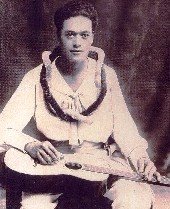
Sam Ku was born in Honolulu, Hawaii in 1907, becoming a professional musician when he joined Irene West's troupe of touring musicians and dancers in 1926. Initially he was known as Sam Ku, Jr. but soon adopted the professional name of Sam Ku West. Often he would be billed as the "Kreisler of the steel guitar" (referring to the famous violinist). This title was given to him by Prince George of England who saw him play in Singapore in 1926.
His recorded legacy was 27 sides - mainly instrumental pieces - recorded for Banner, Gennett, Vocalion and Victor in a 15 month period starting in June of 1927. There were plans for him to record for Odeon in Germany, but illness prevented that .
He was encouraged by his manager to learn to play the concert harp and quickly added solos on this instrument to his live act, though he never recorded with it.
In his short career he toured extensively, making two visits to the Far East. He spent six months on the vaudeville circuits of New York, Boston and Chicago. The final year of his life were spent in Europe. He died in Paris in 1930.
Sam was remembered by Tau Moe, who for a short time was one of his backing band, as one of the two best steel players at the time ...the other being Sol Hoopii.

All but one of Sam Ku's original recordings are available on a CD released on the Grass Skirt label, for details click here

Soundclips available from the shown cd, click here

Above info supplied from Brad's Page of Steel

Jo

Tuesday, October 17, 2006

It's The Girls!


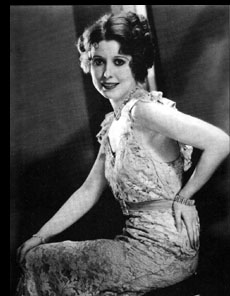
Annette Hanshaw (1901 - 1985) was one of the first great female jazz singers. In the late 1920s she ranked alongside Ethel Waters, Bessie Smith and the Boswell Sisters. Her singing style was relaxed and suited the new jazz-influenced pop music of the late 1920s. Many of her early records feature several of the hot White players of the day like Red Nichols, Miff Mole, Phil Napoleon, Joe Venuti, Eddie Lang, Adrian Rollini, Vic Berton, Benny Goodman, Jimmy Dorsey, Tommy Dorsey and Jack Teagarden. Hanshaw was billed as "The Personality Girl," and her trademark was girlishly saying "That's all" at the end of a lot of her records. Annette never thought much of her abilities as a singer and retired from showbiz in 1935.
You may listen to recordings by Anette Hanshaw clicking here
Hanshaw made her one and only appearance on film in the 1933 Paramount short 'Captain Henry's Radio Show'; "a picturization" of a popular radio program in which she starred from 1932 to 1934.
Enjoy Anette Hanshaw in a performance scene from the mentioned film, click here

The above mentioned Boswell Sisters were a singing group that attained national prominence in the USA in the 1930s. Sisters Martha Boswell (1905-1958), Connee Boswell (1907-1976), and Helvetia "Vet" Boswell (1911 - 1988) were born in a middle-class family in New Orleans. They came to be well known locally while still in their early teens, making appearances in New Orleans theaters and radio. They made their first recordings for Victor Records in 1925. They did not attain national attention, however, until they moved to New York City in 1930 and started making national radio broadcasts. After a few recordings with Okeh Records, they made numerous recordings for Brunswick Records throughout the 1930s.

Connee Boswell continued to have a solo career as a singer after the sister act broke up.

Learn more about the career and discography of the Boswell Sisters by clicking here

I found a couple of video clips featuring the Boswell Sisters performing together.

Enjoy a performance of "Heebie Jeebies" from the 1932 film 'The Big Broadcast', click here

Enjoy also the sisters in a version of "Crazy People", click here

Jo

Monday, October 16, 2006

Fingerstyle Jazz Guitar


"Fingerpicking, or playing fingerstyle, is a technique for playing the guitar, or some other stringed instrument using the fingertips and/or fingernails, rather than with a plectrum (or "pick"). It is used for classical guitar, and some other acoustic styles, but it has found its way into other genres as well". (Wikipedia)
The greatest potential of the guitar is realized when played using fingerstyle technique. Melody, independently moving bass lines and inner voices combine to create a complete, almost "orchestral" sound. In the disciplined hands of the fingerstylist, the guitar takes on many attributes of the piano - the style thus is often described as 'lap-piano'. Fingerstyle guitarists are unique among musicians in their ability to simultaneously and independently express every musical thought with all the dynamics of a symphony, it has been said by John Schroeter.
In terms of jazz there have been more guitarists using fingerstyle technique to great advantage in developing a personal and distinct approach to the instrument, among the pioneers beeing Lonnie Johnson, Teddy Bunn and Oscar Alemán, later followed by names like Wes Montgomery, George Van Eps and Joe Pass - all accomplished musicians and masters of the solo guitar playing.
Here I'll take focus on two very different fingerstyle jazzguitarist, both among my favourites. The first is Guy Van Duser, one of very few guitarists who has managed to transcribe classic stride-piano pieces for solo guitar and actually can play the arrangements in a convincing and enjoyable way. One of his records is simply named 'Stride Guitar' and has compositions by James P. Johnson and Fats Waller as well as by other renowned composers from the great American tradition of classic jazz and swing. To let you have a concept of Van Duser's skills as a fingerstyle guitarplayer I have found a video clip of a live-performance, that shows off his style convincingly.
Enjoy Guy Van Duser performing Jelly Roll Morton's "Wolverine Blues" by clicking here

The other fingerstyle jazz guitarplayer I'll mention here is Ted Greene, who may be considered a follower of the George Van Eps approach to the guitar. Ted Greene developed a fingerstyle tecnique for the electric guitar combining the harmonic theory by Van Eps with a way of playing that incorporates the right hand finesse of a Lenny Breau, another accomplished fingerstyle jazzguitarist. Unfortunately, Ted Greene only left one single recording, 'Solo Guitar' (PMP rec., 1977), before his untimely death last year. However, he spent a lot of his time writing books on and teaching his concept of guitarplaying, luckily we can have a view of one of his teaching lessons from a video clip, where he demonstrates his skills.

Enjoy Ted Greene in a performance of "Autumn Leaves" by clicking here

Jo

Sunday, October 15, 2006

A Nostalgic Trip


Some time ago Hans had an entry at this blog regarding The Original Prague Syncopated Orchestra, headlining a recorded concert by this great retro-band in Breda 1978.

As a small follow-up to Hans' feature on the 1978 performance I was delighted to listen to the recording of the concert (- thanks a lot for the copy, Hans) and was moreover happy to discover a couple of video clips from a TV performance by the OPSO on YouTube.

You are invited to take a nostalgic trip down memory lane with the OPSO and toastmaster/singer Ondrej Havelka (see picture) following the links below.

Enjoy The Original Prague Syncopated Orchestra 1993 performing "Squeeze Me", click here

Enjoy also a version of "Freshmen's Hop", click here

If you felt like dancing watching these two clips, why don't you get up and get started?

A perfect way to start your exercise is doing "The Soft Shoue Shuffle", instruction to be
found
here

Jo


Saturday, October 14, 2006

Oscar Alemán (1909-1980)

Today, October the 14th, it has been 26 years since the great Argentine musician, showman and fabulous guitarist Oscar Alemán passed away.
To remember Oscar Alemán's heritage an entry on some of his Brasilian recordings has been posted at the Oscar Alemán blogspot
Visitors interested in Alemán's legacy may find more info at the El Redescubrimiento de Oscar Alemán pages
A new Argentine website devoted to Oscar Alemán (in Spanish only) has just been launched and may be reached by clicking here
Jo

Friday, October 13, 2006

Douwe Eisenga

( Naar de Nederlandse vertaling.)


The CD production Rose Road - City Lines was produced and released by composer Douwe Eisenga. Douwe Eisenga lives in Middelburg ( southwest part of the Netherlands) and studied at the Groningen conservatory. He made composition for the well known Xenakis Ensemble. He attracted attention with his piece for choir and orchestra, Requiem 1953, composed in commemoration for the great 1953 flood, wich inundated large parts of Zeeland, the region in the south west of the Netherlands.

His recent production Rose Road - City Lines wasn't unnoticed by the national and local music critics. The Stentor, a news paper that is released in the center of the Netherlands, describes Douwe as a typically cross-over figure, pop and jazz are elements to be find in his style of music. It is difficult to label Douwes compositions in a certain style. All kinds of elements used in other music styles are to be found on this CD. The best way to get acquainted with his music is to visit his web site ( you find it by clicking on the title bar) and find the sound files at the Listen link in the start page.


His compositions have been executed at concerts of the Stichting Nieuwe Muziek Zeeland, a foundation that wants to spread the new contemporary music styles to the public. The concerts, in the early days in the Schouwburg of Middelburg and later the Nieuwe Doelen, are now scedulded in the Grote Kerk of Veere, a beautiful venue for this kind of contemporary music.

My first experiences with the Nieuwe Muziek concerts dates from the 1960s when my brother and I drove by Puch moped from ouir home town Hoedekenskerke to the Schouwburg in Middelburg to enjoy concerts of Willem Breuker, Hans Dulfer, Willem van Manen, Theo Loevendie Consort, Misha Mengelberg, Han Bennink and the Instant Composers Pool.

Great moments !

The CD Rose Road - City Lines is to obtain at the Drukkerij Bookshop in Middelburg and different webshops. Addresses are to found on Douwes website.

Enjoy a little fragment of a rehearsal with the Xenakis ensemble in the Kenminn concerthall in Yokohama ( Japan )

fragment


Nederlands ( To the English translation )
( Naar de Nederlandse vertaling.)

De Cd productie Rose Road - City Lines is geproduceerd en uitgebracht door Douwe Eisenga. Douwe Eisenga woont in Middelburg (zuidwest Nederland) en studeerde aan het conservatorium van Groningen. Hij maakte composities o.a. voor het bekende Xenakis Ensemble. Hij trok de aandacht met een grote composite voor koor en orkest, getiteld Requiem 1953, gemaakt ter gelegenheid van de herdenking van de Februari ramp in 1953, waarbij grote delen van Zeeland overstroomden.


Zijn laatste productie Rose Road - City Lines bleef ook niet onopgemerkt in de landelijke- en regionale pers. In de Stentor, een regionaal dagblad dat in het midden van Nederland verschijnt, wordt Douwe een typische cross-over figuur genoemd, iemand die pop en jazz elementen gebruikt in zijn composities. Het is moeilijk om zijn muziek in een stijl te vangen. allerlei elementen, gehaald uit allerlei muziekstijlen, zijn terug te vinden op deze CD. De beste manier om dit zelf te beoordelen is op zoek te gaan naar fragmenten van zijn stukken op zijn website, die je vindt door op de titelkop te klikken.Op de startpagina vind je onder Listen fragmenten van zijn nieuwe CD.

Zijn composities zijn uitgevoerd op concerten georganiseerd door de Stichting Nieuwe Muziek Zeeland, een stichting, die de nieuwe hedendaagse muziek onder de aandacht van de mensen wil brengen. De concerten, vroeger in de Schouwburg van Middelburg, later in de Nieuwe Doelen, worden tegenwoordig uitgevoerd in de Nieuwe Kerk in Veere, een schitterend podium voor deze hedendaagse klanken.

Mijn eerste ervaringen met de Nieuwe Muziek concerten dateren uit de jaren zestig van de vorige eeuw, toen ik met mijn broer op de Puch brommer vanuit Hoedekenskerke naar de Schouwburg in Middelburg reed om de concerten van Willem Breuker, Hans Dulfer, Willem van Manen, Theo Loevendie Consort, Misha Mengelberg, Han Bennink en de Instant Composers Pool te gaan beluisteren.

Mooie tijden !

De CD Rose Road - City Lights is te verkrijgen bij De Drukkerij in Middelburg of op het internet. Adressen zijn te vinden op Douwe's website.

Geniet van een kort stukje film opgenomen tijdens een repetitie van het Xenakis Ensemble in de Kenminn Concertzaal in Yokohama ( Japan )

fragment


Thursday, October 12, 2006

Take Five

( Naar de Nederlandse vertaling.)

Take Five is one of those all-times classics related to Dave Brubeck. His recording of Take Five in 1959 for Columbia on the Time Out album became a million seller. It inspired numerous other musicians to play this strange piece of music in 5/4 measure.

You can find the original version as played in the Jazz Casual series under the title bar.

I found eight versions of Take Five for you, from piano, guitar, accordeon up to choirs and hip-hop on MyTube to illustrate what has happened with Brubeck's tune. The one-and-only Take Five is under the title bar of course.

Enjoy it. I hope Brubeck does too

Take one

Take two

Take three

Take four

Take six

Take seven

Take eight

Take nine

Nederlands ( To the English translation )


Take Five is één van die klassieke nummers, die in verband gebracht worden met Dave Brubeck. Hij nam Take Five op in 1959 voor het Columbia album Time Out en het werd een topper.

Het nummer inspireerde duizenden anderen om dit vreemde nummer in 5/4 maat op te nemen. De originele versie vinden jullie onder de titel, zoals Brubeck het in de jaren zestig voor Jazz Casual opnam.

Ik vond acht verschillende versies van Take Five voor jullie op MyTube, het veelgenoemde programma, om te laten zien wat er zoal van te recht gekomen is op piano, gitaar, accordeon, als koor of hiphop. De enige echte Take Five is uiteraard die van Brubeck zelf.

Geniet ervan; ik hoop dat Brubeck dit ook doet.

Take one

Take two

Take three

Take four

Take six

Take seven

Take eight

Take nine

Wednesday, October 11, 2006

Paquito d'Rivera

( Naar de Nederlandse vertaling.)


The Paquito d' Rivera CD Tico Tico was one of my first aquaintances with his music and to be honest .. .. I liked it.
Born in 1948 in Havana (Cuba) he played as a child with the Havana Municipal Band. He met Chucho Valdes while in conservatory and became one of the founders of the group Irakere. He left Cuba and now lives in New York. He played with Dizzy Gillespie, McCoy Tyner and, according to the liner notes of the CD, he loves to play with Claudio Roditi.

Both Chucho Valdes as Claudio Roditi played at the Porgy en Bess Jazz club (Terneuzen - The Netherlands) - Chucho was part of Roy's Crisol band and Roditi was here with his trio.

The liner notes of the album are very interesting as Paquito tells about the fact, that a lot of western people don't know how rich the Latin American music culture is. They have heard of Carmen Miranda or La Bamba, or la Cucaracha. They don't think South American music is very serious. For most jazz men, Latin American music is samba, but there is so much more. You've got to go back to the roots and listen to the music. Study it. Like a cook. You must know about all the ingredients individally to mix them well, to put them together in the right combination and get the best from all. You can't take music superficially. So this album is a way for me to demonstrate that there is a litle more Latin music than people dancing around with bananas and pineapples on their heads. Paquito d'Rivera mixes Brazilian Chorinho, cuban Danza's, Argentinean Tango and Milonga and Venezuzuelanc waltzes.
There are some great tunes in this album. Tico Tico with d'Rivera on clarinet (this one is not in your extensive 58-tunes compilation, Joergen !!), but also two Venezuelan waltzes with Tiberto Nascimiento on guitar. The album ends with Claudio Roditi's Recife's Blue. A great album

Nederlands ( To the English translation )


De CD Tico Tico was één van mijn eerste kennismakingen met Paquito d' Rivera's muziek en ik vond het geweldig.


Hij werd geboren in 1948 in Havana (Cuba), speelde al als kind in de Havana Municipal Band, ontmoette Chucho Valdes op het conservatorium en richtte met hem de groep Irakere op. Hij verliet Cuba en ging in New York wonen.
Hij speelde met Dizzy Gillespie en McCoy Tyner en, volgens het verhaal op de CD, hij houdt er van om met Claudio Roditi te spelen. Zowel Roditi als Chucho Valdes speelden ooit in Porgy en Bess Jazz Club in Terneuzen (Nederland); Cucho in de Crisol band van Roy Hargrove en Roditi in oktober 2004 met zijn trio.


Paquito vertelt dat de mensen in het westen niet weten hoe rijk de Zuid Amerikaanse muziek traditie is. Ze denken alleen aan Carmen Miranda, of La Bamba of aan La Cucaracha. Ze nemen de muziek niet erg serieus; voor de meeste jazz musici is Latijns Amerikaanse muziek samba spelen. je moet meer weten over de worels van de muziek. Bestudeer ze. Wees een kok, die alles weet over de ingrediënten, ze bij elkaar voegt tot de juiste combinatie. Deze muziek is niet oppervlakkig en met dit album hoop ik te demonstreren dat er meer is dan mensen met bananen en ananassen op hun hoofd die op Latijns Amerikaanse muziek dansen.

Paquito d'Rivera mixt in dit album Braziliaanse Chorinho, de Cubaanse Danza's, de Argentijnse Tango en Milonga en de Venezulaanse wals tot een smakelijk geheel.

Er zijn een paar hoogtepunten op dit album, zoals Tico Tico met de meester op clarinet ( Paquito staat niet tussen de 58 versies op je verzamel CD, Jorgen !), maar ook twee Venezolaanse walsjes met Tiberto Nascimiento op gitaar.

De CD eindigt met Claudio Roditi's Recife's Blue. Een prima CD.

Tuesday, October 10, 2006

Durium Products (GB)

( Naar de Nederlandse vertaling.)


The online Durium (GB) Disco project is part of a large project to share the complete Hit of the week - Durium Discographies with all cardboard Durium record collectors. Up to now the Hit of the weeks (1000-series), the Durium Advertisement and Custom Records ( 5000-series) released in the US and the commercial English Durium records (E-1000 up to E-1131), made in Slough ( near London) are now to be found at http://durium.opweb.nl, the sites to search for information.

A
new page.is now available.

It lists the durium matrices E-1115 up to E-1131. These were the last commercial made recordings for the Durium Products (GB) Ltd. before it broke, due to failing sales figures. The firm activities were limited to advertisement and custom records and renamed Sound Distributors. It seems that a kind of temporary firm took over Duriums contracts still in force under the name of Dubrico Limited.

Matrices E-1124 up to E-1131 are recordings made for the Scandinavian market and labeled as SUPER durium and released in Veckans SKIVA jackets. An English band, Sydney Kytes Piccadilly Hotel Band accompanies two Scandinavian singers, Toivo Ek and Herbert Landgren. It was cheaper to bring those two singers to London, then recording the tunes in Stockholm or Copenhagen, I guess. A year later the Scandinavian records were made in Copenhagen by Nordisk.


If you have images of labels or singers that should be on this page to illustrate, please let me know.


Nederlands ( To the English translation )


Het Durium (GB) Disco project is deel van een veel groter project dat tot doel heeft de informatie van het kartonnen Durium label (1930 - 1939 ) te delen met andere Hit of the week - Durium platenverzamelaars.

Tot nu toe zijn de Hit of the week series ( matrixnummers in de 1000-serie), de Durium advertisement and Custom records zoals uitgebracht in Amerika ( 5000-serie) en de Europese Durium platen, uitgebracht als Durium in Engeland ( E-1000 tot E-1131), online beschikbaar op http://durium.opweb.nl.

De
nieuwste pagina met de laatste commercieel uitgebrachte platen uit Slough ( bij London) is nu online beschikbaar.


Je vindt er de matrixnummers E-1115 tot en met E-1131. Ze zijn de laatste commerciele platen die gemaakt werden voor de Durium Products (GB) Ltd. firma voordat het failliet ging. De firma beperkte zijn werkzaamheden vanaf dat moment tot advertenties, cursussen en gelegenheidsuitgaven en kreeg de naam Sound Distributors. Het lijkt erop dat er voorjaar 1934 een interim bedrijf werd gesticht, Dubrico, dat de lopende zaken van Durium overnam.


De platen met matrix nummers E-1124 tot E-1131 zijn opnamen gemaakt voor de Noordeuropese markt en kregen het SUPER durium label. Een Engels orkest, dat van Sydney Kyte begeleidde twee zangers, Toivo Ek en Herbert Landgren. Het was blijkbaar goedkoper om twee zangers naar Engeland te halen dan het in Denemarken op te laten nemen. Een jaar later werden de SUPER durium platen wel opgenomen in Denemarken door de firma Nordisk.

Als iemand afbeeldsing heeft, die op deze pagina's thuis horen, dan hou ik me aanbevolen.

Durium


Monday, October 09, 2006

Dutch Swing College

( Naar de Nederlandse vertaling.)


The Dutch Swing College Band must have been one of my first experiences in jazz. They were one of Hollands most popular dixieland band during the 1950s and 1960s, so their music must have been on the radio now and then, I guess.

They visited Goes, a small town in the southwest part of the Netherlands, due to the so-called schoolconcerts during the 1960s. Goes was the city of my secondaire school was, the Goese Lyceum. Now and then we had to visit concerts to get our cultural level updated. I still remember these concerts as thrilling experiences. I remember the Dutch Swing College Band and the Trio Pim Jacobs, another popular jazz group. The numerous guitar duos and classical string quartets didn't left any memory damages after all those years. And of course Thom Kelling, the Latin American styled troubadour, who was the first "name"artist I saw live performing.


Last year I was at the Doctor Jazz Reunion in Wageningen searching in boxes filled with old LPs to forgotten treasures. An man sold records from the Dutch Swing College Band priced 1 euro each, a bargain. Although the Dutch Swing College isn't a spearhead in my collection I realised that I had to safe these items of my youth before they would be dumped on some flea market. The owner of the box wanted to get rid of it too and offered me an extra bargain if I bought another one. So two Dutch Swing College LPs, one from the 1960s and a twofer with a 1980 jubilee concert changed owners. I showed my treasures proudly to a man near to me. He had a familiar face, but I didn't recognize him at once. That's a good one, he pointed to the Jubilee twofer, specially the drummer man. And he grinned.


When I walked back to my place I had had a nice talk and an autograph of Martin Beenen, drummer of the Dutch Swing College Band ( 1956 - 1961)


Nederlands ( To the English translation )
De Dutch Swing College Band moet één van mijn eerste jazz ervaringen geweest zijn. Ze waren ons meest populaire dxielandorkest gedurende de vijftiger- en zestiger jaren van de vorige eeuw. Hun muziek werd dan ook regelmatig gehoord op de radio in mijn jeugd.


Ze bezochten 55 jaar geleden Goes, een stadje in het zuidwesten van Nederland, in verband met de zo genaamde schoolconcerten. In Goes zat ik op de middelbare school, het Goese Lyceum. Af en toe moesten we naar zo'n schoolconcert, met als doel ons cultureel niveau op te krikken.Ik herinner me de Dutch Swing College Band en het Trio Pim Jacobs, een andere populaire jazz groep. De talloze klassieke gitaar duo's en strijkkwartetten hebben geen blijvende schade in mijn herinnering opgeleverd.


En natuurlijk, niet te vergeten, Thom Kelling, de troubadour, die in latijns-amerikaanse stijl spelend, de eerste echte artiest was, die ik in levende lijve aanschouwen mocht.

Afgelopen jaar stond ik op de Doctor Jazz Reunie in Wageningen te graaien in een doos met LPs naar verborgen schatten, toen ik een LP van de Dutch Swing College vond. Een man op leeftijd verkocht ze voor de prijs van 1 euro, een koopje. Hoewel de Dutch Swing College Band geen speerpunt in mijn collectie is, voelde ik de noodzaak de muziek uit mijn jeugd veilig te stellen, voordat hij een einde zou vinden op de één of andere rommelmarkt. De eigenaar van de doos wilde er van af en bood zelfs nog meer korting als ik er twee mee zou nemen. Ik kocht twee LP's, één uit de jaren zestig en één dubbel LP met een jubileumconcert uit 1980. Ik liet mijn juist verworven schatten zien aan de man die naast me stond en ik keek in een mij tamelijk bekend voorkomend gezicht. Dat is een hele goede, grijnsde hij en wees hij op de dubbel LP, vooral de drummer.

Toen ik terug zat bij mijn tafel had ik handtekening en een gezellig gesprek gehad met Martin Beenen, voormalig drummer van de Dutch Swing College Band (1956 - 1961)

Sunday, October 08, 2006

Romeu Silva

( Naar de Nederlandse vertaling.)


Daniella Thompson wrote an excellent article about the Brazilian bandleader and sax player Romeu Silva. I love to introduce you to that article. Daniella Thompson is the editor of the online Magazine of Brazilian Music & Culture ( click on the title bar). She also has an informative site about Brazilian music: Musica Brasiliensis


Romeu Silva travelled to Europe around 1926 and became the director of the 16 Baker Boys, the band of Josephine Baker in Paris. Ean Wood writes about that in his biography The Josephine Baker Story: In the autumn of 1931, Paris Qui Remue closed. As Mistinguett was to be the star of the Casino's next revue, Josephine employed herself by setting off on tour with a band of jazz musicians. She named them The 16 Baker Boys.


Their leader was tenor saxophonist Romeo (sic) Silva, and among them were trumpeter Léon Jacobs, who has been her bandleader at Chez Josephine, alto saxophonist Joe Hayman, who had come with her to Paris as part of the Claude Hopkins band for La Revue Negre, and the Argentinian guitarist and composer Oscar Aleman.

About Oscar Aleman Ean Wood says: Aleman was one of the most talented musicians with whom ahe would ever work. He had only arrived in Paris in that year ( 1931) and would stay until the advent of war in 1939, becoming as highly regarded in the French world of le Jazz Hot, as the Belgian gypsy Django Reinhardt. Indeed, the two became good friends. (Source: The Josephine Baker Story - Ean Wood ( 2000) p. 175)

I found an image of Oscar Aleman with some of his musicians, and it might be possible that one of the man in this group might be Romeu Silva or one of the members of his band.

I hope Daniella can confirm that to me !!

You can find the article at this site .

When you click on the title bar you can visit Daniella's excellent web blog about Brazilian culture.

I posted this message yesterday in my Oscar Aleman blog with another picture featuring Josephine Baker with the cast of one of their show. I hoped Remeu Silva was on that picture. Daniella confirmed that Silva is not on the picture. So I took another image of the Baker Boys. Maybe he's on that, Daniella ?!

Nederlands ( To the English translation )

Daniella Thompson schreef een uitstekend artikel over de Braziliaanse bandleider en saxofonist Romeu Silva. Ik vind het fijn dit artikel hier te introduceren. Daniella Thompson woont in de VS (Californie) en is de hoofdredacteur van het internet Magazine of Brazilian Music & Culture (click on the title bar). Ze heeft ook een informatieve pagina over Braziliaanse muziek: Musica Brasiliensis

Romeu Silva reisde rond 1926 naar Europa en werd directeur van de 16 Baker Boys, de band van Josephine Baker in Parijs.

Ean Wood schrijft hierover in zijn biografie The Josephine Baker Story: In de herfst van 1931 werd Qui Remue in Parijs gesloten. Mistinguett werd de ster in de volgende revue in het Casino. Josephine ging met haar groep op tournee en vormde een band met jazzmusici. Ze noemde ze de The 16 Baker Boys.


Hun leider werd tenor saxofonist
Romeo (sic) Silva, en verder trompetist Léon Jacobs, die bandleider bij Josephine geweest was, altsaxofonist Joe Hayman, die met haar naar Parijs gekomen was met de Claude Hopkins band voor de La Revue Negre, en de Argentijnse gitarist en componist Oscar Aleman.


Deze foto laat zien Oscar Aleman tussen de 15 Baker Boys. Misschien is het mogelijk om de andere musici te identificeren.

Over Oscar Aleman zegt Ean Wood: Oscar Aleman was één van de meest talentvolle muzikanten, die ooit voor haar gewerkt hebben. Hij was nog maar net gearriveerd in Parijs (1931) en zou blijven tot aan de vooravond van de Tweede Wereldoorlog ( 1939). Hij werd een hooggewaardeerde muzikant in Le Jazz Hot, net als de Belgische zigeuner gitarist Django Reinhardt. Die twee, hoewel concurenten, werden vrienden. (Bron: The Josephine Baker Story - Ean Wood ( 2000) p. 175)

Ik vond een foto van Oscar Aleman met enkele van zijn muzikanten en het is mogelijk dat één van hen Romeu Silva is.

Ik hoop dat Daniella dit kan bevestigen. Gisteren heb ik deze bijdrage, in iets gewijzigde vorm, ook al gepost op mijn Oscar Aleman blog.

Haar artikel The Globetrotting Romeu Silva vind je op deze pagina .

Als je op de titel klikt kun je Daniella's sites over Braziliaanse muziek bezoeken.


Saturday, October 07, 2006

Moro No Brasil

( Naar de Nederlandse vertaling.)


The Moro No Brasil documentary made by the Finnish filmer Mika Kaurismäki was released in 2002. After I saw his last document, Brasileirinho, about choro music in Brazil, I wanted to see this one too.

In the film Moro No Brasil ( which means I Live In Brasil ) Mika tells how he got into touch with the music of this South American country. He refers to the fact that Brazil is a very large country and that making one film about the musical traditions of Brazil is an impracticable task. He has to make choices.


The film wants to show the origin of the roots of Brazil music, so it starts with shots from native indian people who demonstrate their rhythms. Mika tells that he had to make difficult choices, as there are so many musical traditions and styles in Brazil. He concentrated his field of activity to the Northeast regions of the country, Pernambuco and Bahia, and the city of Rio the Janeiro, where all musical traditions come together. He suggests that these part of the country are melting-pots of traditions and cultures.


Another choice he made is that he filmed the music of the street, not the great musical stars, but the common people making music. I think the shots he made in the favela's of Rio are a good example how the music lives.

The film is set up around different music styles; most unknown rhythms for our western ears, but all part of the roots of Brazilian music, like the samba. You can hear maracatu, frevo, coco, forro, embolada and it ends with the samba. Of course I had hoped that choro was part of the documentary, but that music style is not part of it. He explains that he encountered many beautiful things which have to be documented later, and as I started this blog he made a beautiful documentation about choro music with Brasileirinho in 2005.

There are some minor points of critic I have. The shots he made about the different music styles, as mentioned before, give me the feeling being a traveller witnessed of an organised culturale meeting for tourists. It seems as if it is all directed, not very spontaneous. Maybe this feeling is originated by the fact that Mika walks around with a small camera and a great part of the film is filed with a continuous stream of groups of colourful people demonstrating their local traditions on the local plaza. I didn't had that feeling seeing his documentary Brasileirinho.

The copy of the film I had released by Filmfreak Distribution suggests that the film is spoken in English and Portuguese with French and Dutch subtitles. That's not a fact for that release. The film is spoken in German and the subtitles in Dutch (I haven't examined the French ones) are only used when Portuguese is spoken. I guess some expert forgot that German and Dutch are two complete different languages. A shame !!

The DVD gives but few information about the film. If you want some more background information you need the CD released in 2003 which contains fragments of the music used in the film. Some parts, filled with fragments of rhythms of that CD might be interesting for etnic musicologists; for me only some tracks recorded in Mika's Bar are nice to play (without the moving images on your screen).

If you have to spend a limited amount of money and you love to get known to (part of) Brazilian music I'd suggest to obtain the Brasileirinho DVD and leave the Moro No Brasil DVD in the shop. Get yourself a copy of it in the library !

If you love to see some shots from the documentary click on the title bar.


A part of the film as made in Bahia is to be found here

A contribution about the Brasileirinho documentary is to be found here

This blog will be posted later this week in the Choro blog

Nederlands ( To the English translation )


De Moro No Brasil documentaire, gemaakt door de Finse filmer Mika Kaurismäki is uitgebracht in 2002. Toen ik zijn laatste film, Brasileirinho zag, over de choro muziek tradities in Brazilië, wilde ik deze documentaire ook zien.

In de film Moro No Brasil ( betekent Ik Woon In Brazilië ) vertelt Mika hoe hij in aanraking kwam met de muziek van dit Zuid-Amerikaanse land. Hij stelt dat Brazilie een erg groot land is en dat het maken van een film over de muzikale tradities eigenlijk onbegonnen werk is. Hij moest dan ook keuzes maken.

In de film wil hij vooral de wortels van de Braziliaanse muziekcultuur opsporen, dus begint zijn film met beelden van de originele bewoners, de indianen, die hun ritmes en zang demonstreren.
Het maken van keuzes was niet gemakkelijk, omdat Brazilie zoveel muzikale tradities telt. Hij concentreerde zich dan ook op het noordoostelijk deel van het land, de regionen Pernambuco en Bahia en Rio de Janeiro, de plaats waar alles te vinden is. De gebieden die hij bezocht zijn volgens Mika de smeltkroezen van de Braziliaanse muziek en tradities.


Ook koos hij voor het filmen van de muziek gespeeld door de gewone man op de straat, dus niet voor grote namen. De opnamen in de krottenwijken van Rio, the favela's, zijn daar een goed voorbeeld van.

De film laat verschillende muziektradities zien, de meeste voor ons onbekend, maar alle deel van de uitgebreide Brazilaanse cultuur, zoals de samba. Je kunt kennismaken met maracatu, frevo, coco, forro, embolada en het eindigt met de samba. Natuurlijk had ik gehoopt dat er ook aandacht aan de choro muziek zou worden gegeven, maar dat is niet gebeurd. Hij legt uit dat hij zoveel mooie dingen tegengekomen is, die wachten om vastgelegd te worden. In 2005 hield Mika zich aan zijn woord en kwam met de documentaire Brasileirinho over choro.

Toch heb ik een paar kritische noten: De filmfragmenten van musicerende mensen doen me denken aan bijeenkomsten, opgezet om een groep georganiseerde toeristen te vermaken. Misschien komt dit omdat Mika zelf met een kleine handcamera rond loopt. De optredens lijken erg geregiseerd. Dit gevoel vindt wellicht zijn oorsprong in het feit, dat er heel veel muziek op de film staat - het ene kleurrijke straatfeest op het centrale marktplein, volgt het volgende op. Dit gevoel had ik bij de Brasileirinho film veel minder.

Het exemplaar van de film, uitgebracht door Filmfreak Distribution meldt dat de film gesproken wordt in het Engels en Portugees met Franse en Nederlandse ondertitels. De film echter wordt gesproken in het Duits en de Nederlandse ondertitels ( Ik heb de Franse niet gecontroleerd) verschijnen alleen als er Portugees gesproken wordt en niet bij het Duits. Ik denk dat één of andere slimmerik van mening was dat Duits en Dutch dezelfde taal waren. Wat slordig !!!

Als je achtergrond informatie wilt vind je daar weinig van terug op de DVD hoes.Je zult dan de CD met de soundtrack moeten kopen. Deze CD is wellicht interessant voor in etnische muziek gespecialiseerde musicologen, want de ritme-fragmenten gaan snel vervelen. Alleen de nummers, die gebundeld zijn in Mika's Bar zijn goed te beluisteren ( zonder beelden).

Als je een beperkt budget hebt en je wilt een documentaire kopen over Braziliaanse muziek, kies dan Mika's film Brasileirinho en laat de Moro No Brasil liggen. Je kunt die altijd nog lenen in de videotheek.


Als je een fragment van de film wilt zien klik dan hier


Een trailer van de film zit verstopt onder de kop.

Een blog over de Brasileirinho documentaire is te vinden onder deze link

Deze blog zal later deze week ook te vinden zijn in de Choro blog


Friday, October 06, 2006

Sonny Rollins

( Naar de Nederlandse vertaling.)

The Sonny Rollins Lp The Bridge has been marked as an important album in Rollins carreer. It was released in 1962 after a period of years Sonny didn't play in public, due to kick his habit of drugs.

When the record was published the expectations were high; the media had hoped that Rollins comeback LP would have been totally different from the music he played before. The Bridge sounded like Rollins played before his retirement

The recording has six tracks and I liked God Bless The Child the best.

His Quartet contains Jim Hall, the skilled guitar player, who performed with Jimmy Giuffry and toured with Ella Fitzgerald before he became part of Sonny Rollins' dynamic quartet. I think his guitar playing is great in thie LP. Others were Bob Cranshaw on bass and Ben Riley and Harry Saunders alternate on the drums.
This record is labeled as one of Rollins' bests, but to be honest, the first time I played it I wasn't convinced about that. I remember the primitive stereo sound ( how did they label that, Jerry in the documentary you'd send me? ) and the excellent guitar playing. I guess I'll have to renew the acquaintance this weekend.


In the 1970s Fred Cigar Canté, I guess it was him, started an appeal for a return of Rollins to the stages with a sticker action: Rollins Come Back. I remember I had one too at my school agenda, while my fellow students adored the Stones or the Beatles. Who'd you say?


Can someone show me a picture of this sticker?

I found a performance for TV, produced by Ralph Gleason in the series Jazz Casuals of Sonny Rollins and his quartet playing God Bless The Child. Click on the title bar to enjoy it.


Nederlands ( To the English translation )


De Sonny Rollins LP The Bridge is altijd gekenmerkt als één van de beste platen, die Rollins maakte. Het werd uitgebracht in 1962 na een periode waarin Rollins afkickte en niet in het openbaar optrad.


Toen de plaat uitkwam waren de verwachtingen hoog gespannen; Men hoopte dat zijn muziek anders zou klinken dan voor zijn terugtreden. Niets was minder waar.

De plaat bevat zes nummers en ik vind zelf God Bless The Child het beste.

Zijn kwartet bestaat uit Jim Hall, een ervaren gitarist, die daarvoor platen maakte met Jimmy Giuffre en optrad met Ella Fitzgerald voordat hij bij Rollins dynamische viertal kwam. Ik vind zijn gitaarspel subliem op dit album. De andere musici zijn Bob Cranshaw op bas en beurtelings Ben Riley en Harry Saunders op drum.

De plaat wordt als één van Rollins' beste gekenmerkt en om eerlijk te zijn, de eerste keer dat ik hem draaide viel hij me tegen. Het primitieve stereogeluid ( in de documentaire, die je me stuurde, Jerry, heeft die technicus daar een prachtige term voor) en het prima gitaarspel zijn me bijgebleven. Ik denk dat ik komend weekend de CD nog maar eens moet opzetten.

In de jaren zeventig van de vorige eeuw was er een stickeractie, ik denk opgezet door Fred Cigar Canté, waarin Rollins opgeroepen werd weer te gaan optreden. Ik had ook zo'n sticker op mijn agenda van de middelbare school. Mijn klasgenoten dweepten met de Stones en de Beatles. Wie zeg je?


Heeft iemand nog een afbeelding van die sticker?

Ik vond een optreden voor TV van het programma Jazz Casuals, geproduceerd en gepresenteerd door Ralph Gleason, waarin Rollins met dit kwartet het nummer God Bless The Child speelt. Je kunt het bekijken door op de titelbalk te klikken.

Thursday, October 05, 2006

Joao Pernambuco

( Naar de Nederlandse vertaling.)


Joao Texeira de Guimaräes, known as Joao Pernambuco is one of those unknown composers who are famous in Brazilian music.

He was born in 1883 an died 1947.

He was not only a great composer; he also played guitar in the choro style. He had a great guitar technique, which inspired a lot of other guitar players. He teached his style of playing to his students.

People who have seen him playing remember the way he used to play the instrument: He often played the guitar only with his left hand, which is to say, he made the sounds only on the neck of the guitar. He did this with the greatest naturalness.

He played whatever piece looking towards the sky, towards a wall, not paying attention to the neck of the guitar. He had a fingering and quality that untiul today I have not seen. ( source: Choro - Tamara Elena Livingston-Isenhour-Thomas George Caracas Garcia (2005))

Thanks to Jørgen I could listen to some great 80 years old recordings of Joao Pernambuco on guitar which fascinated me ( Mimoso - Lagrimas and Magoado.)

Thanks Jo.

Jørgen posted a blog about this great Brazilian composer. Find it by clicking on the title bar.

This blog is also posted at our Choro Music blog


Nederlands ( To the English translation )


Joao Texeira de Guimaräes, bekend als Joao Pernambuco is één van die voor ons onbekende grote Braziliaanse componisten.

Hij werd geboren in 1883 en overleed in 1947.

Hij was, behalve componist, ook een groot vertolker van choro muziek op de gitaar. Hij had een fabelachtige gitaartechniek, die vele gitaristen na hem inspireerden. Hij deelde zijn kennis met verschillende leerlingen.

Hij speelde zijn gitaar vaak met alleen zijn linkerhand. Mensen die dat gezien hebben herinneren zich dat: Hij speelde gitaar met alleen zijn linkerhand, ik bedoel, hij maakte de geluiden alleen op de nek van de gitaar. Hij deed dit met het grootste gemak, alsof het zo hoorde, en keek dan naar, doet'r niet toe wat, de muur of het plafond, en speelde zonder naar zijn vingers te kijken. Hij had een techniek en vingerzetting zoals ik nog nooit heb gezien ( uit Choro - Tamara Elena Livingston-Isenhour-Thomas George Caracas Garcia (2005))

Dankzij Jørgen kon ik luisteren naar drie 80 jaar oude opnamen van Pernambuco op de gitaar. Deze opnamen fascineerden me, zeker na het verhaal dat erbij hoorde. Bedankt Jo. ( Mimoso - Lagrimas and Magoado )

Jørgen maakte al eens een blog over deze componist / gitarist. Je vindt het door op de titelbalk te klikken.

Deze blog is ook gepost op onze
Choro Music blog

Wednesday, October 04, 2006

Chet Baker 2

( Naar de Nederlandse vertaling.)>
I promissed to give the track list and liner notes of the CD CHET BAKER Isn't It Romantic. Mind that some track are listed as 1963-1964 sessions, which seems to be wrong. I tried to find some alternatives.

The track list:

CHET BAKER QUARTET: Chet Baker tp, George Arvanitas p, Guy Pedersen b, Daniel Humair dm

Recorded Parijs, 9 June 1960

1 - Porgy And Bess

CHET BAKER QUINTET: Chet Baker tp vo, Jacques Pelzer as f, René Urtreger p, Luigi Trussardi b, Franco Manzecchi dm Recorded Bussels, ca. 1963

2 - Isn't It romantic

3 - Time After time - CB vo

CHET BAKER QUINTET: Chet Baker tp, Jean-Louis Chautemps ts, Francy Boland p,Eddie de Haas b, Charles Saudrais dm

Recorded Firenze, 24 Jan. 1956

4- You Don't Know What Love Is - CB vo

CHET BAKER - LEE KONITZ - KEITH JARRETT: Chet Baker tp, Lee Konitz as, Keith Jarrett p, Charlie Haden b, Beaver Harris dm


Recorded NYC, 14 Apr. 1974

5 - Donna Lee

6 - Lover Man

CHET BAKER SEXTET: Chet Baker tp vo, Jacques Pelzer f, Lucio Terzano p, Philare de Runde b, Giancarlo Pillot dm

Recorded Milan ca March 1977

7. Look For The Silver Lining - CB vo

CHET BAKER QUARTET

Chet Baker tp , Phil Markovitz p, Scott Lee b, J.F. Jenny Clark dm
Recorded 1963-1964 (as the liner notes say) or ca. Nov. 1978 with Jeff Brillinger dm ( instead of J.F. Jenny lark)

8 - There Will Never Be Another You

ROLF-HANS MÜLLER ORCHESTRA with CHET BAKER: Big Band, unknown personnel, Rolf-Hans Müller dir, Chet Baker tp

Recorded Baden-Baden,ca. summer 1960

9 - Autumn In New York

10 - Marilyn

Nederlands ( To the English translation )

I promissed to give the track list and liner notes of the CD CHET BAKER Isn't It Romantic. Mind that some tracksare listed as 1963-1964 sessions, which seems to be wrong. I tried to find some alternatives.

The track list:

CHET BAKER QUARTET: Chet Baker tp, George Arvanitas p, Guy Pedersen b, Daniel Humair dm

Recorded Parijs, 9 June 1960

1 - Porgy And Bess

CHET BAKER QUINTET: Chet Baker tp vo, Jacques Pelzer as f, René Urtreger p, Luigi Trussardi b, Franco Manzecchi dm Recorded Bussels, ca. 1963

2 - Isn't It romantic

3 - Time After time - CB vo

CHET BAKER QUINTET: Chet Baker tp, Jean-Louis Chautemps ts, Francy Boland p,Eddie de Haas b, Charles Saudrais dm

Recorded Firenze, 24 Jan. 1956

4- You Don't Know What Love Is - CB vo

CHET BAKER - LEE KONITZ - KEITH JARRETT: Chet Baker tp, Lee Konitz as, Keith Jarrett p, Charlie Haden b, Beaver Harris dm


Recorded NYC, 14 Apr. 1974

5 - Donna Lee

6 - Lover Man

CHET BAKER SEXTET: Chet Baker tp vo, Jacques Pelzer f, Lucio Terzano p, Philare de Runde b, Giancarlo Pillot dm

Recorded Milan ca March 1977

7. Look For The Silver Lining - CB vo

CHET BAKER QUARTET

Chet Baker tp , Phil Markovitz p, Scott Lee b, J.F. Jenny Clark dm
Recorded 1963-1964 (as the liner notes say) or ca. Nov. 1978 with Jeff Brillinger dm ( instead of J.F. Jenny lark)

8 - There Will Never Be Another You

ROLF-HANS MÜLLER ORCHESTRA with CHET BAKER: Big Band, unknown personnel, Rolf-Hans Müller dir, Chet Baker tp

Recorded Baden-Baden,ca. summer 1960

9 - Autumn In New York

10 - Marilyn


Tuesday, October 03, 2006

Chet Baker

( Naar de Nederlandse vertaling.)


My choice this time is a budget CD called CHET BAKER Isn't It Romantic? on Jazz Hour 73573

Chet Baker, born in 1929 in Yale, Oklahoma and passed away in Amsterdam on 1988 where he felt out of the window, started his carreer in the army band and when he left active service in 1951 he became a professional trumpet player. His cooperation with Gerry Mulligan's pianoless quartet was a great success. His soft, lyrical trumpet style made him a good ambassador of the so called cool- or westcoast style. After two years he left Mulligan and started his own groups, but drugs had got a place in his life. Although still a great artist, his drug addiction kept him busy and brought him in prison or in clinics to kick his habit. During this time singing becomes more important then trumpet playing.

The 1950s recordings with Mulligan and his own quartet are in every record collection. His My Funny Valentine belongs in the list of most admired tunes. The music of the CD above, although with a young Baker on the cover, dates from the period when Baker was already in great problems due to his habit.


The discographical information on the cover is scranty. Most of the recordings were made in Europe and some tunes are even titled wrong. The first tune on the disc is called Porgy And Bess (suite, but is in fact the tune In Porgy, a title which covers a loosely structured improvisation on the chords of It ain't Necessarily So. It was recorded at Comblain-la-Tour, june 1960. The second and third titles are from Brussels (Belgium). The compilation, a hodge podge of recording dates, ends with a recording together with Rolf-Hans Müller Orchestra in Baden-baden (Germany) summer 1960. The most interesting sides, according to the personel, are Lover Man and Donna Lee, which were recorded in New York City ( April 1974) with Lee Kontiz and Keith Jarrett with Charlie Haden on bass and Beaver Harris on drums; an all-star quintet

Although this compilation is a mishmash of recordings it gives a good example of Chet's musical production after his successes with Mulligan, while being a jazz musician in great demand. As this compilation might be in your collection I will post the complete discographical information in this blog tomorrow.

Nederlands ( To the English translation )


Chet Baker, geboren in 1929 in Yale (Oklahoma) en overleden na een val uit het raam van een hotel in Amsterdam ( 1988), begon zijn carriere in een leger band. Na zijn afscheid uit het leger begon hij als professional te werken met o.a. Gerry Mulligan. Het pianoloze kwartet van Mulligan bleek een groot succes. De zachte, lyrische toon van Baker maakt van hem tot een prima ambassadeur van de cool- of Westcoast jazz. Nadat hij in 1953 bij Mulligan vertrok begon hij met eigen groepen op te treden. Hij werd veel gevraagd, maar zijn drugsverslaving zorgde er voor dat hij regelmatig in de gevangenis of in klinieken belandde. Gedurende ceze tijd werd zingen belangrijker dan trompetspelen.

De opnamen uit de jaren vijftig van de vorige eeuw met Mulligan en die met zijn eigen groepen behoren in elke jazzverzameling thuis. Het nummer My Funny Valentine hoort bij de meest gedraaide titels. De keuze voor de muziek van deze CD, hoewel met een afbeelding op de voorkant van een jonge Chet, is uit het begin van de jaren zestig, toen zijn verslaving hem al in grote problemen bracht.

De discografische informatie op de hoes is schaars en soms zijn zelfs de titels niet goed benoemd. Het eerste nummer Porgy And Bess is in werkelijkheid het nummer In Porgy, een wat losjes gestructureerde improvisatie op de akkoorden van It Ain't Necessarily So. Het nummer werd opgenomen in Comblain-la-Tour, juni 1960. De tweede en derde titel komen uit Brussel, zomer 1960. De CD bevat een mix van allerlei opnamen en groepen, meest opgenomen in Europa; zo eindigt de verzameling met opnamen van het Rolf-Hans Müller orkest ( Baden-Baden - Germany 1960) De meest interessante opnamen qua bezetting zijn die uit 1974 met Lee Konitz, Keith Jarrett, Beaver Harris en Charlie Haden - een all-star bezetting. (Donna Lee en Lover Man)

Deze verzameling, hoewel een rommeltje, geeft een aardig idee van Chet's muzikale kwaliteiten na zijn triomfen met Mulligan. Omdat deze goedkope CD in veel verzamelingen aanwezig is zal ik morgen de discografische informatie uitwerken in deze blog.

Monday, October 02, 2006

Randal Corsen

( Naar de Nederlandse vertaling.)


Sometimes music surprises, like last weekend. In the jazz club Porgy en Bess in Terneuzen ( southwest part of the Netherlands) the Randal Corsen Group Muzik Antiyano surprised its audience with a mix of jazz, Tumba's and Danza's from Curacao and classical Antillean music.

At first sight you would believe that the group was sceduled in the wrong venue, but nothing is further from the truth. This group of skilled musicians, gathered around piano player and composer Randal Corsen plays its varied repertoire always with a jazzy touch. The variations in the program, the different musical styles, kept the concert lively and amazing. The audience was treated to classical ragtime-like compositions from Randals great-great-grandfather Joseph Sickman Corsen, swinging latin flavored jazz like Evolushon or bop tunes like Un Poco Loco and lively folk songs from Curacao, the homeland of most of the players ( The drummer Enrique Firpi is Uruguayan born.)


The traditional music of the Netherlands Antilles, unknown to me, made me think of the Brazilian Choro tradition, especially when Ulrich de Jesus played his Kwarta. The Kwarta is a Cavaquinho-like guitar, but the strings are tuned up in a different way, Ulrich told me.

Randal Corsen, a gifted piano player and composer, is appointed as artist in residence in the Porgy en Bess Jazzclub in Terneuzen, that was founded 50 years ago by Frank Koulen. Next year festivities will celebrate this milestone and Randal Corsen will be part of it.


I'm anxious to hear him again next year.


I'd like to thank Eddy and Ella Westveer for their beautiful pictures I was allowed to use for this blog.

More pictures and the line up of the group at my concert log


Porgy en Bess jazzclub

Nederlands ( To the English translation )


Soms word je door muziek verrast, zoals afgelopen weekend. In Porgy en Bess, de jazzclub van Terneuzen, in zuidwest Nederland, trad op zondag 1 oktober de Randal Corsen Group Muzik Antiyano op, die het publiek verraste met een mix van jazz, Tumba's en Danza's uit Curacao en klassieke muziek van de Antillen.

Op het eerste gezicht lijkt het alsof deze groep verkeerd geprogrameerd stond, maar niets is minder waar. Deze groep ervaren musici, verzameld rond pianist en componist Randel Corsen bracht een gevarieerd programma, waarbij de jazz steeds nadrukkelijk aanwezig was.

De afwisseling bleek wel uit de verschillende stijlen, die voorgeschoteld werden; hierdoor werd het een concert vol verrassingen. Het publiek werd getracteerd op klassieke, ragtimeachtige composities van Randal's bet-betovergrootvader Joseph Stickman Corsen, swingende nummers zoals Evolushon of het bopnummer Un Poco Loco en vrolijke traditionele deuntjes uit Curacao, het geboorteland van de muzikanten (alleen Enrique Firpi werd geboren in Uruguay.)


De traditionele muziek uit de Antillen, voor mij helemaal nieuw, deed me denken aan de Braziliaanse Choro muziek, vooral als Ulrich de Jesus zijn Kwarta bespeelde, de kleine viersnarige gitaar, die lijkt op de Braziliaanse Cavaquinho. Het verschil zit in de stemming van de snaren, vertelde Ulrich me.

Randal Corsen, een ervaren pianist en componist, is gevraagd om artist in residence te worden voor het komende seizoen in Porgy en Bess Jazzclub. De club werd 50 jaar geleden opgericht als lunchroom door Frank Koulen en dat wordt volgend jaar groots gevierd. Uiteraard zal Randal daar een rol in spelen.

Ik ben nu al nieuwsgierig naar hert volgende concert dat Randal zal verzorgen.

Bedankt Eddy en Ella Westveer voor het gebruik van jullie mooie foto's.

Meer foto's en de bezetting van de groep is te vinden in mijn concert log

Porgy en Bess jazzclub

Sunday, October 01, 2006

Mingus Plays Piano

( Naar de Nederlandse vertaling.)

Charles Mingus is one of those colourful figures in jazz history. His life, his music and the stories around his performances feed a lot of stories. He was a great composer and in the early 1960s his most complex creations were made, like Meditations on Integration or The Black Saint and the Sinner Lady. In 1962 he started a short cooperation with Impulse where he recorded three important albums, The Black Saint and the Sinner Lady, Mingus Mingus Mingus Mingus Mingus and the special Mingus Plays Piano. Some important tunes released on these three Impulse albums are in the Impulse compilation album Charles Mingus - The Impulse Story.


I was fascinated and surprised to hear Mingus play the piano. Not that he is as good as Monk or Powell - oh no, not at all. It sounds as if he is sitting behind the keyboard while composing one of his tunes.

Phil Kurnit tells how the Mingus Plays Piano LP was born. He tells how he heard someone playing the piano someday, while in the office of ABC studios. Somebody was playing the piano in there very hauntingly - very beautifully. Then it would stop, and start again. It didn't sound like practicing. It sounded like somebody was just thinking on the piano. ... I looked in the music room and it was pitch black. The lights weren't on. So I went into Thiele's office and said "Who's playing in there?""It's Charlie Mingus. A very close friend of his died". I never knew who he was grieving over. But about a half-hour later Thiele said "Charles, let's go into a studio."

That's how Mingus Plays Piano was born.
( source: Ashley Kahn at the liner notes of the Charles Mingus - the Impulse Story)

One of the tunes from the album is Body and Soul as played by Mingus at the piano. It fascinated me and I love to hear the complete Mingus Plays Piano album sometimes.


Nederlands ( To the English translation )


Charles Mingus is één van die kleurrijke figuren in de geschiedenis van de jazz. Zijn leven, zijn muziek en zijn optredens geven stof aan allerlei verhalen. Hij was een belangrijke componist en zijn werk begin jaren zestig bestonden uit ingewikkelde composities, zoals Meditations on Integration of The Black Saint and the Sinner Lady. In 1962 startte een korte samenwerking met het Impulse label, waarvoor hij drie belangrijke platen opnam, namelijk The Black Saint and the Sinner Lady, Mingus Mingus Mingus Mingus Mingus en het bijzondere Mingus Plays Piano.

Een compilatie van deze drie albums is terug te vinden op een interessante CD Charles Mingus - The Impulse Story.

Wat me fascineerde was Mingus piano te horen spelen. Niet dat hij een groot pianist was zoals Monk of Powell, zeker niet. Het klinkt meer alsof hij aan het componeren is achter de piano - alsof hij hardop denkt. Phil Kurnit vertelde hoe de LP Mingus Plays Piano tot stand gekomen is: Ik hoorde iemand in een vlakbij gelegen kamer piano spelen - erg mooi. Het stopte en begon dan weer opnieuw. Het klonk niet alsof er iemand aan het oefenen was, meer alsof iemand aan het denken was op de piano. Ik keek in de muziekkamer, maar alles was donker; de lampen brandden niet.Ik ging het kantoor van Thiele binnen en vroeg wie daar speelde. "Dat is Charlie Mingus - een goede vriend van hem is overleden" zei hij. Ik ben er nooit achter gekomen welke vriend overleden was. Een halfuur later zei Thiele "Charles, kom mee, we gaan de studio in." Zo is deze plaat ontstaan.
( bron: Ashley Kahn in het hoesje van Charles Mingus - the Impulse Story)

Eén van de opnamen van die LP staat op de CD en het fascineerde me Mingus daarop piano te horen spelen. Vooral het bekende Body and Soul sprak me erg aan. Ik hoop ooit de hele LP / CD te kunnen horen.