Sunday, December 31, 2006

Retrospect

( Naar de Nederlandse vertaling.)

On the last day of the year most people look back to the past year. So do I !!. A year with a lot of inspired moments will be part of the memory tomorrow.

Let's remember some remarkable moments. Well, of course the invasion of the Vikings this summer. It was great to have our Danish friends around and to show them our beautiful province of Zeeland ( southwest part of the Netherlands). The small reunion of the so-called Alemaniacs was a great moment, remembering our trip to the Convention of the IAJRC (International Association of Jazz Record Collectors) in Copenhagen (Denmark) the year before.
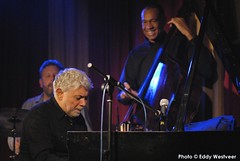

If you have a look at my concert blog you'll learn that I was able to visit a lot of inspired concerts. It is not so difficult to tell what concert was most impressive: The Alexander-Clayton-Hamilton Trio. These three skilled musicians were the highlight of the year.
>Other concerts shouldn't be unmentioned: the reconstruction of the Chet Baker Quartet by Fay Claassen ( scat singing Chet's part on the trumpet); James Spaulding ( a skilled and also very nice musician );

James Carter ( I saw him twice in concert - he turned out to be a great musician the second time ); good old Benny Golson ( ........ and my name is Johnny Griffin .....) with some veteran players like Al Foster and Buster Williams and, not to forget, Gary Smulyan and Jan Menu in their baritone battle a few weeks ago.


I was very happy to learn that Roy Hargrove returned to his roots, next to his RH Factory and recorded a great hardbop album. His concert at the North Sea Jazz Festival in Rotterdam last July was great.

Randal Corsen is a piano player that surprised me - It's good to know that he will perform in two more concerts at Porgy en Bess Jazz Club in Terneuzen (southwest part of the Netherlands) next year.

Thanks to all volunteers in Porgy en Bess in Terneuzen last year great names in jazz came to our remote region. In April 2007 the club will celebrate its 50th birthday.

In February of last year I started my daily Keep swinging web log, just for fun, as a place where I could share my passion to jazz and record collecting. Thanks to Joergen ( Thanks Jo) this blog could be released at a daily scedule for more then 300 times now and reaches an average of nearly ninety visitors a day now.
We started some other web logs, not to unload our frustrations ( in a positive way ), but to share our passion in choro music, Oscar Aleman, Hit of the weeks and last but no least the Flexible records

The artist on record that should be number one in my Top 2000 is, I guess, Jacob do Bandolim. Thanks to Joergen, who feeded me with Choro recordings last year and introduced me to this kind of stuff, I learned to appreciate Choro music.

To wind up this retrospective of the year I love to share a rather moderate film fragment of Epoca de Oura, but with some very good music of Jacob do Bandolim - Noites Cariocas.


Love to thanks Joergen for his support and friendship this year and I'd love to wish every regular visitor a lot of
inspired moments in 2007

Keep swinging

Hans Koert
Photo courtesy Alexander-Clayton-Hamilton Trio: Eddy Westveer.

Nederlands ( To the English translation )


Op de laatste dag van
het jaar kijkt men terug op het bijna afgelopen jaar. Dat doe ik dus ook maar. Een jaar waarin een heleboel inspirerende momenten voorkwamen -morgen is het allemaal herinnering.
Wat moeten we allemaal van het afgelopen jaar onthouden?
Natuurlijk de invasie van de Vikingen afgelopen zomer. Het was fantastisch om onze Deense vrienden hier te hebben en ze Zeeland te laten zien. De reunie van de zogenaamde Alemaniacs, waar we onze tocht, een jaar eerder, naar de Conventie van de IAJRC ( International Association of Jazz Record Collectors ) Kopenhagen nog eens memoreerden, was een hoogtepunt deze zomer.
.

Als je mijn concerten-logboek bekijkt zul je ontdekken dat er nogal wat inspirerende concerten geweest zijn het afgelopen jaar.
Het hoogtepunt was uiteraard het concert van het Alexander-Clayton-Hamilton Trio. Deze drie ervaren rasmuzikanten hebben een onuitwisbare indruk achtergelaten.
Maar er waren een heleboel andere concerten, die niet onvermeld mogen blijven: De reconstructie van het beroemde Chet Baker Quartet door Fay Claassen, die Chet's trompetspel met haar stem deed herleven; het concert van James Spaulding, die behalve een ervaren saxofonist ook een heel aardig mens bleek; James Carter, die ik twee keer hoorde spelen, maakte zijn reputatie tijdens het tweede concert helemaal waar en het was goed om good old Benny Golson ( ......and my name is Johnny Griffin .....) weer eens te zien met veteranen als Al Foster en Buster Williams. Uiteraard blijft het baritonesax-gevecht van Gary Smulyan en Jan Menu van een paar weken geleden boven drijven.
Roy Hargrove liet dit jaar merken dat hij zijn roots nog niet afgezworen heeft, naast zijn groep RH Faktor. Zijn optreden tijdens het North Sea Jazz Festival in Rotterdam en zijn nieuwe hardbop CD bewezen dat.
Randal Corsen was voor mij een verrassing - deze Antiliaanse pianist zal het nog ver schoppen en ik ben blij dat hij volgend jaar nog twee keer naar Porgy en Bess in Terneuzen zal komen om op te treden.
Dankzij alle vrijwilligers van Porgy en Bess konden er ook dit jaar weer heel wat grote namen richting onze afgelegen provincie komen - fantastisch. Volgend jaar april viert Porgy en Bess zijn 50 jarig bestaan.
In februari van dit jaar startte ik, als experiment, mijn dagelijkse Keep swinging web log, voor de grap, als een plek waar ik mijn passie voor jazz en platen verzamelen zou kunnen neerleggen. Dankzij Joergen ( Bedankt Jo) kon deze weblog al meer dan driehonderd keer dagelijks verschijnen en gezien de reacties van de gemiddeld bijna negentig bezoekers per dag, wil ik voorlopig nog even doorgaan. Mijn inspiratie is nog niet opgedroogd.
We startten ook andere weblogs, niet om onze frustraties van ons af te schrijven, maar om onze passie voor choro music, Oscar Aleman, Hit of the weeks en, last but no least de Flexible records met anderen te delen.
De plaat, die ik het afgelopen jaar het meest draaide, is van Jacob do Bandolim. Dankzij Joergen, die het afgelopen jaar, ongevraagd, mijn collectie platen met deze muziek heeft aangevuld, heb ik bewondering gekregen voor deze Braziliaanse Choro muziek.

Om deze terugblik af te ronden heb ik nog een filmpje gevonden van de band Epoca de Oura. De beeldkwaliteit is slecht, maar de muziek des te mooier. Ze spelen een nummer van Jacob do Bandolim Noites Cariocas.


Ik wil graag Joergen bedanken voor zijn hulp en vriendschap het afgelopen jaar en ik wens elke regelmatige weblogbezoeker nog veel inspirerende momenten toe in 2007

Keep swinging

Hans Koert
foto Alexander-Clayton-Hamilton Trio: Eddy Westveer

Saturday, December 30, 2006

Private tapes

( Naar de Nederlandse vertaling.)

The discovery of the year: shrieking headlines report the find of an eighteenth century manuscript of a composition made by a young Wolfgang Amadeus Mozart. The composition, titled All Blues Allegro die Wolfgango Mozart was found in an old book and presented yesterday in Salzburg, Austria to the world.


It's a pity that this find, and the execution of Saddam last night will rule the headlines for the news next days, so another important find won't have enough news value to reach the editors of the news papers.

What happened? A few days ago some important, up to that time, unknown private recordings were found in a bunch of tapes.
Extensive research confirms that the 35 years old tape contains private recordings, that might gain an insight into the development of the popular music in Northern Europe.

The private recordings on the tape were hidden between recordings of Lonnie Johnson and Leon Redbone , which explains, how these recordings could be overlooked for so long time.

The spokesman of the El Redescubrimiento de Oscar Aleman project, who don't wants to inform us about the source of the tape, declared that the private tape contains about 23 minutes of guitar duets in a rather decent sound quality, given the age of the recordings, made by the, now rather forgotten, pioneer of Danish guitar playing, J. Ergen.

This forgotten chapter in North European musical development hasn't been documented or recorded at all, so these tapes might be very valuable. the National Music Archive in Copenhagen confirms.

It contains about 10 short pieces, most spontaneous, not arranged, guitar duets of J. Ergen with S. Clement, made during a cozy gathering at a students apartement around the fall of 1972.
At a rough estimate both Ergen as Clement must have been students, and about 20 years old.

Remarkable are two solo pieces by Ergen himself, titled Slow Blues in C and Jorgen´s Far Out Rag, which seems to be a composition of the guitar player himself.
A blues harp recording in Testing The Blues Harp, might even be an example of the first recorded Blues Harp in Northern Europe in general and Denmark in particular.
Thanks to the archives of the previous mentioned El Redescubrimiento de Oscar Aleman project a rare photo of J. Ergen can be showed. It is part of an unknown gathering some years ago with another guitar player.

The spokesman of the project does not rule out that new private tapes will be discovered later. Well informed circles suggest that J. Ergen played with T van B.in the 1970s too, although it is unknown if these gatherings were documented.

It seems out of the question that these 23 minutes of extreme rare recordings will be available on CD before the end of the year, the spokesman declared.

J. Ergen lives now somewhere isolated in the southeast part of Denmark with his family and was not to reach for commends.

I'm proud that I can introduce you to a short fragment of the private tapes; a piece called Candyman, in which J. Ergen plays in a duet with S. Clement. If you listen carefully you can hear some influences of the music of Leon Redbone. Enjoy it - a great moment to end the year !!


Candyman - J. Ergen - S. Clement -guitar duet

Keep swinging

Hans Koert
keepswinging@live.nl

De ontdekking van het jaar: schreeuwende koppen in de krant meldden dat een onbekend manuscript van de jonge Wolfgang Amadeus Mozart gevonden is. De compositie met de titel Allemaal Ellende met Wolfang Mozart (snel) ( All Blues Allegro die Wolfgango Mozart ) werd gevonden in een oud manuscript en gisteren aan de wereld gepresenteerd in Salzburg, Oostenrijk.

Het is jammer dat deze vondst en de executie van Saddam afgelopen nacht, de komende dagen de koppen van de kranten zullen blijven domineren; deze belangrijke ontdekking zal dan ook waarschijnlijk de redacties niet bereiken.

Wat is er gebeurd? Een paar dagen geleden werd een belangrijke, tot nu toe onbekende privé opname gevonden tussen een stapel oude bandrecorder tapes.

Uitgebreid onderzoek heeft vastgesteld dat de band 35 jaar oud moet zijn en opnamen bevat die onze kennis van de ontwikkeling van de populaire muziek in Noord Europa wel eens op de kop zou kunnen zetten.


De privéopnamen op de band waren verstopt tussen opnamen van Lonnie Johnson en Leon Redbone, hetgeen verklaard, waarom deze opnamen zo lange tijd over het hoofd gezien zijn.

Een woordvoerder van het El Redescubrimiento de Oscar Aleman project, die niet wil zeggen hoe hij aan de opnamen komt, verklaarde dat de band ongeveer 23 minuten muziek bevat met gitaarduetten, van een, gezien de leeftijd, verrassende geluidskwaliteit, gemaakt door de , nu geheel in de vergetelheid geraakte Deense gitaarvirtuoos, J. Ergen.


Deze geheel genegeerde periode in de Noord Europese muziekgeschiedenis is nooit vastgelegd,, dus dit verklaard het belang van deze opnamen.


De band bevat een tiental korte, spontane improvisaties, op twee gitaren door J. Ergen met S. Clement, gemaakt tijdens een gezellige jamesession in hun studenten appartement ergens in de herfst van 1972.
Een snelle berekening bracht aan het licht dat zowel Ergen als Clement studenten moeten geweest zijn van rond de twintig.

Opmerkelijk zijn twee solostukken gespeeld door Ergen zelf getiteld Slow Blues in C en Jorgen´s Far Out Rag, welke van de hand van de gitaarspeler lijken te komen.
Een opname met een mondharmonica in Testing The Blues Harp zou zelfs wel eens één van de oudste mondharmonicaopnamen kunnen zijn uit Scandinavie in het algemeen en Denemarken in het bijzonder.
Dankzij het uitgebreide archief van het El Redescubrimiento de Oscar Aleman project hebben we de hand weten te leggen op een zeldzame foto van J. Ergen.
De foto maakte deel uit van een grotere foto, waarop hij te zien is met een andere onbekende gitaarspeler.
De woordvoerder van het project sluit niet uit dat er meer privé opnamen gevonden zullen worden in de toekomst. Welingelichte kringen weten te vertellen dat er geruchten zijn over een ontmoeting van J. Ergen met Ton v. B. ergens in de jaren zeventig van de vorige eeuw en het lijkt niet uitgesloten dat daarvan ook opnamen boven water zullen komen. Wel wordt het uitgesloten dat nog dit jaar de 23 minuten opnamen zullen worden uitgebracht op CD, aldus de woordvoerder.

J. Ergen woont tegenwoordig teruggetrokken ergens in het zuidoosten van Denemarken met zijn gezin en was niet voor commentaar bereikbaar.

Trots kunnen we jullie een kort fragment van de band laten horen. Het stuk heet Candyman, waarop we J. Ergen in duet horen met S. Clement op twee gitaren. Als je goed luistert hoor je invloed van de muziek van Leon Redbone. een mooi stuk om het jaar mee af te sluiten dunkt me.

Candyman - J. Ergen - S. Clement -guitar duet

Keep swinging

Hans Koert

keepswinging@live.nl

Friday, December 29, 2006

Capitolians

( Naar de Nederlandse vertaling.)

Thanks to several messages and news list contributions I got a link to a very interesting film fragment to share with you. The fragment was sent to me by "Berigan". who posted it on YouTube, and as Stephanie G. wrote in the 78-L list, You Tube is indeed a great source of Jazz Music Videos.

Also on 78-L was a discussion about sound effects on 78 rpm recordings, as David S. had found an old record with a noise that suggests an airplane. And, last but not least, I read somewhere that the new Penguin Guide in Jazz On CD edition appealed not to ignore the music of the pre-CD period as a lot of treasures are still unreissued.

Well, enough stuff that made me decide to make this contribution and share my thoughts about the great film fragment I received, thanks to "Berigan".

On the 1928 film fragment we see the Capitolians, a large show dance band directed by Walt Roesner. They play, as the title suggests, I'm More Than Satisfied, more a medley of tunes, as one of the members sings some phrases of Dinah. I think this fragment might be part of the Metro Movietone Revue No. 1 , directed by Nick Grinde or it is one of the shorts that turned up lately.
The director of the band is Walt Roesner, who was a trumpet player in Art Hickman's Orchestra between 1914 and 1921. Archeophone released a great compilation of this orchestra, titled Art Hickman's Orchestra The San Francisco Sound ( Archeophone 6003 ), probably one of the treasures the Penguin Guide suggested.
In 1921 Walt started at the Paul Ash organization and soon he had his own orchestras. He became famous in the New York surroundings with his own bands ( like the Supersoloists ) or directing other bands as a freelancer, like Art Hickman's, due to sever illness of Hickman in 1927 I believe. Around 1928 he played with his own band in the Capitol Theatre in New York for some years and this film fragment of the Capitolians was made during that period.

The Capitolians seem to double in a lot of instruments, as a big band avant la lettre. If you look carefully you'll learn that it has two pianos. I guess it had the possibility to play music in the theatre without breaks. After the intro, some members of the band do their special things and you can recognize some musicians I had never seen "live" at such a young age, like a 30 years old Miff Mole on trombone. Joe Venuti and Jimmy Dorsey are part of these soloists on the violin and alto saxophone. Other musicians who get a short performance are, according to the commend, Jimmy Lytel and Lou Calabrese.

It would be great if we could identify more musicians of that band.

The members of the band in this film belong to the group of white musicians, that played in New York around 1930 and I realise that several of them might have played at the Durium recording sessions for Hit of the week records during the depression period some years later.
If you have viewed the fragment, please play it again and concentrate on the individual musicians. For me it is pure enjoyment to do that and to learn how they made this beautiful music eighty years ago.

I love the drummer man at the rear of the band. He only has a timpano and a cymbal, where he makes the accents, so typically for 1920s recordings. The end of the film made me think about the discussion I refered to before, about sound effects on 78rpm. If you only listen to the music, and don't see the film you would believe the drummer man uses brushes to make the effect, but on the film you can see him tearing some paper or material to make the effect. In't that great?

Enjoy the fragment !!


I'm More Than Satisfied - Capitolians (1928)


Thanks "Berigan" for sharing this link.

Keep swinging

Hans Koert
keepswinging@live.nl

This filmfragment is also posted at my Hit of the week web log

Nederlands ( To the English translation )


Dankzij verschillende emailtjes en nieuwslijst bijdragen kwam ik op het spoor van een interessant filmfragment dat ik vandaag met jullie wil delen. "Berigan" stuurde me de link toe van het filmpje, dat hij op YouTube had gezet.

In de 78-L list merkte Stephanie G. al terecht op dat YouTube een schitterende plek is om oude (jazz) filmpjes te vinden. Op diezelfde nieuwslijst werd er gisteren ook druk gediscussieerd over geluidseffecten op 78-toeren platen, vanwege het feit dat David S. een plaat gevonden had, waarop duidelijk het geluid te horen is, dat een vliegtuig suggereert.
Verder las ik ook ergens dat in het voorwoord van de nieuwe Penguin Guide to Jazz On CD editie, die onlangs verscheen. opgeroepen werd om vooral de muziek van voor de CD, niet te negeren, aangezien er nog veel schitterende opnamen niet heruitgegeven zijn.

Dit alles was reden genoeg om eens aandacht te besteden aan onderstaand fragment.

Op de film uit 1928 zien we het orkest The Capitolians, een groot (jazzy) show- en dansorkest onder leiding van Walt Roesner.
Ze spelen, zoals de titel suggereert, I'm More Than Satisfied, meer een medley van korte nummers. Eén van de bandleden zingt bijvoorbeeld wat regels van Dinah.
Ik denk dat dit fragment uit de Metro Movietone Revue No. 1 komt, geregiseerd door Nick Grinde of het is één van de onbekende korte vroege geluidsfilms films, die onlangs boven water gekomen zijn.
De bandleider is Walt Roesner, van origine trompetist. Hij speelde tussen 1914 en 1921 bij het orkest van Art Hickman. Archeophone heeft van dit orkest een schitterende verzamelCD gemaakt, getiteld Art Hickman's Orchestra The San Francisco Sound ( Archeophone 6003 ), één van die waardevolle opnamen, die de Penguin Guide bewaard wil zien.

In 1921 stapt Walt over naar Paul Ash, die een theaterbureau had en kreeg hij een eigen orkest. Hij werd bekend in New York en omgeving met zijn eigen bands, zoals de Supersoloists, maar ook als freelancer. Zo leidde hij Art Hickman's Orchestra in 1927 enige tijd toen Art uitgevallen was wegens een ernstige ziekte. Rond 1928 leidde hij een paar jaar een orkest in het Capitol Theater in New York en het filmfragment lijkt uit die periode te komen.

The Capitolians op de film staat er als een big band, in een tijd dat big bands nog niet zo gebruikelijk waren. Als je goed kijkt zie je dat sommige instrumenten dubbel aanwezig zijn, zoals twee piano's links en rechts vooraan. Waarschijnlijk gaf dit de mogelijkheid om tijdens optredens zonder pauzes te werken.
Na het intro presenteren verschillende musici hun trucs en het is leuk dat daarbij verschillende musici naar voren komen, die je niet vaak zo jong "live" ziet spelen, zoals een dertig jaar jonge Miff Mole op trombone. Joe Venuti en Jimmy Dorsey zijn te zien op de viool en de altsaxofoon. Andere muzikanten, die even een solo krijgen, zijn volgens het commentaar van Dr. F., Jimmy Lytel en Lou Calabrese.

Het zou natuurlijk schitterend zijn als we meer musici een naam zouden kunnen geven.

De leden van de band behoren tot de groep blanke musici, die rond 1930 in New York probeerden aan de bak te komen. Ik realiseer me, dat hierbij waarschijnlijk een heleboel musici zitten, die tijdens de depressie speelden in de Durium studios en de zgn. Hit of the week platen opnamen. Als je de film een keer bekeken hebt, doe het dan nog eens en concentreer je op de individuele muzikanten. Voor mij is dat puur genieten, om te ontdekken hoe ze bijna 80 jaar geleden hun muziek maakten. Let bijvoorbeeld eens op de drummer, boven achterin. Hij heeft alleen een pauk en een bekken, zoals dat gebruikelijk was in de jaren twintig. Je ziet hoe hij messcherp de accenten aangeeft op het bekken. Als je alleen naar de muziek luistert zou je zweren dat aan het eind van het optreden de drummer de brushes gebruikt, maar op de film kun je zien hoe hij dit geluid maakt door een stuk papier of lap stof ritmisch te scheuren. Is dat niet geweldig?

Geniet van het filmpje.


Bedankt "Berigan" voor de link die je me stuurde.

Keep swinging

Hans Koert

keepswinging@live.nl

Deze film link heb ik ook gepost op my Hit of the week web log.

Thursday, December 28, 2006

Modern Clarinet Stylists

( Naar de Nederlandse vertaling.)


The first impressions of this CD are as a rather subjective compilation of US and European jazz recordings from the late 1940s and early 1950s. But that’s not true; in fact it is a careful selection of rare recordings with early examples of the modern clarinet styles.


The clarinet has always been an instrument used in the classical and traditional jazz by those legends like Benny Goodman, Artie Shaw and Woody Herman. By the mid-1940s and the advent of bop, the saxophone became the instrument for young players and the clarinet was only the instrument to start up their careers. Buddy DeFranco, to be found in the second part of this compilation, played in the early 1940s in the big bands of Gene Krupa, Charlie Barnet and Tommy Dorsey. He became influenced by Charlie Parker’s alto saxophone playing and converted it in his own modern clarinet style. In 1951 he tried to establish his own big band, but commercial this wasn’t very successfully. These recordings, sought after by record collectors, are now available for a larger audience. Until the present day Buddy DeFranco is the leading clarinet player that plays his instrument in a way that has its base in the bebop style. He even dethroned the King of Swing” Benny Goodman as the “Number One Clarinet Player” in several polls year by year. In fact he is not the only clarinet player who gave the clarinet his modern sound.

The first part of this album is reserved for two Swedish musicians. Isn’t it strange that two European clarinet players put, beside Buddy DeFranco, there stamp on the modern clarinet style?

Stan (Åke) Hasselgård started as an amateur player in the early 1940s. In fact he played then already in the modern style long before Buddy DeFranco rediscovered it. Benny Goodman invited Stan to the US and let him play with his septet. He played professionally in Sweden with Arthur Osterwall and Simon Brehm. The first two recordings on this CD are with a group featuring the latter. Simon Brehm was the best Swedish double bass player in the bebop idiom during the 1940s and 1950s. In the same period he recorded with the Bob Laine-Gösta Törner Sextett, on this compilation to be found as “Stan Hasselgard with Bob Laine”. In the year before he died, he lived in the US and played with great artists like Benny Goodman, Max Roach and Barbara Carroll. He died Nov. 1948.

The other modern clarinet stylist is Putte Wickman. He started as a swing clarinet player, but later he turned to modern styles, like bebop and cool jazz, but never forgot his start in the swing idiom. In 1948 he became the leader of the sextet that is to be found on this CD. With this sextet he made several recordings during the entire 1950s featuring the well known blind Swedish piano player Reinhold Svensson, who played in a style similar to George Shearing. This CD, that contains material that never has been reissued, as far as I know, should be in every collection that contains European jazz and the Buddy DeFranco fans will enjoy these nowadays rare to find recordings. Enjoy the music.

I found a fragment of a 1973 concert of Buddy DeFranco to illustrate his clarinet playing. Enjoy After You've Gone.


(AH) Expressens Elitorkester 1947 / 1. How High The Moon (a) 2. Stompin’ At The Savoy (a) (AH) Bob Laine-Gösta Törner Sextett (on the CD as “Stan Hasselgard with Bob Laine”) / 3. Blues Cupol (b) 4. Ain’t Misbehavin’ (b) 5. Someday Sweetheart (c) (PW) Putte Wickmans Orkester / 6. Blue Skies (d) 7. When Lights Are Low (e) (PW) Putte Wickman Sextett / 8. I’ll Remember April (k) 9. Ko-Ko (k) 10. I’m In The Mood For Swing (l) (BdF) Buddy DeFranco and his Orchestra / 11. Dancing On The Ceiling (f) 12. Out of Nowhere (f) 13. Body and Soul (f) 14. Rupus Room (g) 15. Make Believe (h) 16. Why Do I Love You (h) 17. The Closer You Are (j) 18. Too Many Dreams (j) 19. Swing Low Sweet Clarinet (j) 20. Will You Still Be Mine (j)

AH = (Stan Åke Hasselgård) PW = Putte Wickman BdF = Buddy DeFranco

a = 29 Apr. 1947 / b = 3 May 1947 / c = 12 Jun. 1947 / d = 26 Jan. 1949 / e = 4 May 1949 / f = 19 Feb. 1951 /g = 26 Mar. 1951 / h = 22 Jul 1951 / j = 14 Oct 1951 / k = 23 Mar 1953 / l = 20 May 1953 (All recordings in Stockholm except the 1951 Buddy DeFranco recordings (New York City))
Keep swinging

Hans Koert

keepswinging@live.nl


Nederlands ( To the English translation )

Op het eerste gezicht lijkt deze CD een tamelijk willekeurige verzameling opnamen met eurojazz, aangevuld met opnamen van het orkest van Buddy DeFranco. Niets is minder waar ! In feite bevat deze CD een zorgvuldig samengestelde selectie van plaatopnamen uit de jaren veertig en vijftig waarin de pioniers van de moderne klarinetstijl zich laten horen.
De klarinet werd tot dan toe vooral gebruikt in de meer traditionele vormen van de jazz en dat heeft ons giganten als Benny Goodman, Charlie Barnet en Woody Herman opgeleverd. Bij de opkomst van de bebop in de jaren veertig blijkt de saxofoon het instrument bij uitstek en de klarinet lijkt gedoemd te zijn een bescheiden rol te spelen als instrument, waarop je alleen nog dixieland kunt spelen. Met Buddy DeFranco veranderde dat allemaal. Buddy leerde het vak begin jaren veertig in de big bands van Gene Krupa, Charlie Barnet en Tommy Dorsey. Hij raakte gefascineerd door het spel van Charlie Parker en paste de nieuwe harmonielijnen toe in zijn eigen klarinet spel. In 1951 formeerde hij zijn eigen orkest, maar dat bleek commercieel geen succes en werd na een jaar weer opgeheven. Deze DeFranco MGM big band opnamen zijn nu zeer gezocht en voor het eerst terug te vinden op deze CD. Buddy DeFranco won met zijn klarinetspel in de VS de ene poll na de andere en tot op de dag van vandaag boeit hij een grote schare enthousiaste fans. Voor hen is hij de grondlegger van het moderne klarinetspel, maar dan wordt er gemakshalve voorbijgegaan aan het spel van Stan (Åke) Hasselgård en Putte Wickman, twee Zweedse klarinettisten, die ook hun stempel op het moderne klarinetspel hebben gedrukt.
Eerstgenoemde speelde begin jaren veertig al klarinet in diverse lokale bandjes in een stijl, die later door Buddy DeFranco weer herontdekt werd. Hij speelde professioneel bij de groepen van Arthur Osterwall en Simon Brehm. De eerste twee opnamen van deze CD zijn gemaakt onderleiding van laatstgenoemde. Simon Brehm was de beste bassist uit die tijd, die speelde in de bebop stijl. Uit deze zelfde tijd dateren de opnamen met het Bob Laine-Gösta Törner Sextett, die op deze CD terug te vinden zijn als “Stan Hasselgard with Bob Laine”. Benny Goodman haalde Stan Hasselgard naar de VS en schoof hem naar voren in zijn septet. In 1948 vertrok Stan naar de VS, waar hij opnamen maakte met o.a. Max Roach. Veel te jong kwam hij door een auto ongeluk om het leven.
De andere Zweed, Putte Wickman, is ook zo’n vernieuwer, die op deze CD thuis hoort. Hij speelde in swing bands en ontwikkelde in de loop van de jaren zijn spel richting bebop en cool jazz. In de jaren vijftig maakte hij met zijn sextet, met daarin de blinde pianist Reinhold Svensson verschillende belangwekkende opnamen. Ook deze opnamen zijn hier te horen. De opnamen op deze CD zijn, voorzover bekend, nooit eerder heruitgegeven en dankzij de Japanner Tohru Seya weer uit de vergetelheid ontrukt; ze horen dan ook thuis in elke jazzcollectie.

IK vond een stukje film, waarin Buddy DeFranco zijn vakmanschap etaleert. Geniet van After You've Gone uit 1973.


(AH) Expressens Elitorkester 1947 / 1. How High The Moon (a) 2. Stompin’ At The Savoy (a) (AH) Bob Laine-Gösta Törner Sextett (on the CD as “Stan Hasselgard with Bob Laine”) / 3. Blues Cupol (b) 4. Ain’t Misbehavin’ (b) 5. Someday Sweetheart (c) (PW) Putte Wickmans Orkester / 6. Blue Skies (d) 7. When Lights Are Low (e) (PW) Putte Wickman Sextett / 8. I’ll Remember April (k) 9. Ko-Ko (k) 10. I’m In The Mood For Swing (l) (BdF) Buddy DeFranco and his Orchestra / 11. Dancing On The Ceiling (f) 12. Out of Nowhere (f) 13. Body and Soul (f) 14. Rupus Room (g) 15. Make Believe (h) 16. Why Do I Love You (h) 17. The Closer You Are (j) 18. Too Many Dreams (j) 19. Swing Low Sweet Clarinet (j) 20. Will You Still Be Mine (j)

AH = (Stan Åke Hasselgård) PW = Putte Wickman BdF = Buddy DeFranco

a = 29 Apr. 1947 / b = 3 May 1947 / c = 12 Jun. 1947 / d = 26 Jan. 1949 / e = 4 May 1949 / f = 19 Feb. 1951 /g = 26 Mar. 1951 / h = 22 Jul 1951 / j = 14 Oct 1951 / k = 23 Mar 1953 / l = 20 May 1953 (All recordings in Stockholm except the 1951 Buddy DeFranco recordings (New York City))
Keep swinging

Hans Koert

keepswinging@live.nl

Wednesday, December 27, 2006

Lee Morgan at Both And

( Naar de Nederlandse vertaling.)

A few weeks ago I found a copy of the LP Out There by Lee Morgan. The record contains three tracks of a live concert and sounds fine. The cover has Lee Morgan playing the trumpet and the written words Out There Lee Morgan. On the reverse the track list ( Willow Weep For Me (20:27) / Peyote (13:40) Speedball ( 5:34). No personel, no recording date or place. The liner notes, written by Charles Miron, give some information about the personel in loose terms. The label of the record reads CARRERE 64510; the cover Phoenix10 64510.

Time to do a little research !!

The
Lee Morgan Discography doesn't give information about the record. The CARRERE 64510 is not listed, nor the Phoenix10. I learn that Phoenix was a record company, based in Kingston N.J. that made, at least, 23 LPs with artists like Cootie Wiliams up to Dizzy Gillespie, Charlie Parker and Sonny Stitt. The catalogue numbers of these records are a plain LP-1 up to LP 23 . This number doesn't fit with my record.

A search to the titles learns me that two of the three tunes were also recorded for Blue Note as Lee Morgan Live at the Lighthouse, a great set of records made during a series of concerts at 10, 11 and 12 July 1970 at the Lighthouse. The Lighthouse was a venue at Hermosa Beach, California, were a lot of jazz artists had concerts and recordings were made. I found in my collection recordings made by Grant Green , Howard Rumsey with his Lighthouse All-stars, the Three Sounds and, .... the Lee Morgan Blue Note sessions I mentioned before.

The Lighthouse Cafe in Hermosa Beach near Los Angeles started to scedule jazz concerts in 1949 with a group led by Howard Rumsey. In 1951 this group got his name after the venue The Lighthouse All Stars. Each weekend jazz music was sceduled with a jam session on Sunday. The venue became an important place to hear jazz, most in the West Coast Jazz tradition and a lot of important jazz players had concerts there: Max Roach, Art Pepper, Shorty Rogers, Jimmy Giuffre and Shelly Manne. It was likely that my concert on the LP should be dubs of the Blue Note recordings, but the playing time didn't match with it at all. The Lee Morgan Discography lists some additional sessions at the Lighthouse, all dated as July 1970, including the three tunes on my LP, but no mention of the Phoenix/Carrere record.

The Penguin Guide of Jazz (7th edition) learned me that the recordings I had were not made at the Lighthouse, but at the Both/And Club recorded during a previous session. These records appeared on a Japanese disc, titles Speedball. Some Googling brought me to another Lee Morgan Discography (by Masaya Matsumura), a Japanese one, which gave me the additional infiormation I needed. It seems as if the puzzle is solved.

The three tunes, Willow Weep For Me, Peyote and Speedball were recorded at the Both/And Club June 1970 by the Lee Morgan Quintet, featuring Lee Morgan on trumpet and flugelhorn, Bennie Maupin on flute, tenor saxophone and bass clarinet, Harold Mabern at the piano, Jimie Merritt on bass and Mickey Roker on drums.

The music on this record is great. Lee Morgan plays, less then two years before a girl friend (?), Helen More, shot him as he relaxed between two sets at Slugs Saloon in New York City. with these lengthly tunes a great concert.

I found a trailer of a DVD set that contains a 1958 concert, made in Belgium, of the Art Blakey Jazz Messengers featuring Lee Morgan. Enjoy his trumpet !!


Keep swinging

Hans Koert

keepswinging@live.nl

Nederlands ( To the English translation )


Een tijdje geleden vond ik een LP getiteld Out There van Lee Morgan. De plaat bevat drie nummers van een live concert en bevat prima muziek. Op de hoes prijkt een foto van Lee Morgan spelend op zijn trompet en de geschreven woorden Out There Lee Morgan. Op de achterkant de titels van de nummers ( Willow Weep For Me (20:27) / Peyote (13:40) / Speedball ( 5:34)., maar geen informatie over de spelers of waar en wanneer de opnamen gemaakt zijn. Het verhaal achterop, geschreven door Charles Miron, noemt wel wat namen van spelers, maar blijft een vaag zweverig verhaal. Het label van de plaat is CARRERE 64510; op de hoes staat Phoenix10 64510.

Tijd voor wat onderzoek !

In de
Lee Morgan Discography wordt de LP CARRERE 64510 noch Phoenix10 genoemd. Er blijkt een platenlabel te hebben bestaan, genaamd Phoenix ( uit Kingston N.J.) dat tenminste 23 LPs gemaakt heeft van artiesten als Cootie Wiliams, Dizzy Gillespie, Charlie Parker en Sonny Stitt. De LPs zijn overzichtelijk genummerd: van LP-1 tot LP 23. Dat klopt in ieder geval al niet met mijn LP.


Een zoektocht naar de titels levert op dat twee van de drie nummers ook opgenomen zijn tijdens een Blue Note sessie Live At The Lighthouse. Deze schitterende set bevat opnamen van de optredens in de Lighthouse in Hermosa Beach op 10, 11 en 12 juli 1970.
The Lighthouse was een zaak in Hermosa Beach, California, waar een heleboel jazzartiesten gespeeld hebben en ook opnamen maakten. Ik vond in mijn verzameling opnamen van Grant Green, Howard Rumsey en zijn Lighthouse All-stars, the Three Sounds en, .... the Lee Morgan Blue Note sessions waarover ik het eerder had.

Het Lighthouse Cafe in Hermosa Beach vlakbij Los Angeles begon jazz concerten te plannen vanaf 1949 met een groep geleid door Howard Rumsey. In 1951 kreeg deze groep de naam The Lighthouse All-stars. Elk weekend was er jazz te beluisteren, met op zondag een jamsessie. Dit podium werd een belangrijke plek waar de zo genaamde West Coast Jazz gespeeld werd en een heleboel musici hebben op dit podium gespeeld: Max Roach, Art Pepper, Shorty Rogers, Jimmy Giuffre en Shelly Manne. Het lijkt dus aannemelijk dat mijn plaat daar ook opgenomen werd en dat de LP deze Blue Note opnamen bevat, maar de de speelduur van de twee nummers klopt helemaal niet met de Blue Note opnamen. De Lee Morgan Discography geeft uitsluitsel, lijkt het, door naast de Blue Note opnamen midden juli 1970 ook nog een lijst met andere titels te geven, waaronder de drie van mijn LP, opgenomen juli 1970. De discografie noemt echter de Phoenix/Carrere plaat niet.
De Penguin Guide of Jazz (7th ediition), een schitterend naslagwerk als het om informatie over platen gaat, meldt dat de opnamen, die ik waarschijnlijk op de LP heb staan, niet in de Lighthouse zijn opgenomen, maar even daarvoor in de Both/And Club. Deze opnamen zijn ooit boven water gekomen door een Japanse plaat, getiteld Speedball. Na wat gegoochel vind ik een tweede discografie, de Lee Morgan Discography (by Masaya Matsumura) , een Japanse uitgave. Die bevestigt de opnamen in juni 1970 in Both/And Club.

Het lijkt erop dat het plaatje nu aardig compleet is.

De drie nummers, getiteld Willow Weep For Me, Peyote en Speedball lijken opgenomen in de Both/And Club juli 1970 door het Lee Morgan Quintet, met Lee Morgan op trompet en bügel, Bennie Maupin op flute, tenor sax en basclarinet, Harold Mabern achter de piano, Jimie Merritt op bas en Mickey Roker op het slagwerk.

De muziek op de plaat is schitterend, te vergelijken, uiteraard, met de Lighthouse opnamen. Lee Morgan speelt, minder dan twee jaar voordat hij door een vriendin (?) Helen More, neergeschoten werd, tussen twee sets tijdens een concert in de Slugs Saloon in New York in, de sterren van de hemel. Een schitterende plaat.

Ik vond een vooraankondiging van een DVD schijf, die beelden van een Belgische optreden bevat van Art Blakey en zijn Jazz Messengers uit 1958. Hierin speelt Lee Morgan de trompet. Een mooi fragment om even de smaak van zijn muziek te pakken te krijgen.


Keep swinging

Hans Koert


keepswinging@live.nl


Tuesday, December 26, 2006

Christmas Cookin'

( Naar de Nederlandse vertaling.)

Christmas is a worldwide festive period in the western world at the end of the year with divine services, copious meals, presents and exuberant Christmas decorations. But, above all, Christmas is a commercial event, organized by the tradespeople. The local shopkeepers entice customers inside with all kinds of baits. Bands on the street play their carols, dressed as Father Christmas. Why are those bands so often a kind of dixieland bands wandering around the streets? If they play their carols in a decent way, the music is lost in the sounds of the city, which makes it a farce of.

I found a small film fragment on internet of the Central Station in Antwerp (Belgium), to illustrate what I mean.


In stores a special part of the record sales department is reserved for Christmas music. I learned that most settled artist made their own Christmas Special, in all kinds of musical styles. Most of these recordings have only an ephemeral value - when January starts these records are stored in the attic with the Christmas decorations.
But there are some exceptions ..... like the Jimmy Smith Christmas 64 CD I play myself around the year.

I learned that the CD Jimmy Smith Christmas 64 is a reissue of the LP Jimmy Smith Christmas Cookin'. Both records have different sleeves, confusing I believe.
I like the LP cover the most. Jimmy Smith, sitting in a Santa Claus suit behind the wheel of a red sports car with a tree and presents in tow.
This Verve album contains five tracks with a large orchestra and three with his small working band. Verve used to do this in those days due to commercial reasons I guess. We're lucky they didn't add a bunch of strings. The tunes on the album are both traditional songs, like We Three Kings ( of Orient Are), Silent Night and God Rest Ye Merry, Gentlemen and secular Christmas songs like White Christmas ( oh no, not again ...........) and Jingle Bells.
When Jimmy Smith starts to play God Rest Ye Merry, Gentlemen, this serious religious song becomes a great swinging jazz performance. A great tune.
A tune like Silent Night looses its holy smell and Smith add lustre to this traditional song.

With this CD in your audio equipment you really can survive Christmas.

I found a small 1964 film fragment of Jimmy Smith playing his Hamond B3 organ. Enjoy it.


Keep swinging

Hans Koert

keepswinging@live.nl

Nederlands ( To the English translation )


Het kerstfeest is een feestelijke periode, die, eind december, wereldwijd door de Westerse wereld wordt gevierd met kerkdiensten, veel eten en drinken, cadeautjes en uitbundige versieringen. Kerst is vooral een commercieel feest, georganiseerd door de middenstand. De plaatselijke winkelcentra proberen hun klanten op allerlei manieren naar binnen te lokken. Op straat klinkt kerstmuziek, gepeeld door vrolijk verklede muzikanten. Waarom zijn dit soort groepen, die door de stad sjouwen, vaak een soort dixielandachtige bands? Hun muziek vermengd zich met de geluiden van de omgeving en maakt hen tot een lawaaierig decorstuk. Ik vond, ter illustratie van mijn verhaal, een kort filmpje dat iemand op YouTube gezet heeft waarin hij de hal van het Centraal Station in Antwerpen gefilmd heeft.


In warenhuizen worden speciale bakken met kerstplaten ingericht. Als je daar in grasduint ontdek je dat bijna elke zichzelf respecterende muzikant wel een kerstplaat gemaakt heeft. Het muzikale belang van veel van die platen is maar relatief - De meeste kerstplaten worden in veel huishoudens alleen met de kerst te voorschijn gehaald en in januari verdwijnen ze weer naar de zolder. Maar er zijn uitzonderingen ...... zoals de Jimmy Smith Christmas 64 CD die een voorbeeld is van een kerstplaat, die ik met een gerust hart het hele jaar door kan draaien.


Ik ontdekte dat deze CD Jimmy Smith Christmas 64 een heruitgave is van de LP Jimmy Smith Christmas Cookin'. Beide platen hebben verschillende hoezen - erg verwarrend lijkt me.
Ik vind de hoes van de LP het mooist: Jimmy Smith, zittend in een kerstpak achter het stuur van een rode sportauto met een boom en ingepakte cadeautjes. Deze plaat is, zoals toen gebruikelijk bij Verve, opgebouwd uit een vijftal nummers met groot orkest en een drietal met zijn eigen kleine bezetting. Verve zal daarmee wel commerciële bedoelingen gehad hebben. Gelukkig is er geen blik strijkers opengedraaid.
De nummers op de plaat zijn zowel traditionele kerstliedjes, zoals We Three Kings ( of Orient Are), Silent Night en God Rest Ye Merry, Gentlemen als de bekende kerstliedjes White Christmas ( Oh nee, niet alweer ...........) en Jingle Bells.
Als Jimmy Smith begint om God Rest Ye Merry, Gentlemen, te spelen, dit toch wel ietwat serieuze lied, verandert het in een swingende jazzuitvoering. Een toch wat uitgesabbeld Silent Night krijgt weer kleur als Jimmy Smith er zijn Hamond B3 orgel overheen legt.

Met deze CD in je stereo is het geen kunst meer om de kerstdagen te overleven.

Ik vond een kort stukje film uit dezelfde tijd, waarin Jimmy Smith zijn Hamond B3 orgel bespeelt. Veel plezier ermee.


Keep swinging

Hans Koert

keepswinging@live.nl

Monday, December 25, 2006

White Christmas - 1927

( Naar de Nederlandse vertaling.)

When I woke up this morning the first thing I did was open the curtains, and, although I knew what I would see: no White Christmas this year.


In my remembrances, when I was a kid, in the winter, during our school holidays, the windows were frozen, it was cold outside, the coal stove had to heat the living room and snowflakes made a white carpet in a deathly quiet world. My brother Jan Peter and I made a snow castle, threw snowballs to each other, went out skating near the sluice ( de sluuspit) at the foot of the dike along the river Scheldt.

Remembrances of my youth in Hoedekenskerke, a small village in the southwest part of the Netherlands, long ago - a blased version of the facts!!

No White Christmas anymore, it seems. Christmas and snow. Bing Crosby sung this famous song in 1942 for the very first time in the film Holiday Inn.
The tune was composed by Irving Berlin and sold at least 25,000,000 copies; the best selling song ever. Later this tune was recorded by numerous other artists, like Ernest Tubb and The Ravens in 1949, The Drifters ( 1955) and Elvis Presley (1957). In 1954 Bing sung it again in the film White Christmas with Danny Kaye and Rosemary Clooney. This is the most well known version of it. To make a complete list of all versions ever recorded would be an impracticable job.


Bing Crosby in Holiday Inn (1942)


Last night I opened my copy of the Volkskrant, a Dutch newspaper, I bought to survive these days, and found the Top 2000, a list of the 2000 most popular records ever. It is a tradition in the Netherlands that Radio 2, a public radio station, plays these 2000 records starting at the 26th of December with number 2000 ( What Can I Say - Boz Scaggs ) up to the last day of the year with the number one, the most popular tune Bohemian Rhapsody by Queen.

Of course I have searched for Bing Crosby's White Christmas in the list and found it at ............number 1927, no kidding, a number equal to the year in which Bing became a star in Paul Whiteman's Rhythm Boys. So, if you like to hear it you'll have to wake up tomorrow early in the morning and turn on your radio set at ca. 4.30 hrs a.m. at Radio 2


Guess what's the most popular jazz title ever? ..............
........ right:
What A Wonderful World by Louis Armstrong
on the 281st place !!

Will It ever turn out all right?

Bing Crosby in White Christmas ( 1954)

Keep swinging

Hans Koert

keepswinging@live.nl

Nederlands ( To the English translation )


Toen ik vanmorgen wakker werd was het eerste wat ik deed de gordijnen openen en naar buiten kijken: Ik wist het al .. weer geen Witte Kerst dit jaar.

In mijn herinnering, toen ik nog een kind was, kerstvakantie. bevroren ramen. buiten vriest het. de kolenkachel in de kamer gloeit en sneeuwvlokken vallen achter de ramen en leggen buiten een wit tapijt maken in een doodstille wereld. Een sneeuwkasteel maken met Jan Peter, sneeuwballen gooien naar elkaar en schaatsen op de Sluuspit, de plaatselijke benaming voor een uitwateringssluisje onder aan de Westerscheldedijk.

Herinneringen uit mijn jeugd in Hoedekenskerke, een klein dorpje in het zuidwesten van Nederland; herinneringen, gekleurd door de tijd.


Zullen we ooit nog een Witte Kerst meemaken? Het hoort bij de kerst, zegt men. Bing Crosby zong dit beroemde nummer voor het eerst in 1942 in de film Holiday Inn.

Het was geschreven door Irving Berlin en er werden wereldwijd zo'n 25 miljoen exemplaren verkocht. White Chistmas is de meest verkochte plaat ooit. Later is dit nummer door een heleboel anderen ook op de plaat gezet, zoals Ernest Tubb en The Ravens ( 1949), The Drifters ( 1955) en Elvis Presley ( 1957)

In 1954 zingt Bing het nummer nog eens in de film White Christmas met Danny Kaye en Rosemary Clooney en deze versie is van hem het meest bekend geworden.

Het is ondoenlijk om alle versies van White Christmas op een rijtje te zetten; het moeten er honderden zijn.

Bing Crosby in Holiday Inn (1942)

Gisteravond opende ik mijn exemplaar van de Volkskrant, die ik gekocht heb om de kerstdagen door te komen, en vond er de Top 2000, een lijst met de 2000 meest populaire platen ooit. Het is een traditie in Nederland dat deze platen allemaal tussen Tweede Kerstdag en Oudejaar gedraaid worden op Radio 2. Vannacht om 0.00 u start het programma met nummer 2000 ( What Can I Say van Boz Scaggs ) en het eindigt op Oudejaar vlak voor twaalf uur ´s nachts met nummer één: Bohemian Rhapsody van Queen.

Natuurlijk ben ik op zoek gegaan in de lijst naar White Christmas van Bing Crosby en vond het op plaats ........... 1927, nee, geen geintje, een nummer gelijk aan het jaartal waarin Bing furore maakte met The Rhythm Boys bij Paul Whiteman. Als je nummer wilt horen moet je morgenochtend vroeg om half vijf je bed uit.

Ik vroeg me natuurlijk af wat de hoogst geëindigde jazzplaat was. Raad eens? What A Wonderful World van Louis Armstrong op de 281ste plaats.

Komt het nog ooit goed?


Bing Crosby in White Christmas (1954)

Keep swinging

Hans Koert

keepswinging@live.nl

Sunday, December 24, 2006

Miles In The Sky

( Naar de Nederlandse vertaling.)

The Miles Davis album Miles In The Sky is not Miles' most well known album, but it has some interesting elements if you study the development of Miles' musical growth.
It is a fact that, when this album was released, critics were surprised about the changes in style. In fact, they found it difficult to say what it was.
In 2006, looking back on this album, we can say that this album has a lot of elements of Miles 1970s style, the more rock, rhythm and blues elements and funky stuff.

The original album had four, lenghty tunes: Stuff and Country Son, written by Miles, Paraphernalia ( by Wayne Shorter) and Black Comedy ( a Tony Wiliams composition).

The members of the Quintet are Miles Davis on trumpet, Wayne Shorter of tenor saxophone, Herbie Hancock op piano, Ron Carter on bass and Tony Williams on drums. In Paraphernalia George Benson plays the electric quitar.

The tunes were recorded during the first half of 1968.

While listening to this album for the very first time, it didn't appeal to me. It is one of those albums you have to play several times to learn out its great aspects. Like a good bottle of wine it needs time to show all its aspects.


The music made by Miles Davis prior to this album is much more accessible to the ordinary jazzfan then the music made in the 1970s and 1980s. Some jazzfans don't like the music Miles made in the 1970s. But I remember to have heard once a live performance of Tutu, one of those contemporary Davis tunes, and it kicked me.

In Snuff Miles uses phrases that we should label now as funk. Herbie Hancock plays the electric piano on this track, because Miles wanted that. The electric piano was in those days not a common used instrument and only Joe Zawinul had used it in Cannonball Adderley's Merci Merci Merci and Sun Ra used it in his inter-galactic trips.

Electronic instruments became popular around this time ( Don Ellis for example)

In Paraphernalia George Benson plays his chordal figures on the electric guitar, an instrument Miles didn't used bef
ore. In Black Comedy the rhythm section plays a great part and it seems that they were no longer hidden in the background as in previous recordings with Miles.
I like this tune, which has some good solo performances. The last tune, Country Son, has interesting tempo changes ( and even some out-of-tempo playing).
It is clear that, starting with this album, Miles seems to get interested in other styles, like rock and rhythm and blues with some funky elements.


This short fragment shows Miles and his Quintet in action.
Keep swinging

Hans Koert
keepswinging@live.nl

Nederlands ( To the English translation )


Het Miles Davis album Miles In The Sky is niet zijn meest bekende, maar het heeft een aantal interessante elementen als je iets meer weet over de ontwikkeling van Miles' spel.

Toen het album verscheen wisten de critici niet wat ze er mee aan moesten - er was iets gebeurd, er was iets veranderd; het was moeilijk om er precies de vinger op te leggen.
Als we vanuit 2006 terugkijken kunnen we constateren dat deze plaat een heleboel elementen heeft van Miles nieuwe stijl uit de jaren zeventig en tachtig, de tijd van de jazzrock en funk.


Het originele album bevat vier lange nummers: Stuff en Country Son, beide geschreven door Miles, Paraphernalia ( gemaakt door Wayne Shorter) en Black Comedy ( een compositie van de drummer Tony Williams.
In het quintet vinden we Miles Davis op trompet, Wayne Shorter speelt tenor saxofoon, Herbie Hancock piano, Ron Carter bas en Tony Williams het slagwerk.
In Paraphernalia speelt George Benson de electrische gitaar.
De titels werden in januari en mei 1968 opgenomen.

Toen ik voor de eerste keer naar deze plaat luisterde was ik nog niet onder de indruk. Het is één van die platen, die je, als een goede fles wijn, pas later gaat waarderen.
De muziek zoals Miles die speelde voor 1968 is veel toegankelijker dan de muziek die hij maakte in de zeventiger en tachtiger jaren. Veel jazzfans haken dan ook bij deze plaat af. Ik herinner me echter ooit een live uitvoering te hebben gehoord van Tutu, een latere compositie van Miles, die veel indruk op me gemaakt heeft.

In Snuff gebruikt Miles elementen,die we nu als funk zouden bestempelen. Herbie Hancock speelt op dit nummer de electrische piano, omdat Miles dat wilde. De electrische piano was in die tijd nog niet zo gangbaar en eigenlijk had alleen Joe Zawinul die gebruikt bij Cannonball Adderley's Merci Merci Merci en gebruikte Su Ra het bij zijn reizen-door-het-Melkwegstelsel. Electronische instrumenten kwamen in zwang eind jaren zestig ( denk aan Don Ellis bijvoorbeeld). In Paraphernalia speelt George Benson zijn accoorden op de electrische gitaar, ook iets wat Miles daarvoor nooit gebruikt had.
In Black Comedy speelt de ritmesectie een belangrijke rol en Miles laat ze meer op de voorgrond treden dan daarvoor. Ik vind dit een prima nummer omdat het nogal wat inspirerende soli heeft. Het laatste nummer, Country Son, is geschreven door Tony Williams en heeft interessante tempowisselingen ( soms zelf uit de maat).
Het moge duidelijk zijn dat met dit album Miles op weg was naar een andere soort muziek, zoals de rock en rhythm en blues, met funky elementen zoals we dat kennen uit jaren daarna.

Een kort fragment waarin we het Miles Davis Quintet aan het werk kunnen zien.

Keep swinging

Hans Koert

keepswinging@live.nl

Saturday, December 23, 2006

Three hundred inspired moments


Three hundred inspired moments I shared with you during the last ten months in this daily Keep swinging web log.


It started in February 2006 as a try out with a small contribution titled Fats and more ...
Making this daily web log inspired me to listen carefully to the records others adviced me or records I played from my own collection, to the information I read in news papers and magazines and to share my passion with other collectors and fans of jazz music. Of course, last but no least, the live concerts I attended last year.
I learned that my web logs inspired other people to enjoy jazz music.

Visitors of my blogs, who contacted me at
keepswinging@live.nl appreciate the broad interests which open up new persepectives for the daily visitors.

From my point of view I found but few places where all aspects and styles of jazz music and - collecting are discussed without any restrictions in style; Improvised (jazz) music from 1906 up to 2006

As long as you open my web logs and read it every day I'll continue to share my passions in music and I hope to find a lot of inspired moments in the new period ahead.
Jazz music can be enjoyed by playing records and films, but live performances by musicians creating their music really inspires me. In my season's greeting I give you a survey of some of these moments.
I hope you want to share that with me.

Thanks to Joergen (Jo) Larsen who shared his passions in the web log at those days I couldn't post my contribution ( due to holidays) this blog could be published daily. Thanks Jo, great !!
Keep swinging

Hans Koert
Driehonderd keer heb ik in mijn dagelijkse Keep swinging web log anderen kennis laten nemen van de zaken die mij op muzikaal gebied geinspireerd hebben.

Het begon als een probeerseltje in februari van het afgelopen jaar met een stukje dat getiteld was Fats and more ...

Het maken van een dagelijkse weblog leerde me om goed naar mijn platen te luisteren of kennis te nemen van muziek waar anderen me op wezen. Ook artikelen uit kranten of tijdschriften brachten me op ideeën die ik kon gebruiken. En uiteraard, als belangrijkste element, de live concerten, die ik mocht bijwonen het afgelopen jaar.

Ik merkte dat het mes aan twee kanten sneed; bezoekers van mijn weblogs lieten me weten op
keepswinging@live.nl dat ze de brede kijk op (geimproviseerde) muziek waardeerden omdat ze soms nieuwe verrassende muziek ontdekten buiten het vaste stramien waarin men meestal zijn muzikale keuzes maakt.

Zelf heb ik maar weinig plekken gevonden die me inspireren om te luisteren naar alle jazzstijlen of me informeren over muisici, zonder keuzes te maken die vallen binnen een omkaderd raamwerk; Geimproviseerde (jazz)muziek dus van 1906 tot 2006 !

Zolang jullie mijn weblogs dagelijks blijven lezen en waarderen ( dank voor al jullie berichtjes) zal ik proberen elke dag mijn inspiraties aan het web toe te vertrouwen.

Natuurlijk kun je van jazzmuziek genieten door platen of CDs te draaien of door te kijken naar film opnamen, maar het echte gebeuren vindt plaats op een podium tussen musici, die elkaar inspireren. Ik heb in mijn wensen voor de komende tijd een overzichtje gegeven van enkele van die momenten uit het afgelopen jaar.

Dankzij Joergen (Jo) Larsen. die zijn passies in de weblog plaatste op momenten dat ik fysiek niet in staat was om dat te doen ( vakantie bijvoorbeeld) kon deze weblog dagelijk verschijnen. Bedankt Joergen !!

Keep swinging

Hans Koert

keepswinging@live.nl

Friday, December 22, 2006

Four Toppers

( Naar de Nederlandse vertaling.)


A short fragment today of a vocal group, named The Four Toppers, who performed in the 1940 short film Mystery in Swing, produced by Arthur Dreifuss. In the film this vocal group, which has Steve Gibson as one of the members, sings Jump, the Water's Fine and another song, that is not in the fragment below Let's Go To A Party. Steve Gibson became famous by his 1950s band The Five Red Caps. The band behind the speaker, Ross DiMaggio, is prob. Cee Pee Johnson's Orchestra.


Enjoy it !!

Keep swinging

Hans Koert

You can reach me at keepswinging@live.nl

Nederlands ( To the English translation )


Vandaag een kort fragment van een zanggroepje, genaamd The Four Toppers, die in 1940 in een korte film optraden, Mystery in Swing, geproduceerd door Arthur Dreifuss. In de film zingt het groepje, waarin we Steve Gibson herkennen, het nummer Jump, The Water's Fine en Let's Go To A Party, dit laatste nummer is niet te zien in het fragment. Steve Gibson werd later in de jaren vijftig beroemd met zijn groep The Five Red Caps. De band op de achtergrond van de aankondiger Ross DiMaggio, is waarschijnlijk het orkest van Cee Pee Johnson.


Enjoy it !!

Keep swinging

Hans Koert

Ik ben te bereiken op keepswinging@live.nl

Thursday, December 21, 2006

Clifford Brown

( Naar de Nederlandse vertaling.)

I played one of the great compilation I have from Clifford Brown. It's the 2CD Clifford Brown and Max Roach - Alone Together ( The Best Of The Mercury Years).


For me, this 2CD should be in my suit case if I leave to an uninhabited island.


There are a lot of great tunes on that compilation. I like the 1954 Joy Spring and Cherokee, that is also on A Study In Brown.

Clifford Brown died in 1956 at a road accident; he had a short but great carreer in music and his style of trumpet playing became an example for a lot of others.

Due to the fact that he passed away so early there are but a few films of him. According to the comment of the fragment below, there is only one shot where he is to see. It is a fragment of an early 1956 TV show ( Soupy Sales TV Show) and he plays Lady Be Good and Memories of You.


Enjoy this unique material.

Keep swinging

Hans Koert

You can contact me at
keepswinging@live.nl


Nederlands ( To the English translation )


De verzamel dubbel CD Alone Together van Clifford Brown and Max Roach ( The Best Of The Mercury Days) krijgt zeker een plaatsje in mijn koffer als ik vertrek naar een ver onbewoond tropisch eiland.

Het is voor mij een heerlijke plaat met prima muziek gespeeld door één van de meest talentvolle jazz trompettisten uit de vijftiger jaren.


Er zitten een heleboel prima nummers op deze verzamel CD. Zo hou ik van Joy Spring uit 1954 en Cherokee, dat ook op A Study In Brown te horen is.


Clifford Brown heeft maar een relatief korte carriere kunnen maken, maar wel tientallen trompettisten na hem beinvloed.


Hij overleed in 1956 ten gevolge van een verkeersongeval. Daardoor zijn er weinig filmfragmenten van hem overgebleven; en als ik het commentaar bij onderstaand fragment mag geloven, slechts één kort fragment uit een TV show begin 1956.


Hierboven een fragment uit een Soupy Sales TV Show begin 1956 waarin hij Lady Be Good en Memories of You speelt. Een mooi en uniek document

Keep swinging

Hans Koert

Je kunt me bereiken op:
keepswinging@live.nl

Wednesday, December 20, 2006

Yabba dabba do

Last night I learned that Joseph Barbera died 95 years old. Joseph Barbera was one of the last living cartoon makers of bygone days. Together with Willian Hanna, who died five years ago he formed one of the mightiest of modern cartoon companies, Hanna - Barbera.

The Flintstone in a rare cigarette commercial for Winston Cigarettes.

For me Hanna-Barbera are the parents of the Flintstones, the stone age soap with family Fred and Wilma Flintstone, with their daughter Pebbles, who live next door Barney and Betty Rubble with Bamm Bamm, there little son. Of course the Hanna-Barbera duo made other famous cartoons like Tom and Jerry, maybe even more famous then Fred and Barney, but for me the Flagstones ( the original 1960 name of the series ) became part of our youth.

I remember that the Dutch television played these cartoons ( in black and white of course) once a week during the 1960s. As television sets weren't so common as today my brother and I were very lucky that our grandparents had one of the first sets in Hoedekenskerke, a small village in the southwest part of the Netherlands. So, each Wednesday, the best room of the house was darkened and filled with all our friends from school, sitting on the ground in front of the TV-screen. Life was so easy .......

Listen to this charming girl playing the signature tune of the Flintstone cartoon.

Keep swinging

Hans Koert

You can contact me at:
keepswinging@live.nl


Nederlands ( To the English translation )


Gisteravond hoorde ik dat Joseph Barbera op 95-jarige leeftijd overleden was. Joseph Barbera was één van de laatst levende tekenfilmmakers uit vroeger tijd. Samen met William Hanna, die vijf jaar geleden overleed, vormden ze de belangrijkste tekenfilm studio, kortweg genoemd: Hanna - Barbera.

The Flintstones in een zeldzame advertentie voor Winston sigaretten.

Voor mij zijn Hanna en Barbera de ouders van de Flintstones, de soap die zich afspeelt in de steentijd, met daarin de families van Fred en Wilma Flintstone met hun dochtertje Pebbles en hun buren Barney en Betty Rubbles met hun zoon Bamm-Bamm. Natuurlijk maakte het tweetal Hanna-Barbera nog meer tekenfilms, waarvan Tom en Jerry ongetwijfeld hun belangrijkste was, maar voor mij blijven Fred en Barney mijn helden uit The Flagstones ( zo heettte de serie toen hij net verscheen begin jaren zestig) omdat ze een onderdeel van mijn jeugd vormen.

Ik herinner me dat de Nederlandse televisie deze tekenfilms ( uiteraard in zwart-wit) elke week uitzond in de jaren zestig. Televisietoestellen waren toen nog niet zo dik gezaaid als tegenwoordig. Mijn broer en ik waren zo gelukkig dat onze opoe en opa in Hoedekenskerke, een klein dorpje in de provincie Zeeland, één van de eerste televisietoestellen van het dorp hadden. Dus zaten we elke woensdagmiddag met al onze klasgenoten op de grond voor het beeldscherm in een verduisterde voorkamer. Waar blijft de tijd......
Luister maar eens naar deze charmante jonge dame die de herkenningsmelodie van de Flintsones voor ons speelt.


Keep swinging

Hans Koert

Ik ben te bereiken op:
keepswinging@live.nl

Tuesday, December 19, 2006

I Like Jazz

( Naar de Nederlandse vertaling.)

The book I Like Jazz was released by Verlag Bärmeier und Nikel in 1960. It contains jazz cartoons made by Hans de Haëm with text of Hans Herder.

In the book itself are cartoons about the history of jazz and about certain jazz artists like Thomas Fats Waller, Erroll Garner, Julian Cannonball Adderley, Dizzy Gillespie and Lester Young ( on the right)

The texts in the book are a hodge-podge of subjects in a rather droll style.

Hans Herders Jazz Thermometer doesn't give the temperature outside, but the temperatures of certain music styles; Art Blakey is kochend and Lennie Tristano is listed as absoluter Nullpunt.

It has an interview with Goethe about Jazz ( Ein imaginäres Interview ), a chapter about instruments, about jazz sayings ( jazz sprichwörtlich ) ( Wer Louis Armstrong nicht ehrt, ist Chris Barber nich wert )

It will be clear that the cartoons in this little book has some value nowadays. They are made in the typically Hans de Haëm style, with fragile lines. The texts are not interested anymore, although it gives some character of an era about humor in jazz.

The cartoons in this blog are showed in negative, so the white lines used to be black in the original.

Keep swinging

Hans Koert

You can contact me at:
keepswinging@live.nl


Nederlands ( To the English translation )


Het boekje I Like Jazz is uitgebracht door Verlag Bärmeier und Nikel in 1960. Het bevat jazz cartoons van Hans de Haëm met teksten van Hans Herder.

In het boek vind je cartoons over de geschiedenis van de jazz en over bepaalde muzikanten zoals Thomas Fats Waller, Erroll Garner, Julian Cannonball Adderley, Dizzy Gillespie en Lester Young ( zie rechts )

De teksten in het boek zijn een beetje oubollig en een samenraapsel van onderwerpen. Zo is er Hans Herders Jazz Thermometer, die niet de buitentemperatuur aangeeft, maar de temperatuur van bepaalde muziekstijlen ( Art Blakey is kochend en Lennie Tristano daarentegen absoluter Nullpunt).

Er staat een interview in met Goethe over jazz ( Ein imaginäres Interview ), een hoofdstuk over instrumenten, over jazzspreekwoorden ( jazz sprichwörtlich ), zoals Wer Louis Armstrong nicht ehrt, ist Chris Barber nich wert.

Het moge duidelijk zijn dat dit boekje vooral interessant is door de schitterende tekeningen die het bevat. Ze zijn gemaakt door Hans de Haëm met fijne pennestreekjes. De teksten hebben alleen historische waarde, aangezien ze een tijdbeeld geven van de humor in de jaren vijftig van de vorige eeuw

De tekeningen, die ik voor dit blog geleend heb zijn alle negatief afgedrukt, dus de witte lijntjes zijn in het origineel zwart.

Keep swinging

Hans Koert

You can contact me at:
keepswinging@live.nl


Monday, December 18, 2006

Dinner @ Jazz


On Sunday evening 18th of December 2006 we visited a small restaurant in Tilburg, a small city in the southern part of the Netherlands.

In the Eetcafé De Uitstad they promissed Dinner @ Jazz

Inside a quartet of young Dutch Jazz musicians played their music for a mere handful of people.

f.l.t.r. Jeroen Torrente g, Coen Pel b, Michiel Sonnevijlle ts

These young musicians are students of the Tilburg Conservatory of Music and the saxophone player happened to be our nephew Michiel Sonnevijlle.

f.l.t.r.: Jeroen Torrente g, Coen Pel b, Michiel Sonnevijlle ts, Yori Olijslagers dm

Michiel told that he plays on a regular base on this venue each Sunday evening in January 2007. There are no more concerts planned for December.

Thanks Michiel for filling this place with your music during our dinner.

Thanks Jaap and Marij for joining us.

Keep swinging

Hans - Corrie Koert

keepswinging@live.nl

Nederlands ( To the English translation )


Op zondagavond 18 december 2006 bezochten we een klein restaurant in Tilburg.
In het Eetcafé De Uitstad beloofde het menu Dinner @ Jazz

Binnen speelde een kwartet met een viertal jonge musici voor een handjevol bezoekers van het eetcafé.

v.l.n.r. Jeroen Torrente g, Coen Pel b, Michiel Sonnevijlle ts
Deze jonge musici zijn studenten van het Tilburgs Muziek Conservatorium en de saxofoonspeler bleek ook nog ons neef(je) Michiel Sonnevijlle te zijn. Wat een toeval !!

v.l.n.r.: Jeroen Torrente g, Coen Pel b, Michiel Sonnevijlle ts, Yori Olijslagers dm.

Michiel vertelde dat ze hier regelmatig op zondagavond spelen, in ieder geval in januari 2007. In december zijn er hier voor hen geen optredens meer gepland.

Bedankt Michiel, dat we een vorkje mochten prikken tijdens jullie optreden.
Bedankt Jaap en Marij voor het idee.

Keep swinging

Hans en Corrie Koert

keepswinging@live.nl

Sunday, December 17, 2006

Mound City Blue Blowers

( Naar de Nederlandse vertaling.)

Thanks to Fr. Mike Logsdon, Salinas CA (USA), I received the music of the sound tracks of two Vitaphone shorts, featuring the Mound City Blue Blowers.

Red McKenzy, the leader of the group told about how the group was born:
In 1923, Red said, I was back in my home town, St. Louis, the 'Mound City' from which the Blue Blowers got their name. I was a bellhop in the Claridge,
. . . and across the street was a place called Butler Brothers Soda Shop. Dick Slevin worked there and there was a little colored shoe-shine boy who used to beat it out on the shoes. Had a phonograph going. I passed with my comb, and played along. Slevin would have liked to play a comb but he had a ticklish mouth, so he used a kazoo. He got fired across the street and got a job in a big soda store. He ran into Jack Bland, who owned a banjo (now known for his guitar),


Jack Bland (1929)

and one night after work they went to his room. He and Slevin started playing. They got me. Gene Rodemich's was a famous band at that time. His musicians used to drop in at the restaurant where we hung out. They were impressed and told their boss. He took us to Chicago to record with his band, as a novelty. When we got to Chicago we went down to the Friars' Inn. About 1924 it was. Volly de Faut and Elmer Schoebel were there. Isham Jones was at the place and he asked us what instruments we were playing. He had us come to his office next day, and set the date for Brunswick. That was the time 2-23-'24 we made "Arkansas Blues" and "Blue Blues". They say it sold over a million copies. Brunswick put us in a cafe in Atlantic City called the Beaux Arts. I met Eddie Lang in Atlantic City. In New York, The Mound City Blue Blowers played the Palace in August, 1924.

Subsequently, Red's band played at the Stork Club in London. Upon returning to America McKenzie joined the Paul Whiteman Orchestra, but kept the band going on the side, with personnel changes. In 1935 he revived the Mound City Blue Blowers for a series of recording sessions.

Ed Ford
The first short is titled Nine O'Clock Folks and was directed by Roy Mack. It was released in 1929 and features four tunes played by the Mound City Blue Blowers, with Whitey and Ed Ford and the Aaron sisters.
Mike sent me two tunes of the film: (probably) Turkey In The Straw, which has, as he says, a fella with long plank-shoes. It sounds to me that it could have been Ed Ford, who was a vaudeville artist. About this Ed Ford information is very rare, but I found an image of him. Maybe someone who has the film can identify him as the fella with the long plank-shoes.
The second tune is titled St. Louis Blues.

The second Vitaphone short is titles Opry House and was also released in 1929. It features the Mound City Blue Blowers in three tunes. The first one is Ain't Got Nobody. Enjoy this part of the film.


Ain't Got Nobody (1929)


The second tune is Let Me Call You Sweetheart with Doris Walker as the vocalist and the Mound City Blue Blowers as a backing group. The final tune is My Gal Sal.

Thanks Mike Logsdon for sharing this with us.

The Vitaphone film fragments were shared by Bob Erwig at YouTube. Thanks Bob

I'd love to wish Jo and his family all te best in their fights against the flew.

Keep swinging

Hans Koert

You can contact me at: keepswinging@live.nl

Nederlands ( To the English translation )


Dankzij Mike Logsdon, Salinas - Californië (USA), ontving ik de sound tracks van een paar Vitaphone films, met daarop de Mound City Blue Blowers.


Red McKenzy, de leider van de groep, vertelde in een interview hoe de groep ontstaan is: In 1923 was ik in mijn geboortestad St. Louis, ook wel genoemd de "Mound City", zodat je nu weet waar de band naar vernoemd is. Ik was een piccolo in het Claridge Red Hotel en aan de andere kant van de straat was er een winkel genaamd Butler Brothers Soda shop. Daar werkte Dick Slevin en ook een klein schoenpoetsertje, die zich ritmisch uitleefde op de schoenen. Er was ook een gramofoon. Ik kwam er wel eens en speelde dan mee met mijn kam-met-vloei. Slevin wilde ook wel graag op zo'n kam-met-vloei spelen, maar zijn lippen waren erg gevoelig, dus gebruikte hij een kazoo.
Hij kreeg zijn ontslag en kwam in een andere zaak te werken. Daar liep hij Jack Bland tegen het lijf, die een banjo had ( nu speelt hij prima gitaar).


Jack Bland (1929)

Op een avond, na het werk, speelde hij en Slevin samen. Ik kwam er ook bij.
Gene Rodemich had toen een beroemd orkest. De musici kwamen vaak samen in het restuarant waar wij ook rondhingen. Ze hoorden ons spelen en vertelden dat aan hun baas. We mochten mee naar Chicago om voor de aardigheid een plaat op te nemen met de band. In Chicago bezochten we de Friars' Inn. Het moet rond 1924 geweest zijn. Volly de Faut en Elmer Schoebel speelden daar. Ook Isham Jones was daar en vroeg ons wat we voor instrumenten speelden
We moesten de volgende dag naar zijn kantoor komen en een opnamedatum afspreken voor Brunswick. Op 23 februari 1924 namen we Arkansas Blues en Blue Blues op. Er wordt wel gezegd dat er een miljoen platen van verkocht zijn. We traden op in Atlantic City in een café, genaamd de Beaux Arts.
Daar ontmoette ik Eddie Lang.

The Mound City Blue Blowers speelden in New York in het Palace ( aug. 1924) en in London in de Stork Club. Terug in Amerika speelde Red McKenzie bij Paul Whiteman en vanaf 1930 hield hij zijn Mound City Blue blowers nog wel draaiend, maar speelde hij niet zelf meer met hen mee. In 1935 kwamen de bandleden weer bij elkaar voor een serie opnamen.

Ed Ford

De eerste film is getiteld Nine O'Clock Folks en was geregisseerd door Roy Mack. Hij werd uitgebracht in 1929 en bevatte vier titels, gespeeld door de Mound City Blue Blowers, met Whitey en Ed Ford en de Aaron Sisters.
Mike zond me twee van de vier nummers: (Waarschijnlijk) Turkey In The Straw, een nummer met, zoals hij het zelf omschrijft, een vent met grote houten plankschoenen. Het klinkt alsof dat Ed Ford moet zijn geweest, die een vaudeville artiest was. Over deze Ed Ford is er weinig meer bekend, dan dat, doch ...... we hebben een foto van hem. Misschien dat iemand die de film heeft de persoon kan identificeren?
Het tweede nummer is St. Louis Blues


De tweede Vitaphone film is Opry House. Deze film werd ook uitgebracht in 1929. Het heeft drie nummers gespeeld door de Mound City Blue Blowers.
Het eerste is Ain't Got Nobody. Dit nummer kan ik laten zien:


Ain't Got Nobody ( 1929)

Het tweede nummer is Let Me Call You Sweetheart met Doris Walker als zangeres, bijgestaan door de Mound City Blue Blowers als achtergrond koor. Het laatste nummer is My Gal Sal.

Bedankt Mike dat je me deze nummers toestuurde en Bob Erwig bedankt voor het delen van deze prachtige fragmenten met ons op YouTube.

Keep swinging

Hans Koert

Je kunt me bereiken op keepswinging@live.nl

Saturday, December 16, 2006

Raymond Guiot

( Naar de Nederlandse vertaling.)


There are records that remind you to a previous period in your personal musical development.

The LP Haendel With Care played by the Raymond Guiot Quintette is such an item. I found it in the legacy of Jan H. , a bunch of records I received when I visited Germany a few month ago.

Raymond Guiot , born in 1930, is a French composer, and flute player in the so-called Neo-classiques styles.
In the 1950s and 1960s he popularized classical compositions to a kind of jazz influenced pop-music. He made records filled with compositions of Johann Sebastian Bach ( I Like Johann Sebastian ) or Georg Friedrich Händel ( Haendel With Care).
In the Netherlands we had musicians like Thijs Van Leer, Chris Hinze and Louis Van Dyke who popularized this kind of music. I remember the records of the Rondo Veneziano too.
In the USA the Modern Jazz Quartet made this kind of music.


Daniel Humair

The record Haendel With Care and the other one I Like Johann Sebastian ( both German pressings on Ariola) contain 16 tracks with parts of orchestral compositions by Händel or Bach played by the Raymond Guiot Quintette / Quartette, featuring some leading French jazz artists like Guy Pedersen on bass and Daniel Humair on drums. Michel Hausser is at the vibes. Georges Wertz plays the cymbal on the Händel LP.

The music sounds nowadays very smoothly, dated and arranged in my ears, but I'll keep both LPs as a remembrance of a period in my musical development passed by.

Maybe someone can tell me what the recording dates of these LPs are?


Keep swinging


Hans Koert

keepswinging@live.nl

Nederlands ( To the English translation )


Er zijn van die platen, die je in gedachten terugbrengen naar een periode in je leven waarin je muzikale smaak nog anders ge(mis)vormd was. De LP Haendel With Care gespeeld door het Raymond Guiot Quintette is er zo één. Ik vond hem in het stapeltje platen, samen met de plaat I Like Johann Sebastian, dat ik meebracht uit de nalatenschap van Jan H. uit Duitsland een paar maanden geleden.


Raymond Guiot , geboren in 1930, is een Franse componist en fluitspeler, die klassieke componisten met een jazzy sausje overgoot in een stijl die ze in Frankrijk Neo-classique noemden. In de vijftiger en zestiger jaren van de vorige eeuw populariseerde hij klassieke composities. Hij maakte platen met de muziek van Johann Sebastian Bach ( I Like Johann Sebastian ) of Georg Friedrich Händel ( Haendel With Care). In Nederland kenden we dit ook - muzikanten als Thijs van Leer, Chris Hinze en Louis van Dyke deden hetzelfde. Ik herinner me de platen van de Rondo Veneziano. Aan de andere kant van de oceaan maakte het Modern Jazz Quartet soortelijke platen.


Daniel Humair

De plaat Haendel With Care en I Like Johann Sebastian ( beide Duitse persingen op Ariola) bevatten elk zo'n 16 nummers van delen van klassieke composities gemaakt door Händel of Bach uitgevoerd door het Quartette / Quintette van Raymond Guiot. Hierin zaten gerenomeerde Franse jazz musici als Guy Pedersen op bas en Daniel Humair op drums. Michel Hausser speelde vibrafoon. Georges Wertz is op de Händel LP ook te horen op de cymbaal.

De muziek klinkt voor mij nu te gladjes, te gedateerd en te gearrangeerd, maar ik hou beide LPs in mijn verzameling als tastbare herinneringen aan een voorbije tijd.

Kan iemand me vertellen uit welk jaar deze LPs zijn?


Keep swinging


Hans Koert

keepswinging@live.nl

Friday, December 15, 2006

Forro

( Naar de Nederlandse vertaling.)

Today just a small contribution, due to local problems with the internet.


I'd love to share you this fragment of a Brazilian group that plays its music before the camera. This film was made by Milena Campos from Barra Bonita. This musicians in this group are all amateurs in music and it has all elements that are available in tradional jazz styles.

This style of music is called forro.

Thanks David for pointing me to this fragment.

Keep swinging

Hans Koert

You can contact me at:
keepswinging@live.nl

Nederlands ( To the English translation )


Vandaag maar een korte bijdrage, tengevolge van wat plaatselijke problemen met de internetverbinding.

Het volgende fragment werd gemaakt door Milena Campos uit Barra Bonita in Brazilie.


Deze muzikanten zijn allemaal amateurs en hun muziek heeft alle elementen die zo karakteristiek zijn voor traditionele jazz.

Deze soort muziek heet forro.

Bedankt David voor de link.

Keep swinging

Hans Koert

Je kunt me bereiken op:
keepswinging@live.nl

Thursday, December 14, 2006

Baritone Explosion

( Naar de Nederlandse vertaling.)


Ten days ago the Rein de Graaff Trio gave a series of concerts (like in Porgy en Bess Jazz Club Terneuzen) with Gary Smulyan and Jan Menu, two baritone saxophone players who have won their spurs in jazz. At that concert I bought a CD recorded by the Rein de Graaff Trio with two other baritone sax players, Ronnie Cuber and the late Nick Brignola. Both musicians made a one week tour with the trio in 1994.


This Timeless CD SJP 431, titled Baritone Explosion was recorded at Nick Vollebregt's Jazzcafé in Laren (a place near Amsterdam ( The Netherlands)). The concert was broadcast by the Tros radio-station in its weekly jazz series Sesjun.

The five musicians, Ronnie Cuber and Nick Brignola on baritone saxophone, Rein de Graaff at the piano and leader of the trio, Koos Serierse at the bass and Erik Ineke on drums, found themselves on stage for the very first time - no rehearsals at all, just playing some standards, the lingua franca of jazz. Some tracks on that CD are Softly As In A Morning Sunrise, Caravan and In A Sentimental Mood.

Ronnie Cuber and Nick Brignola together at the North Sea Jazz Festival in The Hague
Both baritone saxophone players are skilled musicians. Ronnie Ruber played with the Mingus Big Band, as well as with Dr. John; with musicians like George Benson up to Eddie Palmieri. Nick Brignola, who died in 2001, played in the Woody Herman Herds ( a short Jan. 1964 solo of a young Nick in this Herman's Herd is to be found in the fragment below.) and with Cal Tjader, with Pepper Adams, the father of most baritone saxophone players and Cecil Payne.


A young Nick Brignola in a 1964 solo in Woody Herman's Herd.
This CD Baritone Explosions has become a very spontanious jazz transcription of a great jam session at Nick's March 1994. If you happen to find this CD buy it !

Keep swinging

Hans Koert

You can contact me at
keepswinging@live.nl


Een dag of tien geleden gaf het Rein de Graaff Trio een serie concerten in Nederland (waaronder de Porgy en Bess Jazz Club in Terneuzen) met Gary Smulyan en Jan Menu, twee ervaren baritone saxofonisten, die hun sporen in de jazz verdiend hebben. Ik kocht van Rein de Graaff een CD van een optreden met twee andere baritone saxofonisten, Ronnie Cuber en de onlangs overleden Nick Brignola.
Beiden trokken in 1994 een week lang door Nederland met het trio.


Deze Timeless CD SJP 431, getiteld Baritone Explosion werd opgenomen tijdens opnamen voor het wekelijkse Tros radioprogramma Sesjun in Nick Vollebregts's Jazz Café in Laren.

De vijf muzikanten, Ronnie Cuber en Nick Brignola op hun baritone saxen, Rein de Graaff als leider van het trio op piano, Koos Serierse achter de bas en Erik Ineke op drums, stonden die avond voor het eerst samen op het podium - geen repetitie vooraf, maar meteen aan de bak met de lingua franca van de jazz, standards, die elke jazzmuzikant hoort te kennen. Zo speelden ze Softly As In A Morning Sunrise, Caravan en In A Sentimental Mood, die alle op de CD zijn terug te vinden.

Nick Brignola en Ronnie Cuber samen op het podium tijdens een optreden tijdens het North Sea Jazzfestival in Den Haag


De twee baritone saxofoonspelers hebben beide een grote staat van verdiensten. Ronnie Cuber speelde zowel in de Mingus Big Band als met Dr. John; met George Benson en Eddie Palmieri.

Nick Brignola, die in 2001 aan de gevolgen van kanker overleed, speelde in de Woody Hermen Herd's ( een fragment van een TV show met een korte solo van een jonge Nick is hieronder te zien) en met Cal Tjader. Verder maakte hij platen met Pepper Adams, de nestor van bijna alle baritone saxofoonspelers en Cecil Payne
.
Een jonge Nick Brignola tijdens een solo in januari 1964.
Deze Baritone Explosion is een prachtig klankverslag geworden van een bijzonder optreden in Nick's in maart 1994; een plaat die ik iedereen kan aanbevelen.

Keep swinging

Hans Koert

Ik ben te bereiken op
keepswinging@live.nl

Wednesday, December 13, 2006

Nights When I'm Lonely

( To the English translation)


Mijn weblog, gewijd aan de Jack Norman - Chick Bullock heeft veel reacties losgemaakt. Ik hoopte dat iemand me iets meer kon vertellen over de Paull Sisters, maar tot nu toe ben ik niet verder gekomen dan dat ze opnamen maakten voor Hit of the week - Durium, Edison en Victor met het orkest van Phil Spitalny. Hun namen of hun foto heb ik nog niet gekregen. Ik plakte er een foto bij van de Boswell Sisters en dat maakte bij sommigen de tongen los.

De drie Boswell Sisters, Connee, Martha en Helvetta, was het beste jazz zanggroepje voordat groepen als Lambert, Hendrick and Ross dertig jaar later met optredens begonnen. Ze maakten stevig swingende nummers met scat, en gebruikten, niet zoals anderen, verschillende toonsoorten en ritmes in één nummer. Ze hadden mooie stemmen. Hun nummer, Nights When I'm Lonely, was hun eerste succes. Tijdens de jaren derig werden ze bekend in de jazz en film. Connee maakte ook als solo zangeres en carriere en zong onder andere met Bing Crosby.

Berigan was heel blij met het fotootje van de Boswell Sisters. Ik had hem verteld dat één van mijn favoriete Boswell Sisters nummers hun eerste succes nummer Nights When I'm Lonely was uit 1925: zo heerlijk puur, naief, amateuristisch - ik smelt alitijd weg als ik het hoor. Berigan schrijft hierover: Durium, je zult lang moeten zoeken om een grotere fan te vinden van de Boswell Sisters dan mij. Er is, naar mijn mening, geen betere zanggroep. Als jij het nummer Nights When I'm Lonely goed vindt, weet ik zeker dat je de andere kant van de plaat met , I'm Gonna Cry (The Cryin' Blues) ook geweldig zult vinden. Het zou prachtig geweest zijn als ze dit in de jaren dertig opnieuw uitgebracht zouden hebben, het is een fanatastisch nummer. Ik hou van het zinnetje: "With all my persistence, you still keep your distance" Zoals dat bij Connee uit haar mond komt ........ ( zucht) ....... De enige plaats waar ik dit nummer weet is op een oude ASV Boswell Sisters CD.

Als je een filmpje van hun wilt zien kijk dan maar eens naar dit:


Bedankt Berigan voor het delen van je passie met ons.

Keep swinging

Hans Koert

Je kunt me bereiken op
keepswinging@live.nl

English ( Naar de Nederlandse vertaling)


My contribution, dedicated to Jack Norman - Chick Bullock brought some nice commends. I had hoped to find the names of the members of the Paull Sisters, but up to now, people can only tell me that they made recordings for Hit of the week - Durium, Edison and Victor with Phil Spitalny's band. Their names, like their images, are still a mystery. I first posted an image of the Boswell Sisters on the internet as an fine example and got some nice commends.

The three Boswell Sisters, Connee, Martha and Helvetta, were the greatest jazz vocal group prior to groups like Lambert, Hendrick and Ross 30 years later. They featured hard swinging choruses and group scatting with numerous key and tempo changes. They had very appealing voice too. Nights When I'm Lonely was their first success. During the 1930s they became popular in jazz and film. Connee became also known as a solo vocalist, like recordings with Bing Crosby.

Berigan was very delighted with the Boswell Sisters. I had told him about one of my favorite Boswell Sisters recording. It is one of their first: the 1925 Victor recording of Nights When I'm Lonely . - it's so pure, so amateurish, so innocent, so sweet - I melt away when I hear their sweet voices. Berigan agrees; he writes: Durium, you would be hard pressed to find a bigger Boswell Sisters fan than me! No better vocal group ever, IMHO. If you like the 1925 recording of Night's When I'm Lonely, I bet you would like the other side, which for some reason was left off the Storyville Chronological cds! I'm Gonna Cry (The Cryin' Blues) is a great little tune. I wish they had re-recorded it in the 30's, but what you gonna do? I love the line, "With all my persistence, you still keep your distance" Something about the way it rolls off of Connie's tongue.....sigh....Anyway, the only place I know of the track is the old ASV Boswell sisters cd.
If you want to see the sisters check out these:

Thanks Berigan for sharing this great remembrances and film with us.

Keep swinging

Hans Koert

You can contact me at
keepswinging@live.nl

Tuesday, December 12, 2006

Deelderhythm

( Naar de Nederlandse vertaling.)

Of je draait platen of je lult ....

I was rejoiced about the new Jules Deelder compilation CD Deelderhythm. A month ago this fourth compilation CD was released.

Jules Deelder is a Dutch artist and poet, Above all things he is a great jazz scolar and record collector.

This Deelderhythm CD contains 15 tracks with rare groovin' hot jazz tunes from his own collection.

Jules Deelder plays his records in dance halls for young people to dance on; not like DJs who mix the music with external rhythms and effects, but only the plain music directly from the LP record.
During those DJ sessions he plays old Riversides, Blue Notes and Prestige records for the young audience.

These are the tracks on Deelderhythm:

1.
Roy Eldridge and his Orchestra - Minor Jive
2.
Al Cohn and his Charlie's Tavern Ensemble - Inside Out
3.
Art Farmer - Mox Nix
4.
Joe Newman with Frank Foster - Mo-lasses
5.
John Plonsky Quintet - Putting on the Ritz
6.
The Jazz Modes - The Oblong
7.
Bobby Bryant Sextet - 58th Street
8.
Randy Weston - Niger Mambo
9.
The Jomar Dragon Quartet - Vinces' Tune
10.
Tony Scott - The Moon Walks
11.
The Freddy Merkle Group - Proto Cool
12.
James Moody Orchestra and Quartet - Smack-A-Mac
13.
Johnny Griffin Sextet - Olive Refractions
14.
Frank Wess - Southern Comfort
15.
Hank Mobley/Cedar Walton Quintet - Breakthrough


It is a joy to listen to this collection of rare LPs, most collector items, made by artists that never reached the top, but have made good danceable music. A great addition to my record collection.


Enjoy this fragment in which you can hear Jules Deelder at work.

If you want to read more about Jules Deelder visit:
Jules Deelder and Hills and Dales

Keep swinging

Hans Koert

You can contact me at:
keepswinging@live.nl

Nederlands ( To the English translation )


Of je draait platen of je lult .............
Het was heerlijk om de nieuwe verzamel CD van Jules Deelder te ontvangen en te beluisteren. Deze vierde CD heet Deelderhythm en verscheen een maand geleden.

Jules Deelder is een Nederlandse artiest en dichter, maar vooral een groot jazzkenner en verzamelaar van zeldzame jazzopnamen.

Deze Deelderhythm CD bevat 15 nummers met heerlijke, meest hardbop, jazz nummers uit zijn eigen collectie.

Jules Deelder draait zijn platen in discotheken in den lande voor jonge mensen die willen dansen. Hij mixet niet, zoals andere DJs, allerlei extra ritmes en effecten door de plaat, maar draait ze puur zoals ze op de LP staan. Tijdens dit soort sessies draait hij zijn eigen Blue Notes, Riversides en Prestige LPs.

Deze nummers zijn op de verzamel CD terug te vinden:

1.
Roy Eldridge and his Orchestra - Minor Jive
2.
Al Cohn and his Charlie's Tavern Ensemble - Inside Out
3.
Art Farmer - Mox Nix
4.
Joe Newman with Frank Foster - Mo-lasses
5.
John Plonsky Quintet - Putting on the Ritz
6.
The Jazz Modes - The Oblong
7.
Bobby Bryant Sextet - 58th Street
8.
Randy Weston - Niger Mambo
9.
The Jomar Dragon Quartet - Vinces' Tune
10.
Tony Scott - The Moon Walks
11.
The Freddy Merkle Group - Proto Cool
12.
James Moody Orchestra and Quartet - Smack-A-Mac
13.
Johnny Griffin Sextet - Olive Refractions
14.
Frank Wess - Southern Comfort
15.
Hank Mobley/Cedar Walton Quintet - Breakthrough

Het is een waar genoegen om naar deze zeldzame opnamen te luisteren, gemaakt door artiesten die nooit boven zijn komen drijven en dus vergeten zijn in de geschiedenis. Een belangrijke aanvulling voor mijn collectie.


In dit filmpje kun je Jules Deelder aan het werk zien.

Ik heb over Jules Deelder ook geschreven in een paar andere weblogs: Jules Deelder and Hills and Dales

Keep swinging

Hans Koert

Je kunt me bereiken op
keepswinging@live.nl


Monday, December 11, 2006

Honolulu Baby - 1930s Hawaiian hype

( Naar de Nederlandse vertaling.)

Last night I enjoyed a Sol Hoopii reissue CD, titled Sol Hoopii, Master of the Hawaiian Guitar. Joergen pointed me to this compilation of the great slide player guitar.
Sol Hoopii was one of the major Hawaiian styles guitar players from the 1930s who became famous to the general public. He was also very interested in jazz music and used a lot of elements in his music.
Joergen posted an extensive blog about Sol Hoopii, you'll find by clicking on the title bar or link at the end of this contribution.

Hawaiian music became a hype in the early 1930s thanks to the film.
In 1932 the film Bird of Paradise with Dolores del Rio Hawaii is portrayed as the paradise, where all your troubles become faint. As the depression suffered the common man, films about Hawaii or its music became a hype. I like, for instance, the Betty Boop's Bamboo Island cartoon (23 Sep. 1932) with the Royal Samoans featuring Miri as a filmed intro of te cartoon as an example of early way to idolize these Southsea islands.


Another well known film that became a famous element in spreading the Hawaiian hype was the 1933 film of Laurel & Hardy titled Sons of the Desert, with the unforgetable Honolulu Baby.If you listen carefully you can hear a lot of jazzy elements.


(If you like you may sing along )
While down on a south sea island
underneath the beauty of the stars
I strayed upon some maidens
who were strumming on their guitars
a hula maid was dancing
and I knew I´d found my paradise
So this is what I told her
as I gazed into her eyes

Honolulu baby,
where d´ya get those eyes
and the dark complexion
I just idolise
Honolulu baby
where did you get that style
and those pretty red lips
and that sunny smile

When you start to dance,
your hula hips entrance
then you shake it up and down
you shake a little here,
you shake as little there
well you got the boys going to town

Honolulu baby,
you know your stuff,
Honolulu baby,
don´t call your bluff .


Most of these film and cartoons didn't had anything to do with the real Hawaiian music, but it helped to make it a hype. The 1937 film Waikiki Wedding with Bing Crosby featured Sol Hoopii and Lani McIntire and the tune Sweet Leilani became a hit. Other films that became hits were Song of he Islands with Betty Grable ( 1942) and of course, in the 1960s, the Elvis Presley films, like Blue Hawaii and Paradise, Hawaiian Style.

Thanks Jo for sharing the great blog contribution:
Sol Hoopii (1902-1953)

Keep swinging

Hans Koert
You can contact me at
keepswinging@live.nl

Nederlands ( To the English translation )


Gisterenavond heb ik genoten van een Sol Hoopii verzamel CD, getiteld Sol Hoopii, Master of the Hawaiian Guitar.
Joegen had me op deze CD van de grote Hawaiigitarist Sol Hoopii gewezen.
Sol Hoopii was één van de grootste vertolkers van deze muziek en werd in de jaren dertig van de vorige eeuw beroemd bij het grote publiek. Hij was heel geinteresseerd in jazzmuziek en gebruikte elementen in zijn spel.
Joergen heeft eerder al een uitgebreide web log gemaakt over deze belangrijke gitarist. Je vindt het door te klikken op de titel of op de link onder aan deze web log.

Hawaiimuziek werd een rage in het begin van de jaren dertig dankzij de film.
In 1932 schilderde de film Bird of Paradise ( met Dolores del Rio in de hoofdrol) Hawaii af als het paradijs in de Stille Zuidzee; al je problemen verdwenen daar als sneeuw voor de zon. Aangezien de wereld gebukt ging onder het financiële debacel van de depressie konden we zo'n verwijzing naar het zgn. Zwisterlevengevoel avant la lettre wel waarderen.
Zelf vind ik de Betty Boop's cartoon Betty Boop's Bamboo Island uit 1932 ook zo'n heerlijk voorbeeld, met Miri en de Royal Samoans wulps dansend in de intro.


Een andere bekende film, die bijdroeg in de verspreiding van de Hawaii rage was de film Sons of the Desert van Laurel & Hardy, waarin het nummer Honolulu Baby te zien en te horen is. als je goed luistert hoor je een heleboel jazzelementen.


(Als je wilt mag je hardop mee zingen)

While down on a south sea island
underneath the beauty of the stars
I strayed upon some maidens
who were strumming on their guitars
a hula maid was dancing
and I knew I´d found my paradise
So this is what I told her
as I gazed into her eyes

Honolulu baby,
where d´ya get those eyes
and the dark complexion
I just idolise
Honolulu baby
where did you get that style
and those pretty red lips
and that sunny smile

When you start to dance,
your hula hips entrance
then you shake it up and down
you shake a little here,
you shake as little there
well you got the boys going to town

Honolulu baby,
you know your stuff,
Honolulu baby,
don´t call your bluff ...


De meeste van deze films hadden niet echt iets van doen met Hawaii en zijn muziek, maar het werd wel een hype. In de film Waikiki Wedding met Bing Crosby uit 1937 speelden Sol Hoopii en Lani McIntire mee en het nummer Sweet Leilani werd een hit. Andere films die veel kijkers trokken waren Song of the Island van Betty Grable uit 1942 en veel later de Elvis films uit de jaren zestig, als Blue Hawaii en Paradise, Hawaiian Style.

Bedankt Joergen voor je bijdrage in de vorm van de web log Sol Hoopii (1902-1953)

Keep swinging

Hans Koert

Ik ben te bereiken op
keepswinging@live.nl

Sunday, December 10, 2006

Montreux Alexander Live

( Naar de Nederlandse vertaling.)


Three weeks ago the Alexander-Clayton-Hamlton Trio, featuring Monty Alexander on piano, John Clayton on bass and Jeff Hamilton on drums, performed in the Porgy & Bess Jazz Club in Terneuzen ( southwest part of the Netherlands). This group was a reunion of the group Monty Alexander had at the Montreux Festival in 1976. Last night I played the record made at this 1976 Montreux concert (10 June 1976) .


This album is really great. It was a renewed going through the 2006 Terneuzen concert, although the repertoire was different.


The soulful approach to the generally familiar melodies made it sound fresh and swinging.

One of the most remarkable tunes on the album is The Battle Hymn of the Republic. It seems that this tune just came up spontaniously during the concert, as Monty didn't planned the concert before he started it.
I like Work Song, that soulful tune composed by Nat Adderley with a great bass solo played by John Clayton.

Did you recognize the similarity between Eddy Westveer's 2006 picture and the Montreux cover?

I found a fragment in which you can hear Jeff Hamilton plays the drums ( not with the Alexander crew) . It shows what a great drummer he is. Enjoy it.

You shouldn't talk to much about this concert, Monty should have said to a reporter, just let it speak for itself.

Keep swinging

Hans Koert

You can contact me at: keepswinging@live.nl

Thanks Eddy Westveer for using your 2006 Porgy & Bess concert picture.

Nederlands ( To the English translation )


Drie weken geleden speelde het Alexander-Clayton-Hamilton Trio, met Monty Alexander op piano, John Clayton op bas en Jeff Hamilton op drums, in de Porgy & Bess Jazzclub in Terneuzen.
Deze groep was een reunie van de groep waarmee Monty Alexander in 1976 tijdens het Montreux Festival zoveel succes had. Gisteren heb ik de plaat van dit concert in Montreux, Montreux Alexander Live, nog eens gespeeld. Dit concert vond plaats op 10 juni 1976.


Het is echt een geweldige plaat. Het bracht me weer allerlei herinneringen aan het concert van drie weken geleden in gedachten, hoewel er in Terneuzen andere titels werden gespeeld.


De wat soul-achtige aanpak waarmee Monty de bekende standards speelt, geeft het concert een frisse en swingende aanpak.

Een opvallend nummer is Battly Hymn of the Republic. Het schijnt dat dit nummer spontaan opkwam tijdens het concert, mede omdat Monty niet te voren gepland had wat hij ging spelen.
Zelf vond ik het bekende Work Song ( gecomponeerd door Nat Adderley ) bijzonder door de bassolo van John Clayton.

Is jullie opgevallen dat de foto die Eddy Westveer drie weken geleden in Terneuzen maakte veel overeenkomst heeft met die van de hoes van het concert in Montreux in 1976?

Ik vond een stukje film waarin Jess Hamilton drumt, wel is waar niet met Monty en John, maar je kunt een prima idee krijgen over het vakwerk van deze ervaren drummer. Geniet er van.

Je moet niet te veel over dit concert willen zeggen, schijnt Monty gezegd te hebben tegen een journalist. Laat het maar voor zichzelf spreken.

Keep swinging

Hans Koert

Je kunt me bereiken op: keepswinging@live.nl

Bedankt Eddy Westveer voor het gebruik van de foto uit Porgy & Bess.

Saturday, December 09, 2006

Jack Norman - Chick Bullock

( Naar de Nederlandse vertaling.)


Thanks to Jerry Priessen I was pointed to some flexible records that are for sale on eBay; a Goodson, a Filmophone and this beautiful set containing a durium record covered in a Veckans skiva sleeve.

These flexible records all date from the late 1920s and 1930s and were an answer to the very vulnerable shellack records. They were cheap, light weight and unbreakable. Nowadays most of these records are rare and good copies are difficult to find.
What about this Veckans skiva? It was released in Sweden on the 27 th of May 1932 in a weekly range. this one is number 6 and the series of Veckans skiva (means Weekly Record) went up to ca. 100 in 1933. The sleeve was, of course, to protect the record inside, but contained also information about showbizz and entertainment. This one has a sensationell intervju med den världberömde filmjäleten Ramon Novarro om Greta Garbo. Inside a durium record, a kind of Hit of the week, originally recorded in the US for export to Europe. The matrices were brought to Europe, by ship I guess, and the record, made from card board covered by an acetate called Durum, were made in Slough, a suburb of London. These recordings were made in the second half of the 1931 by named artists. The band was actually Phil Spitalny's Music, who is reponsible for most Durium's Hit of the week recordings (a series made in the US similiar to these Veckans Skiva's).
He accompanied the Paul sisters, a popular vocal group ( but who are the members?) and the famous Chick Bullock. As Chick Bullock was under contract for ARC reords in the US he wasn't allowed to sing on this recording, so he cooperated ( I guess he wanted some extra income due to the depression) under the conditions that the records should never be issued in the US. His name is on the cover and label in full, but Phil Spitalny used a pseudonym, Jack Norman.

These Veckans Skiva covers are beautiful coloured and much more collectible then the dull Hit of the week or Durium covers.

If you're anxious to learn more about these flexible records, visit my
Flexible Records web log and my Hit of the week - Durium web log . Both blogs give more information about other flexible records.

Keep swinging

Hans Koert

Author of the Hit of the week-Durium discographies.

You can contact me at
keepswinging@live.nl with the names of the Paul sisters, for instance or other questions about these flexible records.

This contribution is also posted at:
http://hitoftheweek.blogspot.com

Nederlands ( To the English translation )


Dankzij Jerry Priessen werd ik gewezen op verschillende flexibele platen die te koop zijn op eBay, zoals een Goodson, een Filmophone en een durium plaat in een kleurrijke Veckans skiva hoes.

Deze flexibele platen dateren uit de periode rond 1930 (depressie), waarin ze een antwoord wilden zijn op de dure breekbare schellak platen. Ze waren goedkoop, licht van gewicht en onbreekbaar. Tegenwoordig zijn gave exemplaren moeilijk te vinden.


Wat kan ik vertellen over deze Veckans skiva ? Hij werd uitgebracht op 27 mei 1932 in een wekelijkse serie. Dit is nummer 6 en er zijn er zo'n 100 gemaakt ( tot in 1933). De hoes moet natuurlijk de plaat beschermen, maar gaf ook informatie over de show business; over onderwerpen die niets met de plaat te maken hadden. Deze hoes meldt een sensationell intervju med den världberömde filmjäleten Ramon Novarro om Greta Garbo.

De plaat binnenin is een durium plaat á la de bekende wekelijkse Hit of the week serie. Deze plaat is speciaal opgenomen voor export naar Europa. De matrijzen werden per schip naar Europa gebracht en hier in Slough ( bij London)op platen geperst. Deze platen waren van karton gemaakt met een laag Durium kunststof. De band op de plaat was die van Phil Spitalny, een bandleider verantwoordelijk voor heel veel Hit of the week platen, de voorloper van deze Veckans Skiva (betekent wekelijkse plaat)

Op deze plaat begeleidt hij de Paul sisters, een groep zingende zusjes ( Wie waren zij? Wie kent de namen?) en de bekende crooner Chick Bullock, die onder contract stond bij ARC records. Hij zal deze opnamen dan ook wel stiekem gemaakt hebben ( uit geldgebrek - denk aan de depressie) op voorwaarde dat ze alleen in Europa mochten worden uitgebracht. Phil Spitalny kwam op het label te staan als Jack Norman, een pseudonym.

Deze Veckans skiva hoezen zijn mooi uitgevoerd en leuk om te verzamelen, veel leuker dan de saaie Hit of the week of Durium hoezen.

Als je nieuwsgierig geworden bent naar deze flexibele platen kijk dan ook eens op mijn Flexible Records web log en mijn Hit of the week - Durium web log . Beide weblogs geven nog veel meer informatie over dit fenomeen.

Keep swinging

Hans Koert

Auteur van de Hit of the week-Durium discografieën

Je kunt me bereiken op:
keepswinging@live.nl ( bijvoorbeeld als je meer wilt weten over deze flexibele platen of als je de namen van de Paul zusjes kent)

Deze bijdrage vind je ook in mijn:
Hit of the week - Durium web log


Friday, December 08, 2006

Roditi-Ignatzek-Rassinfosse Trio

( Naar de Nederlandse vertaling.)

A great trio: Claudio Roditi on trumpet, Klaus Ignatzek at the piano and Jean-Louis Rassinfosse on the bass.

In 2004 they toured through Europe with this Roditi-Ignatzek-Rassinfosse Trio and visited a recording studio in Brussels (Belgium), to make this great album for Nagel Hayer.

The name of the group indicates that the members are equally skilled musicians.

Claudio Roditi originally comes from Rio de Janeiro and plays since the 1970s in numerous orchestras in the US and Europe, like Dizzie Gillespie´s United Nation Orchestra and the Slide Hampton Jazz Masters. He plays the trumpet, but als the flugelhorn, a great instruments in ballads. He sings now and then, like on this album. Now he has his own groups.

Klaus Ignatzek is a German piano player and composer, who made a lot of recordings, most with his own trio.

Jean-Luis Rassinfosse. a Belgian bass player, is known for his records and performances with the late Chet Baker.

Three skilled musicans together on one great recording.


This trio performed in the Porgy & Bess Jazz Club in Terneuzen (southwest part of the Netherlands) in October 2004 and gave a great concert.

Keep swinging

Hans Koert

You can contact me at:
keepswinging@live.nl

Nederlands ( To the English translation )


Een fantastisch trio: Claudio Roditi op trompet, Klaus Ignatzek op de piano en Jean-Louis Rassinfosse achter de bas.

In 2004 tourden ze door Europe met hun Roditi-Ignatzek-Rassinfosse Trio en bezochten ze de Dada opnamestudio in Brussel om deze fantastische CD te maken voor Nagel Heyer.

De naam van deze groep laat al zien dat de drie leden van het trio allen ervaren musici zijn.

Claudio Roditi komt oorspronkelijk uit Rio de Janeiro en speelt sinds de jaren zeventig in Amerika in groepen als Dizzie Gillespie´s United Nation Orchestra en de Slide Hampton Jazz Masters. Hij speelt trompet, maar ook bugel (een fantastisch instrument voor de langzame stukken) en af en toe zingt hij, zoals ook op deze plaat. Tegenwoordig heeft hij eigen groepen, waarmee hij optreedt, zoals dit driemanschap.

Klaus Ignatzek is een piano speler en componist. Hij komt uit Duitsland en heeft al aan heel wat opnamen meegewerkt. Dit trio is een voortvloeisel uit zijn Klaus Ignatzek Trio, waarmee hij al in de jaren negentig opnamen maakte.

Jean-Luis Rassinfosse komt uit België en plukt de bas. Hij is vooral bekend door zijn begeleiding bij concerten en opnamen met Chet Baker.

Drie ervaren musici bij elkaarop één schijfje - dat moet iets moois opleveren.


Het trio speelde in oktober 2004 in Porgy en Bess Jazzclub in Terneuzen en ik heb goede herinneringen aan dit concert.

Keep swinging

Hans Koert

Ik ben te bereiken op
keepswinging@live.nl

Thursday, December 07, 2006

Return of Tal Farlow

( Naar de Nederlandse vertaling.)

The return of Tal Farlow is a recording that surprised me. It was recorded September 1969 with his quartet. In the quartet John Scully on piano, Jack Six on bass and Alan Dawson on bass; Tal Farlow plays the guitar.
I was surprised by his technique of guitar playing. He is a self-taught player, who didn't read music.
He played some gigs with Buddy de Franco and vibraphonist Red Norvo. during the 1940s and early 1950s. He became very popular in the US, but he hated the travelling, the life in the big city, the distaste of the music world so he decided to stop playing somewhere in the second half of the 1950s. He became a sign painter for a living, playing now and then in the local club.


Some years ago I had contact with a jazz collector and film editor in the US who sent me a documentary, he had made himself, titled Talmage Farlow (1921 - 1998 ). It was the first time that I heard the name of Tal Farlow myself.

The documentary started with a shot in which you see a man painting letters on a boat in an accurate way. I took some time before I understood that the beautiful guitar music, played as sound track, was played by this man painting the letters. In 1969 Tal Farlow decided to start playing again and this Prestige recording, The Return of Tal Farlow / 1969 refers to that moment. It was his first album after retiring.

I found a beautiful solo piece of Tal Farlow, Misty, to share with you.


I hope you liked his music. as I did enjoying The Return.

Keep swinging

Hans Koert

You can contact me at
keepswinging@live.nl


Nederlands ( To the English translation )


The return of Tal Farlow is een plaat die me verraste. Hij werd opgenomen in september 1969 met zijn quartet. In het quartet spelen John Scully op piano, Jack Six op bass, Alan Dawson op drums en uiteraard Tal Farlow op de gitaar.

Ik werd vooral verrast door zijn techniek. Zijn manier van gitaarspelen heeft hij zichzelf geleerd; muziek lezen kon hij niet. Hij speelde met Buddy de Franco en vibrafonist Red Norvo in de jaren veertig en begin jaren vijftig. Hij werd heel populair in de VS met zijn eigen groep. Alleen, Tal had een bloedhekel aan alles wat er bij kwam kijken in de wereld van de muziek, het reizen, de grote stad, de slechte smaak van de muziekindustrie.

Halverwege de jaren vijftig trouwde hij en hing zijn gitaar aan de wilgen. Hij werd letterschilder en speelde alleen nog af en toe in het plaatselijke café.

Een paar jaar geleden had ik contact met een Amerikaanse verzamelaar en filmproducent. Hij stuurde me een documentaire die hij zelf gemaakt had, getiteld Talmage Farlow (1921 - 1998 ). Het was de eerste keer dat ik de naam Tal Farlow hoorde.


De documentaire begint met beelden van mensen die vissen in bootjes en een meneer, die letters schildert op de romp van een boot. Het duurde even voordat ik begreep dat de prachtige gitaarmuziek, die ik op de achtergrond hoorde gespeeld werd door deze letterschilder.

In 1969 besloot Tal Farlow om weer te gaan spelen en deze Prestige plaat, The Return of Tal Farlow / 1969 was zijn eerste opname na de jaren waarin hij een teruggetrokken leven als letterschilder leidde. Ik vond een prachtig solo stuk gspeeld door Tal Farlow, waarin hij laat zien hoe Misty gespeeld moet worden.


De CD The Return of Tal Farlow / 1969 hoort thuis in elke verzameling.

Keep swinging

Hans Koert

Ik ben te bereiken op
keepswinging@live.nl


Wednesday, December 06, 2006

Louis Armstrong and his Friends

( Naar de Nederlandse vertaling.)

He is, no doubt about that, the most celebrated jazz musician of the XXth century, but I only have a few items of him in my collection, like his recordings with King Oliver, his Hot Five and Hot Seven recordings from the 1930s and this duets with Ella from the 1950s. I found the LP Louis Armstrong and his Friends ( Philips 6369 401) a few month ago and took it. It is one of Louis last performances in public.

Born in August 1900 (there is still some discussion about that) he celebrated his 70th birthday in May 1970 at a great birthday party in Hollywood.


Louis was an old man already, he was ill and didn't play trumpet due to shortness of breathe.

He got a rocking chair and a birthday cake over 3.5 meter high. There were 6700 fans who heard him sing some of his standards.
This LP contains 10 tracks that were recorded during three different sessions, which means that the party was spread out during several days. Louis sings, with his broken voice, as best he could.
I took this LP because I didn't found the ordinary commercial standards, like Hello Dolly and Blueberry Hill, but tunes like the Beatles song Give Peace a Change, My One and Only Love and This Black Cat Has 9 Lives. In We Shall Overcome a lot of jazz musicians, friends, like Bobby Hackett, Chico Hamilton, Ornette Coleman, Leon Thomas and Miles Davis sing in the choir.
Ever heard Miles Davis sing? This is your chance - try to find his voice somewhere in the choir.

A year later, Louis died aged 70 years old, one of the most celebrated jazz man ever. This LP is a nice keepsake.

Keep swinging

Hans Koert


You can contact me at
keepswinging@live.nl

Nederlands ( To the English translation )

Hij is, zonder twijfel, de meest geëerde jazzmuzikant van de twintigste eeuw, maar toch heb ik maar weinig van hem in mijn collectie. Natuurlijk de opnamen met King Oliver, met zijn Hot Five en Hot Seven uit de twintiger jaren en de duetten met Ella uit de jaren vijftig. Ik vond de LP Louis Armstrong and his Friends ( Philips 6369 401) een paar maanden geleden en nam hem mee. Hij bevat één van de laatste opnamen met Louis Armstrong.

Geboren in Augustus 1900 ( de juiste datum schijnt niet bekend) vierde hij in mei 1970 zijn zeventigste verjaardag op een groots verjaardagsfeest in Hollywood.

Louis was toen al een oude man, ziek en speelde geen trompet meer wegens problemen met zijn ademhaling.

Hij kreeg een schommelstoel cadeau en er was een verjaardagstaart van 3,50 meter hoog. Er waren 6700 fans gekomen om hem nog één keer zijn bekende nummers te horen zingen.

Op deze LP staan 10 nummers, die gedurende drie dagen werden opgenomen - hieruit blijkt dat het feest uitgespreid was over verschillende dagen.
Ik nam deze LP mee, omdat er nu eens niet die uitgekauwde versies van Hello Dolly en Blueberry Hill op stonden, maar nummers als de Beatles song Give Peace a Change, My One and Only Love en This Black Cat Has 9 Lives. In We Shall Overcome zingen een heleboel jazzmusici, his Friends, zoals Bobby Hackett. Chico Hamilton, Ornette Coleman, Leon Thomas en Miles Davis mee in een achtergrondkoor.
Ooit de kans gehad om Miles Davis te horen zingen? Probeer hem maar eens te vinden in het koor.

Een jaar later overlijdt Louis, zeventig jaar oud en deze LP is een mooi aandenken aan deze gevierde muzikant.

Keep swinging

Hans Koert


Je kunt me bereiken op
keepswinging@live.nl


Tuesday, December 05, 2006

Jam session

( Naar de Nederlandse vertaling.)

On the 5th of December 1938 a remarkable recording session took place in the HMV studios in Copenhagen (Denmark). Svend Asmussen, 22 years old, violin player and leader of his own band, had organized a session with three charming Danish vocalists Ingvar Blicher-Hansen, Sonja Steincke and Annegrethe Asmussen to record some popular Danish songs, with unspeakable titles like Et lille tilfældigt or Du sender solen i mit hjerte. So far so good. This session wouldn 't become part of a web log 68 years later if nothing else happened during this session.


f.l.t.r. Leo Mathisen p, Bibi Miranda dm, Svend Asmussen v, Oscar Aleman g

The weeks before this session was planned Svend played with members of his group in the Josephine Baker Revue who had planned a trip through Denmark late November 1938.
Making such a tour was very expensive, so Josephine Baker left her original Baker Boys in Paris and organized a local group to accompany her. A select number of musicans from her band joined her, like Oscar Aleman, the Argentine guitar player and Bibi Miranda, a Brazilian drummer.


Svend Asmussen told me how he appriciated the musical skill of Oscar Aleman, but also his humor and personality. Svend invited Oscar Aleman and Bibi Miranda to follow him into the studio on that 5th of December 68 years ago and join him at a jam session.

This jam session was recorded and the two tunes Sweet Sue and Limehouse Blues were released on a HMV record.

In the meantime Oscar Aleman made a record with two solo performances he played during the Josephine Baker show. These two recordings became very remarkable; the two tunes, Nobody's Sweetheart and Whispering belong to the best guitar tunes from the 1930s.

This 1938 recording is described in an article titled
Oscar Aleman in Copenhagen , that can be downloaded in an English and a Spanish version.

Keep swinging

Hans Koert

You can contact me at keepswinging@live.nl

This contribution was also posted at the Oscar Aleman web log

Nederlands ( To the English translation )


Op 5 december 1938 vond er een bijzondere opname plaats in de HMV studio in Kopenhagen (Denemarken). Svend Asmussen, toen 22 jaar oud, violist en leider van zijn eigen band had een opnamesessie gepland met drie charmante zangeressen, Ingvar Blicher-Hansen, Sonja Steincke en Annegrethe Asmussen om een aantal populaire Deense liedjes op de plaat te zetten, zoals de onuitspreekbare titels, Et lille tilfældigt en Du sender solen i mit hjerte. Deze opnamen zouden al lang vergeten zijn als er niet nog meer gebeurd was tijdens deze opnamen.


v.l.n.r.: Leo Mathisen p, Bibi Miranda dm, Svend Asmussen v, Oscar Aleman g

De week voordat deze opnamen gepland waren speelde Svend met enkele van zijn bandleden in de Josephine Baker Revue. Zij had een tournee gepland en bezocht eind november Denemarken. Het opzetten van zo'n tournee was erg duur, dus had Josephine Baker, om reis en verblijfkosten te besparen, een deel van haar band thuisgelaten in Parijs en Deense musici ingehuurd. Alleen Oscar Aleman, de Argentijnse gitarist en Bibi Miranda, een Braziliaanse drummer, had ze meegenomen.


Svend Asmussen vertelde me hoe hij de muziek van Oscar Aleman, zijn techniek en ervaring ging waarderen; maar ook zijn humor en zijn persoonlijkheid. Sven nodigde dan ook Oscar Aleman en Bibi Miranda uit om mee te gaan naar de studio op die bewuste 5de december, achtenzestig jaar

geleden en mee te doen aan een jam session. Deze jam session werd op de plaat gezet en de twee titels, Sweet Sue en Limehouse Blues werden uitgebracht. In de tussentijd zette Oscar ook nog eens twee solo-opnamen op de plaat tijdens deze opnamesessie. Deze twee nummers, Nobody's Sweetheart Now en Whispering speelde Oscar ook tijdens de revue. Ze behoren nu tot de beste jazz-gitaarstukken van de jaren dertig.

Deze jam session, ook wel als Danish Jam Session op de plaaat gekomen, wordt uitgebreid beschreven in een artikel, getiteld Oscar Aleman in Copenhagen dat te downloaden is in het Engels en Spaans.

Keep swinging

Hans Koert

Je kunt me mailen op
keepswinging@live.nl

Deze bijdrage werd ook geplaatst op de Oscar Aleman web log

Monday, December 04, 2006

Gary Smulyan - Jan Menu

( Naar de Nederlandse vertaling.)

One baritone saxophone on stage is not a common event; two baritone saxophones on one stage is a piece of luck. On a rainy Sunday afternoon two skilled musicians made that possible.

On the 3rd of December Gary Smulyan and Jan Menu gave a concert at Porgy & Bess Jazz Club in Terneuzen (southwest part of The Netherlands).

They were accompanied by the Rein de Graaff Trio.


Gary Smulyan, born in 1955, is not the nearest baritone sax player in jazz.
In 1990 he received a prime placement in the Jazz Times Critics' Poll of Emerging Talent and three years later the Down Beat Critics' Poll.
He started his carreer in Woody Herman's Young Thundering Herd, the band that was a breeding ground for a lot of young talents, like Joe Beck, Joe Lovano and drummer Jeff Hamilton, who played in Porgy & Bess Jazz Club just two weeks earlier as member of the Alexander-Clayton-Hamilton Trio.
Gary became a member of the Mel Lewis Orchestra, one of the most influential and popular big bands of that time.


For Jan Menu Porgy & Bess is like coming home. He grew up in this part of the Netherlands and played recently here with his group Dig d'Diz.
He is a skilled baritone saxophone player, but plays also the tenor sax in bands like the Jazz Orchestra of the Concertgebouw directed by Henk Meutgeert. He also accompanies vocalists like Greetje Kauffeld and recently Laura Fygi and Fay Claassen, the latter in a tribute to Chet Baker.

The Rein de Graaff Trio needs no introduction. This backing group of Rein de Graaff at the piano is known for their numerous projects with American musicians, Rein brings to Europe.
I remember his concerts with David Fathead Newman and Houston Person, with Herb Geller and recently with James Spaulding. Rein told me that his next series of concerts will be early 2007 with the Bud Shank Sextet.

Marius Beets and Eric Ineke are a solid base in rhythm and both experienced musicians.
Like Rein gots opportunities in the 1960s to play with great American musicians, he invited Johannes Probst, a young conservatorium student from Vienna on stage to play two tunes on trumpet.
The baritone is the second largest in the saxophone family known for his low tones and snorring sound. This concert made me clear that it is a fully instrument, with a large range of tones and a great instrument for improvisation. Gary, who has been influenced by the great Pepper Adams and Jan who plays in the Gerry Mulligan tradition were both equally matched on stage and in improvisation.
The tunes played by the five musicians were Mulligan and Adams standards like Move and Donna Lee, but Gary and Jan also played some beautiful ballads like Woman Always Understands played by the former.

Thanks for this great concert.

More pictures


Thanks Tony for your additions


Keep swinging

Hans Koert

You can contact me at keepswinging@live.nl


Nederlands ( To the English translation )


Eén baritonsax op het podium is al iets bijzonders, maar twee dat maak je niet vaak mee. Op een regenachtige zondagmiddag stonden er twee ervaren bariton saxofonisten op het podium van Porgy en Bess.


Op 3 december gaven Gary Smulyan en Jan Menu een concert in de Porgy & Bess Jazzclub in Terneuzen, begeleid door het trio van Rein de Graaff.

Gary Smulyan, geboren in 1955, is niet de eerste de beste op baritonsax. In 1990 werd hij uitgeroepen tot de meestbelovende artiest door het blad JazzTimes en drie jaar later won hij de Critics' Poll van het blad Down Beat.

Hij begon zijn carriere bij de Young Thundering Herd, de band van Woody Herman. Deze band was een kweekvijver voor jong talent, zoals Joe Beck, Joe Lovano en drummer Jeff Hamilton. Jeff Hamilton speelde twee weken eerder ook al in Porgy & Bess als deel van het Alexander-Clayton-Hamilton Trio.

Gary speelde later in het Mel Lewis Orchestra, één van de invloedrijkste en populairste orkesten van die tijd.

Voor Jan Menu is Porgy & Bess een soort thuiswedstrijd. Hij groeide op in Zeeuws Vlaanderen en speelde hier onlangs nog met zijn groep Dig d'Diz. Hij is een ervaren baritonspeler, maar bespeelt ook de tenor in bijvoorbeeld het Jazz Orchestra of the Concertgebouw geleid door Henk Meutgeert.
Verder is hij de vaste begeleider van Greetje Kauffeld en trad pas nog op als begeleider van Laura Fygi en Fay Claassen; laatstgenoemde met een schitterend programma ter nagedachtenis aan Chet Baker ( met Jan natuurlijk in de rol van Gerry Mulligan).

Rein de Graaff hoeft bijna geen nadere introductie. Zijn begeleidingsgroep met hemzelf achter de piano begeleidde al tientallen Amerikanen op toernee door Nederland. Ik herinner me zijn concerten met David Fathead Newman en Houston Person, met Herb Geller en pas nog met James Spaulding. Rein vertelde me dat zijn volgende project met het Bud Shank Sextet begin 2007 zal zijn. Marius Beets en Eric Ineke zijn de twee andere musici in het trio, twee solide en ervaren begeleiders.

Zoals Rein de Graaff in de zestiger jaren als beginnend pianistje wel eens een nummer mocht meespelen met de grote Amerikaanse namen, zo ook tijdens dit concert. Johannis Probst, een conservatorium student uit Wenen, speelde geroutineerd op zijn trompet twee nummers mee.


De baritonsax is het op een na grootste instrument in de saxofoon familie en bekend om zijn lage tonen en soms knorrend geluid. Dit concert maakte duidelijk dat het veel meer kan - dat het een volwaardig instrument is, met een groot bereik en uitermate geschikt voor improvisatie. Gary, die beinvloed is door Pepper Adams en Jan, die meer speelt á la Gerry Mulligan waren aan elkaar gewaagd tijdens hun improvsaties.


Er werden nummers gespeeld door het quintet, die we kennen vanuit het repertoire van Gerry Mulligan en Pepper Adams, zoals Move en Donna Lee, maar er werden ook een paar schitterende ballads gespeeld, zoals Woman Always Understands, gespeeld door Gary.

Een mooi concert.

Meer foto's

Bedankt Tony voor je aanpassing.

Keep swinging


Hans Koert

Je kunt me bereiken op: keepswinging@live.nl

Sunday, December 03, 2006

Lonnie Johnson

( Naar de Nederlandse vertaling.)

On the 3rd of December 1931, seventy-five years ago, Lonnie Johnson visited the recording studios and recorded two songs; the second one was: Uncle Ned, Don't Use Your Head.

It is one of the 400 performances this great blues guitar player and vocalist made during his career of more then fifty years.

Lonnie Johnson was born in New Orleans 1884 or 1889. During the first World War he and his brother James Steady Roll Johnson formed a duo . They played in bars and clubs in New Orleans.

He went to Europe between 1917 and 1919 as part of a revue to play for the troups. During the 1920s he played in Chas. Creath's Jazz-O-Maniacs who sailed across the Mississippi in one of those riverboats. In 1925 he started to make records for Okeh.
He lived and worked in Chicago and St. Louis and around 1931, when this record was made, he lived in New York. A few years before this recording he made some records with Eddie Lang (as Blind Willie Dunn), Louis Armstrong, McKinney's Cotton Pickers and Duke Ellington and especially the Eddie Lang-Lonnie Johnson duets became famous. For me, these duets still belong to the masterpieces of the late 1920s.


During the 1930s he lived in Cleveland and was a worker on the rail roads for a living. During this time he didn't make much records, but appeared in radio programs and played with Putney Dandridge band, the piano player and (awful) vocalist who wanted to raise the same sales figures for Vocalion as Fats Waller did for Victor.
During the 1940s Lonnie worked in a factory for car tyres and played with Johnny Dodds in Chicago. He started to use the electric amplified guitar and became more commercial.

In the 1950s and 1960s, almost forgotten, he travelled through England with Mary Bryant and with the American Folk Blues Festival through Europe.The fragment I share with you is from this period. In 1966 he started a bar in Toronto and died at a traffic accident in 1970.

The tune, Uncle Ned Don't Use Your Head was based on the tune You Rascal You. Keith Briggs gives in the liner notes of the KATCD 110 an explanation for the strange title, which seems to be a misprint. In the second verse, which opens with the advice don't use your head, concludes with the reason: you in bed is you eating too much fish without no bread and was obvious sexual overtones revelatory of the mores of blues society at that time - which, going by the evidence of current recordings, do not apply today ( source liner notes: Keith Briggs in Lonnie Johnson - Hot Fingers) KATCD110)

Here again the link to
Uncle Ned, Don't Use Your Head. Enjoy this fine seventy-fice years old recording.

I found a fragment of a TV show made in Europe in 1963 in which Lonnie Johnson is playing at the American Folk Blues Festival
Another Night To Cry

Keep swinging

Hans Koert

You can contact me at
keepswinging@live.nl

Nederlands ( To the English translation )

Op 3 december 1931, vijfenzeventig jaar geleden dus, bezocht Lonnie Johnson de opnamestudio om twee opnamen te maken; één van die opnamen is het nummer Uncle Ned, Don't Use Your Head.

Het is één van de 400 nummers die Lonnie Johnson ons op de plaat na liet tijdens zijn 50 jarige muziek carriere.


Lonnie Johnson werd geboren in New Orleans ergens tussen 1884 en 1889. Tijdens de Eerste Wereldoorlog vormde hij samen met zijn broer James Steady Roll Johnson een duo, waarmee hij de bars en clubs in New Orleans afliep. Hij ging ook met een revuegezelschap naar Europa van 1917 tot 1919 om het moreel van de Amerikaanse troepen op te vijzelen. Tijdens de jaren twintig speelde hij op de radarboten, die de Mississippi op- en afvoeren met Chas. Creath's Jazz-O-Maniacs. In 1925 kreeg hij een contract bij Okeh en maakte zijn eerste plaat.
Hij woonde en werkte in Chicago en St. Louis en in de tijd dat de plaat Uncle Ned opgenomen werd woonde hij voornamelijk in New York. Een paar jaar eerder had hij opnamen gemaakt met Duke Ellington, Louis Armstrong en speelde hij bij de McKinney's Cotton Pickers. Zijn beroemdste duetten met Eddie Lang (als Blind Willy Dunn) maakte hij toen ook. Deze opnamen behoren m.i. tot de beste opnamen uit de jazzgeschiedenis.

In de jaren dertig werkte hij als spoorwerker in Cleveland en trad alleen nog op voor radio programma's en met de groep van Putney Dandridge, een pianist - zanger ( met een afschuwelijk vibrerende stem), die moest proberen om voor Vocalion dezelfde verkoopcijfers te halen als Fats Waller deed voor Victor. Uiteraard lukte dat niet.


In de jaren veertig werkte hij in een autobanden fabriek en speelde met Johnny Dodds in Chicago. Hij begon toen ook meer commerciele nummers op te nemen en de electrisch versterkte gitaar te gebruiken.
In de laatste twintig jaar van zijn leven was hij bijna vergeten. Begin jaren vijftig komt hij nog een keer naar Engeland met Mary Bryant en tien jaar later toert hij door Europa als onderdeel van de American Folk Blues Festival. Uit deze tijd stamt het optreden, dat ik heb gevonden en hieronder heb gelinkt. In 1966 start hij een bar in Toronto en in 1970 komt hij bij een auto-ongeluk om het leven.


Het nummer, Uncle Ned Don't Use Your Head is gebasseerd op het bekende nummer You Rascal You. Keith Briggs schrijft in het boekje bij de KATCD 110 meer over deze wat vreemde titel: Het tweede couplet, dat begint met het advies don't use your head eindigt met de constatering dat hij in bed terecht gekomen is omdat hij teveel vis zou hebben gegeten zonder brood. Natuurlijk zit hier een meer sexuele betekenis achter die voor de luisteraar in die tijd meer dan genoeg betekende; ons ontgaat dit nu anno 2006 en het nummer is voor ons is het gewoon een leuk nummer geworden. ( bron boekje: Keith Briggs in Lonnie Johnsom - Hot Fingers) KATCD110)

Hier nog een keer de link naar: Uncle Ned, Don't Use Your Head. Geniet van dit vijfenzeventig jaar oude nummer.

Ik vond een fragment van een TV programma waarin Lonnie Johnson het nummer Another Night To Cry speelt als onderdeel van het American Folk Blues Festival.

Keep swinging


Hans Koert

Je kunt me bereiken op keepswinging@live.nl

Saturday, December 02, 2006

Don Ellis at Fillmore

( Naar de Nederlandse vertaling.)

Some records in our collections have a history in itself. Where did you buy it? How did you find it? This is a story of such a record.

A few years ago I visited the record fair of the Doctor Jazz Magazine in Wageningen (center of the Netherlands). One of the record collectors had a metal disc, as shown on the left for sale. It was blank, no names, no writing. He had found it in a junk store years ago and didn't know what its origins where.

I bought it and studied the metal disc. It was made of blank shiny metal, nothing written on it, except a number etched in the surface: S 66261-3. Such a number in a 78rpm records is called a matrix or matrice number. Each record has its own unique code. The -3 could suggest the take number, as that was the meaning of this adding number on 78rpm record. This information could be the start of a research.

A machine used in the production of records.

It was obvious an element used in the production of records. The size and the visual intervals in the groove suggested I was looking to a stamper for an LP. So I started a research on internet using the information I had, the code on the plate. To make a long story short: I found several LP productions that could have used this matrix number (from classical music up to popular Dutch folk songs).

As the number wasn't etched as an image mirror this couldn't be the final stamper - so I put the metal record on my gramophone (oh boy my needle !!) and heard some modern big band music. So I could skip some possibilities and concentrate on the jazzy sides. I learned that the tracks on the LP were different in size - it contained three tracks - the first one was 4 cm, the second one 2.5 cm and the one near the spindle 1.5 cm wide. I looked to the found information and learned that one of the records was a 2LP set and guess - the A side of the second record ( ok, that´s the meaning of - 3) contained three tracks: Hey Jude ( playing time 10:38), Antea (5:59) and Old Man's Tear (4:53). Thanks to the fact I could play it on my gramophone I learned that the first track was indeed an instrumental version of the well known Beatles tune Hey Jude. The record was found.

I learned that this 2 LP was titled Don Ellis at Fillmore and it was recorded live at Bill Graham's Fillmore West in San Francisco ( June 1970).

Some research learned me that this 2LP was never reissued on CD, so I was happy to learn that some collectors had a copy of this 2LP in their collection. Thanks to one of them I got a copy of this 2LP set on CDR. Now I'm able to listed to it.

Don Ellis ( 1934 - 1978 ) was a true innovator in big band music and he is a follower in the Stan Kenton tradition. He had played in the orchestras of Woody Herman, Claude Thornhill, Lionel Hampton, Charlie Barnet and Maynard Ferguson, before he founded his own band. He wanted to find advanced harmonics and rhythms, so he studied the music of India ( he played in the Har Rao Hindustani Jazz Sextet) and formed a 21-piece orchestra in the so-called Third Stream style. The orchestra achieved great success at the 1966 Monterey Jazz Festival. He experimented with odd measures, electronics, mixing Indian elements to jazz, using quarter tones for solos and human voices as instruments. You can imagine that this experimental Third Stream styled big band didn't became a great financial success and the fame of Don Ellis' music was limited to a small group of admirers.

You can have a preview on a documentary about Don Ellis made by John Vizzusi called
Electric Heart that will be released in 2007.
And if you want more you can also view a fragment of Don Ellis in
New Horizons.

You're forewarned !!

Keep swinging

Hans Koert

You can contact me at
keepswinging@live.nl

Nederlands ( To the English translation )

Sommige platen in onze verzamelingen hebben hun eigen gschiedenis. Waar is 't ie gekocht? Hoe ben je hem op het spoor gekomen? Deze bijdrage gaat over zo'n plaat met een eigen verhaal.

Een paar jaar geleden bezocht ik de platenbeurs van de Doctor Jazz Magazine Reunie in Wageningen. Eén van de verzamelaars had een metalen plaat te koop zoals te zien op de afbeelding links. Het label was leeg, er stond niets op geschreven. Hij vertelde dat hij het eens gevonden had in een rommelwinkeltje lang geleden en dat hij niet wist waar het vandaan kwam.

Ik kocht hem en bestudeerde de metalen plaat. Hij was gemaakt van glimmend metaal, geen geschreven aanwijzingen, alleen een nummer gekrast in het oppervlak: S 66261-3. Zulke nummers in 78 toeren platen noemen we een matrix nummer; elke plaat heeft zijn eigen unieke code. De -3 op 78-toeren platen vertelt welke take we in handen hebben. Duidelijk was in ieder geval dat dit nummer het uitgangspunt moest zijn bij het onderzoek.

Een apparaat gebruikt om platen te maken

Het was niet zo moeilijk te bedenken dat de plaat een onderdeel was in het productieproces om gramofoonplaten te maken. De banden op de plaat en de afmeting suggereerden dat er sprake was van een LP. Dus begon ik een zoektocht op het internet met de gegevens die ik had. Om een lang verhaal kort te maken: Ik vond verschillende platen, van klassiek tot populaire Nederlandse muziek, die bij dit nummer zouden kunnen horen.

Aangezien het nummer niet in spiegelbeeld geschreven was, betekende dit dat deze plaat niet de laatste stempel in het productie proces kon zijn geweest, dus heb ik voorzichtig de plaat op de pickup gelegd en afgespeeld ( o, mijn naald !!). Ik hoorde moderne big band muziek. Een aantal mogelijkheden viel dus af en ik kon me concentreren op de meer jazzy platen. De plaat bevatte drie nummers, dat kon je zien aan de banden op de plaat. De eerste was 4 cm breed, de tweede 2,5 cm en de derde 1,5 cm. Bij de platen die overgebleven waren was één dubbel LP en op de A kant van de tweede LP ( dus dat was de - 3 !) vond ik drie nummers: Hey Jude ( speelduur 10:38), Antea (5:59) en Old Man's Tear (4:53). Omdat ik de metalen matrijs kon afspelen op mijn platenspeler kon ik inderdaad het eerste nummer identificeren als een instrumentale versie van de Beatles klassieker Hey Jude. De plaat was gevonden.

Ik ontdekte dat ik een matrijs had van de dubbel LP Don Ellis at Fillmore, opgenomen live in Bill Graham's Fillmore West in San Francisco in juni 1970.

Ik ontdekte dat de dubbel LP nooit heruitgebracht was op CD dus was ik blij dat ik verzamelaars kon vinden die deze 2LP in hun verzameling hadden. Dankzij één van hen kreeg ik een CD-recordable van het album. Nu kon ik hem zelf beluisteren.

Don Ellis ( 1934 - 1978 ) was een echte vernieuwer van de big band muziek. Zijn roots liggen in de Stan Kenton traditie. Hij speelde in bands als die van Woody Herman, Claude Thornhill, Lionel Hampton, Charlie Barnet en Maynard Ferguson. Hij wilde nieuwe harmonieën, ritmes gaan gebruiken en bestudeerde daarvoor de Indiase muziektradities. Zo speelde hij in het Har Rao Hindustani Jazz Sextet. Hij formeerde een 21 koppige orkest in de toen zogenaamde Third Stream stijl, waarmee hij succes boekte in 1966 op het Montery Jazz Festival. Hij experimenteerde met vreemde maatsorten, electronische muziek, met een mix van Indiase en jazz elementen, kwart noten in improvisaties en de menselijke stem als instrument gebruikt. Het moge duidelijk zijn dat hij hiermee niet een groot publiek bereikte, maar dat zijn succes beperkt bleef tot een select groepje liefhebbers.

Je kunt alvast een stukje zien van een documentaire, die in 2007 uitkomt, gemaakt door John Vizzusi getiteld
Electric Heart en als je er geen genoeg van kunt krijgen kun je ook nog naar New Horizons klikken gespeeld door Don Ellis.

Je bent gewaarschuwd.

Keep swinging

Hans Koert

You can contact me at
keepswinging@live.nl

Friday, December 01, 2006

Piet Noordijk

( Naar de Nederlandse vertaling.)

This time I'll make a recording of a Dutch jazz saxophone player the center of attention - Piet Noordijk's album Live.

This record was made April 1988 live at a concert for VARA radio at De Boerderij in Huizen (The Netherlands). The musicians in his quartet are Piet Noordijk on alto and soprano-saxophone, Rob Madna piano, Harry Emmery bass and Eric Ineke drums. The record has eight tracks, most standards, some Ellington compositions and, although Piet is a real Parker follower, no Parker tunes. Remarkable is the recording of Misha Mengelberg's tune D.T.L.

Piet Noordijk, born in Rotterdam 1932, started his musical career on the clarinet and went to the Rotterdam Conservatory. He learned himself to play the alto- and soprano-saxophones and worked for a short period in the Rotterdam's Kamerorkest (He was fired because he played jazz music in his spare time.)

During the 1950s Piet performed with his own groups (featuring his brother Kees on tenor saxophone) and gigs with Frans Poptie ( the violin player), Pia Beck (I remember her boogie woogies at the piano) and The Millers. Between 1964 and 1967 he cooperated in the Misha Mengelberg-Piet Noordijk Kwartet with in 1966 a concert at the Newport Jazz Festival in New York, as a highlight in his career. D.T.L. (Driekusman Total Loss) is a Mengelberg composition from that period. He broke with Misha when he learned that their musical ideas varied widely.
Piet played with a lot of famous musicians, too much to list all. Names like Benny Bailey, Lee Konitz, Johnny Griffin, Dexter Gordon, Ben Webster, Clark Terry, Slide Hampton and Herb Geller. Most of these musicans lived in Holland for some time.
Piet played for a long period in various Dutch orchestras, like The Skymasters, The Ramblers and The Metropole Orchestra. In fact, he is inextricably bound up with the Dutch jazz scene.

One of his most remarkable projects was his project Piet Plays Bird. He toured around with his quartet ( Rob van Bavel replaces Rob Madna) and the Ernö Olah String Quartet and played the music of Charlie Parker (with strings). It was recorded in a great album. I heard him playing with that group at the Schouwburg of Middelburg (southwest part of the Netherlands) January 1998.

The album Piet Noordijk Live, being at the central of this blog, is not more then one small item in Piet's career. You should of course hear his work as leader of the saxophone section (called Pietsectie for fun) of The Metropole Orchestra, of course his tribute to Charlie Parker in Piet Plays Bird, his tribute to Sinatra (Piet Plays Sinatra) and his latest CD project Pete's Groove in which he plays the soul music of Cannonball Adderley, Jimmy Smith and Ray Charles.


For me Piet is one of the best alto-saxophone players of Europe and surroundings, although a lot of jazz critics still don't know that. What a shame !!


When someone plays me the music of Charlie Parker and Strings I'll react impulsively Piet Noordijk ....... isn't that a great compliment on Piet?

I found a fragment of a performance of the Metropole Orkest featuring Piet Noordijk and the Dutch vocalist Greetje Kauffeld. They play the tune
Hungry Years. Enjoy it.

Keep swinging

Hans Koert

You can contact me at:
keepswinging@live.nl

Nederlands ( To the English translation )

Deze keer wil ik een CD van een Nederlandse jazz saxofonist als uitgangspunt nemen; Piet Noordijk's plaat Live. Deze plaat werd live opgenomen in april 1988 voor de VARA radio in De Boerderij in Huizen door het Piet Noordijk Quartet. In dit kwartet spelen, naast Piet op alt- en sopraansax, Rob Madna op piano, Harry Emmery op bas en Eric Ineke op drums. Er werden acht nummers opgenomen, meest standards, wat Ellington composities en, hoewel Piet een fanatieke fan is, geen nummers van Parker. Een opvallend nummer op de CD is Misha Mengelberg's D.T.L.

Piet Noordijk werd in 1932 in Rotterdam geboren en begon te spelen op klarinet. Hij studeerde klarinet op het Rotterdamse conservatorium en leerde zichzelf later alt- en sopraansax. Hij werkte nog een korte tijd in het Rotterdams Kamerorkest, maar werd daar ontslagen omdat hij in zijn vrije tijd jazz speelde.


In de jaren vijftig speelde Piet met zijn eigen groep, waarin ook zijn broer Kees op de tenorsax zat. Verder speelde hij met Frans Poptie, de violist, Pia Beck ( ik herinner me van haar vooral haar boogie woogies) en The Millers.
Tusen 1964 en 1967 vormde hij met Misha Mengelberg een kwartet, waarmee ze in 1966 op mochten treden tijdens het Newport Jazz Festival in New York. Een absoluut hoogtepunt voor Piet. Uit die periode stamt de Misha Mengelberg compositie D.T.L. ( = Driekusman Total Loss). Piet stapte uit het kwartet toen bleek dat Misha meer b
elangstelling kreeg voor de free jazz.
Piet speelde met veel beroemde musici, teveel om allemaal op te noemen. Okay, een paar dan: Benny Bailey, Lee Konitz, Johnny Griffin, Dexter Gordon, Ben Webster, Clark Terry, Slide Hampton and Herb Geller. De meesten woonden langere of kortere tijd in Nederland.

Piet speelde ook lange tijd in grotere Nederlandse orkesten zoals de Skymasters, De Ramblers en het Metropole Orkest.


Hij is in feite onlosmakelijk verbonden met de Nederlandse jazzscene.

Eén van zijn opvallendste projecten was Piet Plays Bird. Met dit programma trok hij rond door Nederland en speelde met zijn kwartet ( Rob van Bavel verving Rob Madna) en het Ernö Olah String Quartet de muziek uit het Charlie Parker (with Strings) repertoire. Een schitterend project. Ik heb hem toen horen spelen januari 1998 in de Schouwburg van Middelburg.


De CD Piet Noordijk Live, uitgangspunt in deze web log, is maar een klein aspect uit Piet's muzikale carrriere. Als je meer van Piet wilt beluisteren zoek dan opnamen met het Metropole Orkest, waarin hij de leider van de sax-sectie ( Pietsectie ) was, natuurlijk de opnamen van Piet Plays Bird, zijn project Piet Plays Sinatra of zijn laatste CD Pete's Groove, waarin hij de soul muziek van Cannonball Adderley, Jimmy Smith en Ray Charles nieuw leven in blaast.

Voor mij is Piet één van de grootste alt saxofonisten van Europa en omgeving. Alleen weten veel jazzkenners dat (nog) niet.

Als ik opnamen hoor van Charlie Parker with Strings dan roep ik spontaan: Piet Noordijk.
Is dat geen groot compliment voor hem?

Ik vond een filmfragment van een optreden van Piet Noordijk en Greetje Kauffeld met het Metropole Orkest met het nummer
Hungry Years. Geniet er van !!

Keep swinging

Hans Koert

Je kunt me bereiken op:
keepswinging@live.nl